
Stop Doing This When Cooking Eggs
Small shifts in egg cooking technique unlock tender, flavorful results. Learn what's working against you—and why patience changes everything.
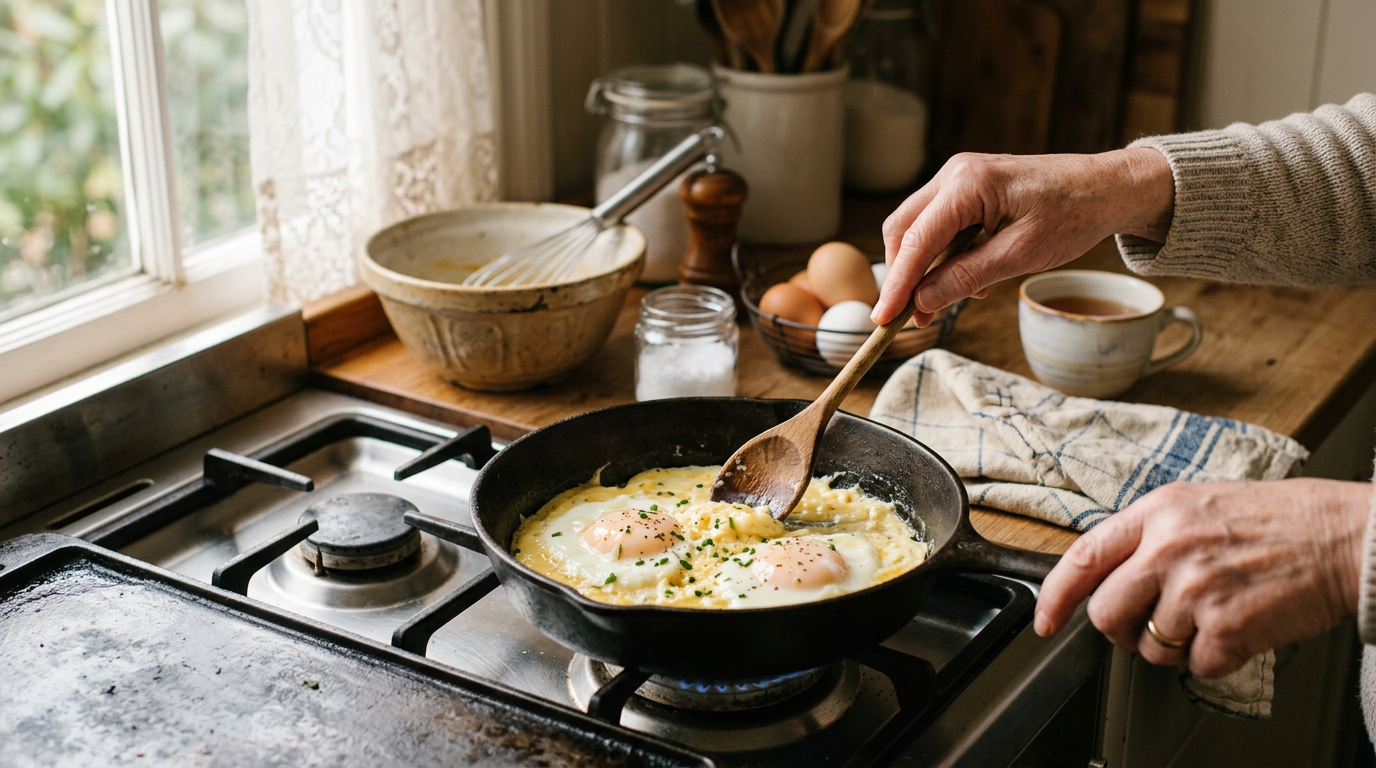
There's a peculiar moment in many home kitchens when someone cracks an egg into a hot pan and immediately reaches for a spatula. The heat is high, the butter is foaming, and the instinct is to rush. This small gesture—this eager scrambling or constant fiddling—is often where things go wrong. Not catastrophically, but noticeably. The results are acceptable, familiar even, but they're not quite what they could be.
Eggs are one of those foods that seem simple on the surface but reveal themselves differently once you start paying attention. They respond to heat, time, and restraint in ways that many other foods don't. Most of the frustration people experience when cooking eggs comes not from lack of knowledge, but from habits that work against what eggs actually need. The good news is that breaking these habits doesn't require special equipment, expensive ingredients, or culinary training. It requires noticing what you're doing and understanding why it matters.
Why High Heat and Eggs Don't Get Along
The most common mistake is cooking eggs at too high a temperature. This feels counterintuitive because we've been taught that high heat means faster cooking, and faster cooking is efficient. But eggs are a protein, and proteins set at specific temperatures. When you exceed those temperatures unnecessarily, you're not cooking faster—you're overcooking.
Consider what happens at the molecular level. Egg whites begin to set around 140°F (60°C), while yolks begin setting around 149°F (65°C). This narrow window is where the magic happens. When you use high heat, you shoot past these temperatures quickly, causing the proteins to contract and squeeze out moisture. The result is rubbery whites and grainy yolks. The egg hasn't cooked better; it's been abused into submission.
The reason high heat feels right is because it's decisive. It's visible. You can see the proteins transforming. But lower, steadier heat does the same work—just more gently, and with better results. Medium to medium-low heat might feel slow at first, but it delivers eggs with proper texture, a tender quality that high heat simply cannot achieve. The whites set without toughening, and the yolks stay rich and cohesive.
Stop Stirring Before the Eggs Are Ready to Move
There's a rhythm to cooking scrambled eggs that many people never quite find because they disrupt it with the spatula. The impulse to stir constantly—to keep the pan moving, to push the eggs around—comes from the same place as using high heat: the desire to control the process and see immediate results.
What actually works better is patience. When you add beaten eggs to a buttered pan at medium heat, let them sit. Literally sit. For 15 to 20 seconds. During this time, the bottom begins to set and form a thin layer of cooked egg. Only then should you gently push the spatula across the pan, scraping the set portions toward the center and tilting the pan so the still-liquid egg flows to the edges. Then you wait again.
This is the rhythm: set, push, wait. Set, push, wait. Not constant stirring, but deliberate movements separated by moments of stillness. This technique, sometimes called the pause method, gives the heat time to actually set the proteins properly rather than keeping everything in constant motion and preventing any real cooking from happening. The result is larger, softer curds instead of small, broken pieces. The eggs stay moist because the proteins haven't been overworked and squeezed.
This same principle applies to fried eggs. You crack the egg into the pan, and then you leave it alone. You don't jiggle the pan, you don't poke at the white, you don't second-guess the process. You let the white set undisturbed. The yolk will cook gently from the residual heat of the pan and the white that surrounds it. Interfering with this process only prevents it from working smoothly.
The Butter Question—When to Add It, and How Much
Many people cook eggs in oil or wait to add butter until the pan is screaming hot. Both approaches have costs. Oil has a higher smoke point, which feels safer, but it also doesn't dissolve into the eggs or complement them the way butter does. Butter has lower smoke point, yes, but this isn't a limitation—it's actually helpful feedback.
When you add butter to a medium-heat pan and let it melt and foam, it tells you something important: the pan is ready. The foam signals that moisture is evaporating and the temperature is steady. This is the ideal moment to add eggs. The butter is flavorful, it coats the pan evenly, and it sets a tone of gentleness that matches the low-to-medium heat approach.
There's also a practical reason to use enough butter: it prevents sticking without requiring aggressive stirring. A generous tablespoon (or even a bit more) for two or three eggs isn't extravagant; it's enabling the eggs to cook properly without burning to the pan and requiring you to scrape and push constantly. That constant scraping, remember, is part of what creates the small, broken texture people usually don't love in scrambled eggs.
Salt at the Right Moment
There's an old rule about not salting eggs before cooking them because salt allegedly makes them watery. This rule is often stated without explanation, which leads people to either follow it blindly or ignore it entirely. The truth is more nuanced.
Salt does affect the texture of eggs, but not the way the rule suggests. If you salt beaten raw eggs and let them sit for more than a few minutes before cooking, the salt dissolves in the liquid and can affect how the proteins set. But salting right before cooking—or even right after putting them in the pan—is fine. Salting after they're mostly cooked is also fine. The thing to avoid is salting them, then letting them sit in a bowl for several minutes while you attend to other tasks. The salt has time to draw out moisture in a way that makes the eggs slightly less tender.
In practice, most people don't have time to sit around salting eggs and waiting. Salt them right before the pan or salt them as they're cooking. Both approaches work perfectly well. What matters most is not the salt timing but the other factors: the heat level, the restraint with stirring, and the overall approach of gentleness.
Room Temperature Eggs Do Cook Better
Cold eggs straight from the refrigerator will cook unevenly, setting on the outside while the inside is still liquid. Room-temperature eggs cook more uniformly because the heat penetrates evenly and the proteins all begin setting at roughly the same time. This difference seems small until you've experienced it. Pulling eggs out of the fridge 10 or 15 minutes before cooking, or placing them in warm water for a couple of minutes, makes a noticeable difference in the final texture.
This isn't fussy. It's one small action that aligns with every other principle we've discussed: setting the conditions for gentle, even cooking rather than fighting against them.
The End Point Matters More Than You Think
Many cooks remove eggs from the heat when they still look slightly underdone. This feels wrong—the instinct is to cook until they look definitely cooked. But residual heat continues cooking eggs even after they're off the burner. The carryover cooking is real and significant.
If you wait until your scrambled eggs look perfectly set in the pan, they'll be overdone by the time they reach the plate. The same is true for fried eggs and any other preparation. Learning to stop cooking slightly earlier than seems right is one of the most important techniques in egg cooking. It requires trust in the process and confidence that the residual heat will finish the job. Once you've experienced the difference, it becomes obvious. Eggs plated slightly underdone become perfectly tender. Eggs that looked done in the pan become tough by the time you eat them.
A Small Change in Approach
These aren't revolutionary ideas. None of them require new equipment or ingredients. What they require is attention and a shift in approach: trading high heat and constant stirring for lower heat and strategic patience. Trading the assumption that high heat means better cooking for the understanding that gentleness with eggs actually delivers better results.
The reason these techniques matter is that they align with how eggs actually behave. You're not fighting the process; you're working with it. And that's where the real cooking happens—not in dramatic gestures or visible action, but in the quiet space between moments, in the gentle heat that transforms simple ingredients into something notably better.
Related articles

How Slow Cooking Improves Focus
Understand why pace matters in food preparation.
9 Things You Should Never Put in the Dishwasher—And Why Hand Washing Matters
Some kitchen items deserve the gentle care of hand washing. Learn which treasured pieces to protect and why this simple practice preserves what matters most.
The One Food You Should Never Reheat—and Why It Matters More Than You Think
Some kitchen rules exist for good reason. Learn which common food poses real danger when reheated and why this matters for your family's health.