
7 Things in Your Home You Should Replace More Often (And Why It Actually Matters)
Small replacements prevent big problems. Here's what actually needs attention—and the quiet reasons why your home runs better when you do.
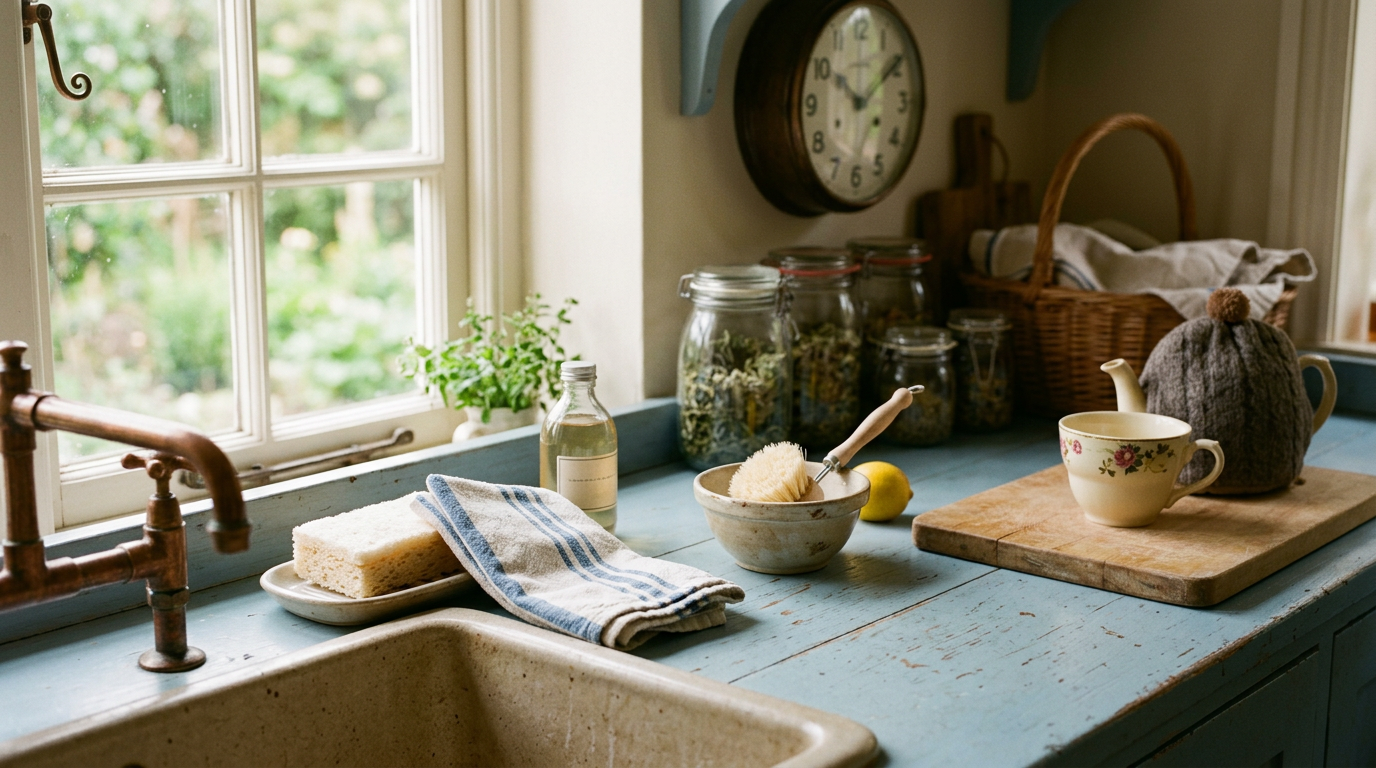
There's a particular kind of wisdom that comes not from rules, but from watching things fail. From noticing the slow decline that happens when we stretch something past its usefulness. This is one of those areas of home care that doesn't get talked about much—not because it's complicated, but because it's easy to overlook until something goes wrong.
Most of us replace things only when they break or become obviously unusable. We squeeze the last drop from the sponge, wear the bath towel until it's thin enough to read through, keep the same pillows for a decade. There's something thrifty and sensible about that. But there's also a quieter kind of economy in replacing things before they've completely failed—one that protects your home, your health, and actually saves money over time.
The items on this list aren't expensive. They're not glamorous. But they work quietly in the background, and when they stop doing their job properly, everything else has to work harder.
1. Kitchen Sponges (Every 1–2 Weeks)
A kitchen sponge is one of the most useful tools in a home, and also one of the most contaminated. This isn't being overly cautious—it's simple biology. A sponge is the perfect environment for bacteria: it's moist, it holds food particles, and you use it to clean surfaces where those particles have already multiplied. Even if you rinse it thoroughly and wring it out, you're not solving the underlying problem.
The reason this matters beyond just cleanliness: a failing sponge doesn't clean as effectively. It spreads bacteria around rather than removing it. It leaves a faint smell because the microbes are reproducing faster than you're rinsing them away. A fresh sponge does its actual job—it picks up debris, it responds to soap and water, it leaves surfaces genuinely clean.
One way to extend the life of a sponge is to actually dry it completely between uses. Store it where air can reach all sides, not crammed into a holder where it stays damp. Some people keep multiple sponges and rotate them. Others microwave theirs for a minute or two to kill bacteria (though this is temporary, not permanent). But the simplest approach: replace it regularly. They cost almost nothing. Your kitchen is cleaner and safer when you do.
2. Dish Towels (Every 3–4 Months, or Sooner)
Unlike sponges, dish towels are easy to wash, which is why people keep them far longer than they should. A dish towel that's been in regular use for eight months looks fine—it's still absorbent, still soft. But it's also accumulated invisible buildup: detergent residue, lint from other laundry, bacteria that survived the wash cycle, faint odors that linger even after drying.
The practical consequence: older towels dry dishes less effectively because the fibers are coated with buildup. They hold onto odors. They transfer bacteria back onto clean dishes, which defeats their purpose. A fresh towel absorbs water quickly and efficiently. It doesn't smell. It's genuinely hygienic.
Pay attention to how your towels perform, not just how they look. If a towel isn't absorbing water the way it did when it was new, it's time. Keep a rotation of three or four good-quality towels and replace one every few months. This is one area where the small expense of new towels saves you from the larger problem of food contamination or the unpleasant discovery of mold.
3. Bed Pillows (Every 1–2 Years)
A pillow is a deeply personal thing. You sleep on it every night. It supports your head and neck for hours. Over time, it breaks down—not visibly, but structurally. The filling compresses. It no longer provides proper support. The fabric develops microscopic tears, and dust mites colonize the interior. Even if you wash the pillowcase regularly, the pillow itself is becoming less hygienic and less functional.
The reason people resist replacing pillows is the same reason they're worth replacing: they become shaped to your head, familiar, almost a comfort object. But that familiarity masks the problem. A pillow that's lost its support can contribute to neck pain, poor sleep, and the kind of low-grade fatigue that you don't quite connect to your pillow until you sleep on a new one.
A good pillow costs money, but poor sleep is expensive in ways that go beyond dollars. If you're waking up with neck stiffness, struggling to fall asleep, or not feeling rested, your pillow might be the culprit. Two new pillows per year for a bed you sleep in every night is a reasonable investment in your health and comfort. Choose ones with good support and a quality that will last. Your sleep quality, and therefore your whole life, improves noticeably.
4. Shower Curtain Liners (Every 3–6 Months)
A shower curtain liner does a specific job: it keeps water from splashing out of the tub and damaging your bathroom walls and floor. Over time, mildew grows on it—dark spots that look permanent. Soap scum builds up. The plastic becomes brittle. Eventually it cracks or tears, and suddenly water is leaking out again, causing the exact damage it was meant to prevent.
The temptation is to clean the liner with bleach, scrub it, try to restore it. Sometimes this works temporarily. But the underlying issue is that the plastic has deteriorated. Microorganisms have penetrated into tiny cracks. It's no longer a reliable barrier.
Replacing a liner is simple and inexpensive. A new one hangs cleanly, is actually waterproof, and removes the mildew problem at its source. More importantly, it prevents water damage to the bathroom structure—damage that's expensive and difficult to fix. This is one of those cases where a very small, routine replacement prevents a much larger, unexpected repair.
5. Air Filter in Your HVAC System (Every 1–3 Months)
This is the replacement that's hardest to remember because you never see the consequences of skipping it—not until they've accumulated. A dirty air filter restricts airflow through your heating and cooling system. Your HVAC system has to work harder. It runs longer to heat or cool your home. Your energy bills go up. The system itself wears out faster.
Beyond the mechanical wear: a clogged filter doesn't clean your indoor air. Dust, pet dander, pollen, and other particles cycle through your home more freely. If anyone in your household has allergies or asthma, the impact is direct and noticeable. If not, the problem is quieter but still real—you're breathing air with more particulates in it than necessary.
The frequency depends on several things: how many people live in your home, whether you have pets, whether anyone smokes, how much dust enters from outside. A household with pets and multiple people might need a new filter every month. A quiet household might go three months. The way to know: check the filter monthly. When it's visibly gray or dirty, replace it. This is inexpensive maintenance that improves air quality, reduces energy costs, and extends the life of expensive equipment.
6. Toothbrushes (Every 2–3 Months)
A toothbrush that's been in use for six months looks almost the same as one that's new. The bristles might be slightly splayed, but it still seems functional. However, the bristles have become frayed at the microscopic level. They're less effective at removing plaque. They're also a repository for bacteria and mold—especially if they're stored upright in a holder where moisture collects.
The consequence isn't dramatic, but it's real. An older brush doesn't clean your teeth as thoroughly. Over time, this contributes to plaque buildup, gum inflammation, and tooth decay. A fresh brush with bristles in their proper shape removes plaque more efficiently.
Dentists recommend replacing toothbrushes every three months—a guideline that sounds excessive until you understand the hygiene reason for it. If you can't remember this on a schedule, buy several toothbrushes at once and simply replace one quarterly without thinking about it. Your teeth and gums will be healthier for it.
7. Kitchen Cutting Boards (When They Show Deep Grooves)
This one is less about time and more about condition, but the principle is the same. A wooden or plastic cutting board that's been used regularly develops tiny grooves and scratches where bacteria hide. You can sanitize the surface, but you can't clean inside those small cracks. Over time, bacteria accumulate, including potentially harmful strains that cause cross-contamination.
The visible sign that a board needs replacement is when you can feel deep grooves in its surface—when your fingernail catches if you run it across the board. At that point, the surface area for bacterial growth is significant. The board is no longer truly sanitary, no matter how well you wash it.
Plastic boards generally deteriorate faster and show these grooves sooner. Wooden boards last longer but eventually need replacing too. Rather than trying to extend the life of an old board, having two or three boards in regular rotation makes sense. Keep them smooth and relatively new. This is one area where the low cost of replacement is far less than the potential cost of foodborne illness.
The Pattern Underneath
If you notice a theme here, it's this: these are all items that come into contact with food, water, or your body multiple times a day. They work in damp or contaminated environments. They deteriorate gradually and invisibly. Their failure isn't usually catastrophic—it's a slow decline in function and hygiene.
The wisdom of replacing them more often than we naturally would isn't about perfectionism or excess. It's about understanding that these items have a job to do, and they do it best when they're relatively new. It's about preventing the larger problems—illness, damage, system failure—that come from letting small, replaceable things deteriorate completely.
This approach to home maintenance is one that pays for itself quietly. It prevents emergencies. It keeps your home cleaner, safer, and more pleasant to live in. It requires only small, affordable investments made on a regular schedule.
If you've been extending the life of items past their usefulness, choose one from this list to start with. Buy replacements and establish a simple rhythm—monthly, quarterly, or whenever you notice the sign that replacement is needed. You'll notice the difference almost immediately: things work better when they're fresh. Your home runs smoother. And that sense of quiet order and care is worth far more than the small cost of replacement.
Related articles

How Slow Cooking Improves Focus
Understand why pace matters in food preparation.
9 Things You Should Never Put in the Dishwasher—And Why Hand Washing Matters
Some kitchen items deserve the gentle care of hand washing. Learn which treasured pieces to protect and why this simple practice preserves what matters most.

The One Food You Should Never Reheat—and Why It Matters More Than You Think
Some kitchen rules exist for good reason. Learn which common food poses real danger when reheated and why this matters for your family's health.