
Grandma Knows: How to Remove Tomato Sauce from Clothing
Tomato sauce stains are vivid and quick to set. Learn the right sequence of treatments to remove tomato stains from clothing before they become permanent.
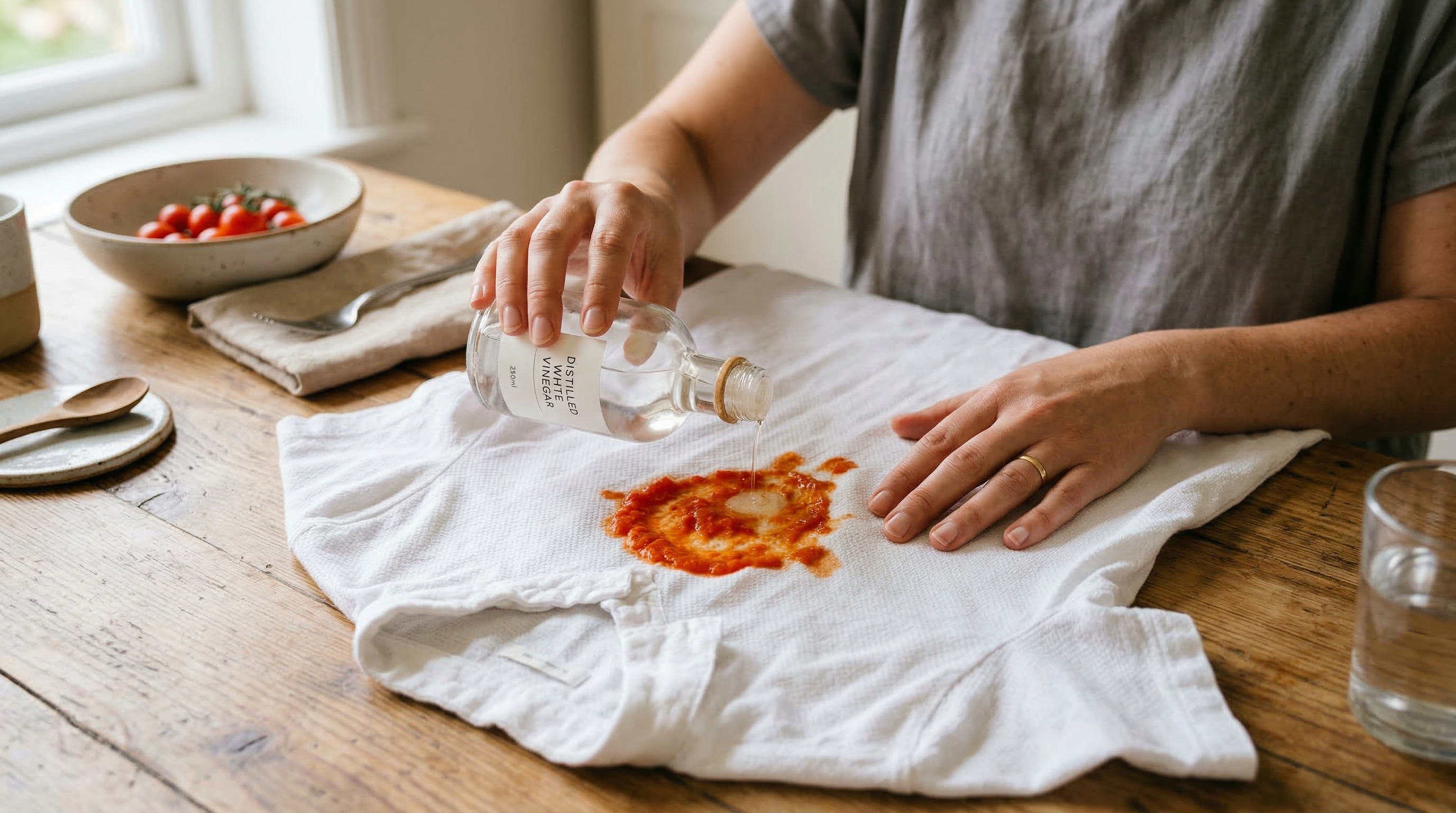
Tomato sauce stains are among the most visible fabric stains — the bright red-orange color stands out against almost any fabric, and the stain sets relatively quickly because it contains a combination of water-soluble pigments, oils, and sometimes proteins if the sauce contains meat. Quick action makes a significant difference, but even a stain that's dried can often be fully removed with the right approach.
What's in Tomato Sauce
The deep red color of tomato sauce comes primarily from lycopene, a fat-soluble pigment, along with other carotenoids. This fat-soluble nature is part of what makes tomato stains tricky — unlike water-soluble dyes that simply rinse away, lycopene requires a solvent or surfactant to lift it from fabric.
Tomato sauce also typically contains oil, salt, and sometimes proteins from added ingredients. The combination means you're dealing with multiple stain types in a single mark.
Remove the Solid Material First
Before applying any liquid treatment, remove as much of the sauce as possible using the edge of a spoon or a dull knife. Scoop from the outer edge toward the center, lifting the sauce away from the fabric rather than pushing it in or spreading it outward.
Don't be tempted to wipe with a napkin or cloth at this stage — wiping spreads the stain and pushes it further into the fabric. Lift, don't wipe.
Cold Water Flush
Hold the back of the fabric under cold running water. The water pressure helps push the sauce back out through the fibers from the same side it entered. Avoid hot water — it can set the proteins and oils in the sauce.
After the cold water flush, assess how much of the stain remains. For many fresh tomato sauce stains on cotton, this step removes a significant portion of the color.
Dish Soap for the Oil Component
Apply dish soap directly to the remaining stain and work it gently into the fabric. The surfactants in dish soap address the oil-based lycopene and any cooking oil in the sauce. Let it sit for five to ten minutes before rinsing with cold water.
If the stain is predominantly the red-orange color of the tomato without an oily component, this step may be sufficient for a fresh stain. Check after rinsing.
White Vinegar for Tomato Pigment
White vinegar is particularly effective on tomato stains because its mild acidity disrupts the bond between the tomato pigments and the fabric fibers. Apply white vinegar directly to the stained area after the dish soap rinse and let it sit for ten minutes. You may see the color begin to lift. Rinse with cold water.
Alternating between dish soap and vinegar treatments, with rinses between each, progressively removes the stain components. The dish soap addresses fat-soluble pigments and oils; the vinegar addresses color bonds directly.
Baking Soda Paste for Stubborn Stains
If color remains after vinegar treatment, apply a paste of baking soda and a small amount of white vinegar to the stain. The fizzing reaction between baking soda and vinegar creates physical agitation at the fiber surface that helps lift loosened stain particles. Let the paste sit for fifteen minutes before rinsing.
Sunlight as a Final Treatment
Sunlight is an old and effective treatment for residual tomato stain color on cotton and linen. The UV component of sunlight bleaches natural plant pigments, and lycopene is particularly susceptible to photo-oxidation — it breaks down when exposed to light.
After washing, if a faint stain remains, dampen the area and lay the garment flat in direct sunlight. Check every hour and redampen if it dries. This works best on white or light-colored cotton. It's too slow to be useful as an initial treatment but can clear the last traces of tomato color that other methods couldn't fully remove.
Don't use this method on colored or dark fabrics, as sunlight can bleach dyed textiles as well as the stain.
Protein Component in Meat Sauces
Bolognese and other meat-based tomato sauces add a protein component to the stain. If the sauce contained meat, treat with an enzyme cleaner after the dish soap and vinegar steps. Enzyme cleaners break down protein compounds that other cleaning agents can't address. Apply generously, allow adequate contact time, and launder in cold or warm water — not hot.
Upholstery and Carpet
For tomato sauce on upholstery or carpet, remove solids first, then treat with the same dish soap and cold water approach used for garments. Apply foam rather than liquid to avoid over-saturating the fabric. Follow with a white vinegar and water solution — one part vinegar to two parts water — applied and blotted. Rinse by blotting with a cold, damp cloth.
After Treatment and Before Drying
Launder the garment after pre-treatment and check carefully before the dryer. Tomato sauce stains, if not fully removed, tend to oxidize and become a brownish-orange color with heat — more visible and more difficult to remove than the original red. If any color remains, treat again before drying. Tomato stains are among the stains that most benefit from a second treatment when the first hasn't fully cleared them.
Related articles
Grandma Knows: How to Remove Grass Stains from Clothes
Grass stains on clothes are stubborn but very treatable. Learn the household methods that break down chlorophyll and get fabric clean again.
Grandma Knows: How to Remove Grease from Clothes
Grease stains on clothes are tricky but not impossible. Discover proven household methods using baking soda, dish soap, and patience.
Grandma Knows: How to Remove Blood Stains from Fabric
Blood stains on fabric respond to cold water and the right approach. Learn which methods work on fresh and dried blood without damaging your clothes.