
Grandma Knows: How to Remove Blood Stains from Fabric
Blood stains on fabric respond to cold water and the right approach. Learn which methods work on fresh and dried blood without damaging your clothes.
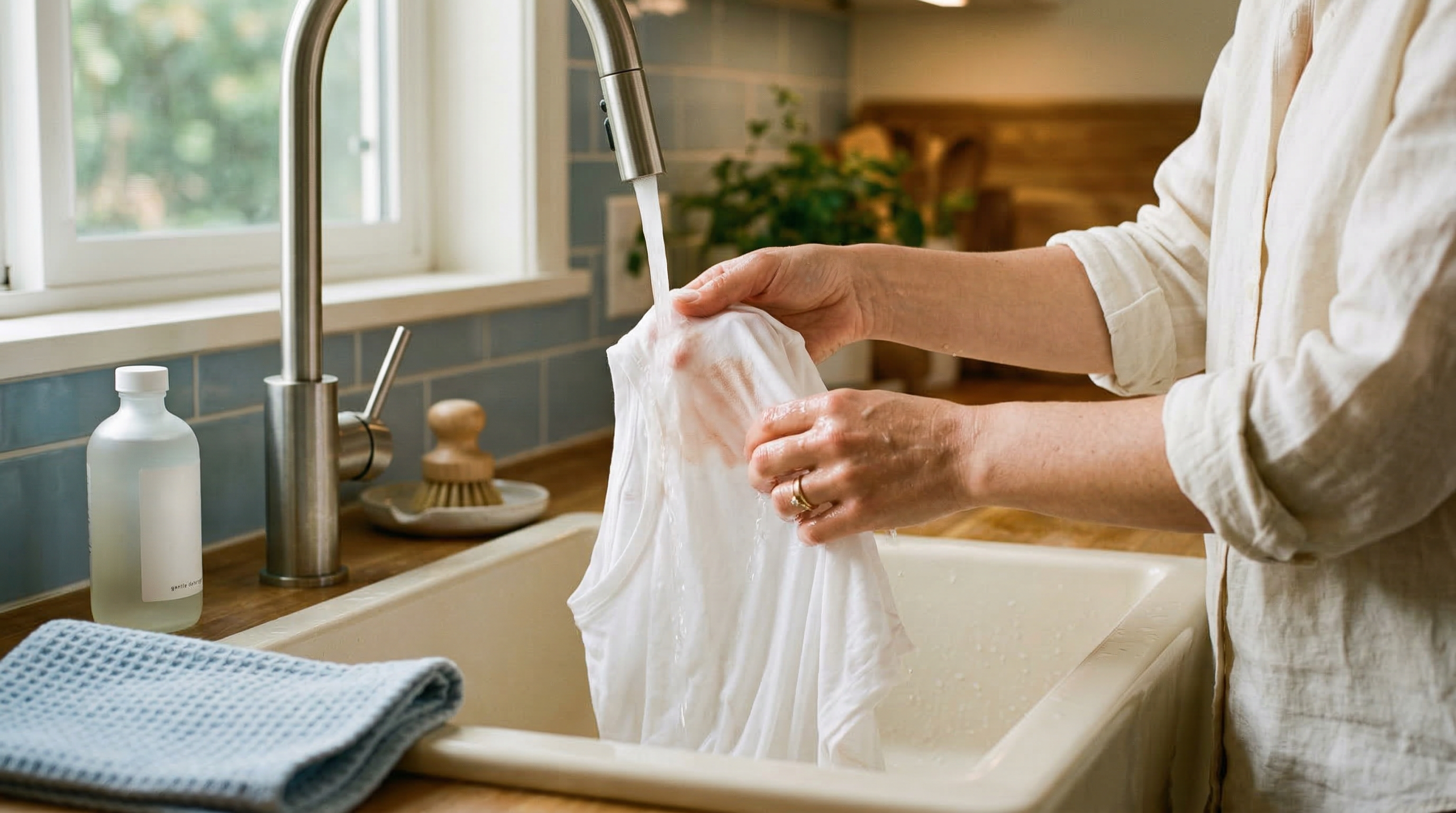
Blood stains are among the most urgent fabric stains to treat because their chemistry changes quickly once they leave the body. Fresh blood is water-soluble and responds remarkably well to cold water alone. But as blood dries and oxidizes, it undergoes chemical changes that make it progressively more resistant to removal. The window for easy treatment is short — and the methods that help fresh blood stains can actually harm dried ones.
Why Blood Stains Are Time-Sensitive
Blood contains hemoglobin, the protein responsible for its red color, along with other proteins, iron, and organic compounds. When fresh, these compounds are still in their natural, soluble form. Cold water disrupts the structure of these molecules and rinses them away from fabric fibers.
As blood dries, the proteins denature — they unfold and bond to whatever surface they're touching, including fabric fibers. Iron in the blood also oxidizes on contact with air, which is part of what darkens a drying bloodstain. This is why heat is the worst thing you can apply to a blood stain: it dramatically accelerates protein bonding and sets the stain permanently into the fabric.
The Cold Water Rule
Cold water is the most important tool for fresh blood stains. As soon as possible, hold the stained fabric under cold running water from the back of the stain. The water pressure helps push blood back out through the fabric rather than further in.
Never use warm or hot water on a blood stain at any stage of treatment. This is the single most important rule — worth repeating clearly. Hot water is what sets blood stains permanently, and no subsequent treatment will fully undo that damage.
If you're away from a sink when the stain occurs, use cold water from a bottle or even an ice cube wrapped in a cloth to dilute the stain. The goal is to keep the blood from drying until you can treat it properly.
Fresh Blood: Cold Water and Soap
For a fresh stain, cold water alone often removes most of the blood. Rinse thoroughly and assess. For whatever remains, apply a small amount of dish soap or hand soap directly to the stain and work it gently into the fabric. Rinse again with cold water.
If soap isn't immediately available, your own saliva contains enzymes — amylase among them — that can help break down blood proteins on fabric. This old-fashioned method sounds unusual but has a real chemical basis. Apply saliva directly to the fresh stain and rinse with cold water. It's most useful in the moment, when nothing else is at hand.
Salt Water Treatment
Dissolving two teaspoons of salt in a cup of cold water creates a solution that draws blood out of fabric through osmosis. Soak the stained area in this solution for thirty minutes, or apply it directly and let it work before rinsing.
Salt is particularly effective on fresh stains and on natural fibers like cotton and linen. The mineral content of the salt also helps with the initial stages of oxidized stains. Rinse thoroughly with cold water after treatment.
Hydrogen Peroxide for Dried or Stubborn Stains
Hydrogen peroxide is one of the most effective treatments for dried blood stains on white and light-colored fabrics. When it contacts blood, it releases oxygen, which breaks apart the oxidized hemoglobin compounds that give dried blood its brown color.
Pour a small amount of three percent hydrogen peroxide — the standard pharmacy concentration — directly onto the stain. You'll see it fizz and bubble as it reacts with the blood proteins. This fizzing is the reaction working. Let it sit for five to ten minutes and then rinse with cold water.
Do not use hydrogen peroxide on dark or colored fabrics without testing first. It can bleach color out of dyed fabric, particularly if left for extended periods. Test on a hidden seam before applying to a visible area.
Enzyme-Based Cleaners
Biological laundry detergents and enzyme pre-treatments are formulated to break down protein compounds, which is exactly what blood is. For stubborn dried stains, applying an enzyme cleaner generously and allowing it to work for the maximum recommended time before laundering gives these products the best chance to succeed.
Enzyme cleaners are particularly useful on larger stains or stains that have been in the fabric for some time. They work more slowly than hydrogen peroxide but are safe on a wider range of fabrics and colors.
Baking Soda Paste
For dried blood stains that have been rehydrated with cold water, a paste of baking soda and cold water can be applied and worked gently into the fabric. The mild abrasiveness helps lift loosened stain particles, while the alkaline nature of baking soda supports the breakdown of organic compounds. Rinse thoroughly after allowing the paste to sit for twenty minutes.
Upholstery and Mattresses
Blood on upholstery or a mattress requires the same cold water principle but with less liquid than you'd use on a garment. Apply cold water with a clean cloth — don't pour it — and blot the stain carefully. Follow with a solution of cold water and a small amount of liquid soap, applying it with a cloth and blotting rather than rubbing.
For mattresses, it's particularly important not to saturate the surface. Moisture reaching the mattress interior can encourage mildew. Work with minimal liquid and dry the area as quickly as possible. A paste of baking soda applied after cleaning, left to dry, and then vacuumed away can help absorb remaining moisture and any residual stain.
What Doesn't Work
Warm or hot water, as mentioned, sets blood stains permanently. This is worth emphasizing because it's a common mistake. Bleach may remove the color of a blood stain on white fabric but doesn't break down the proteins effectively and can damage some natural fibers. Scrubbing aggressively spreads the stain and can damage delicate fabric weaves.
Some very old blood stains — particularly those that have been washed and dried in hot conditions multiple times — may not respond to home treatment. In these cases, professional cleaning with specialized enzymatic solutions may help, but results cannot be guaranteed for stains that have been heat-set repeatedly.
After Treatment
After treating a blood stain and before putting the garment in the wash, check that the stain is gone or significantly reduced. Wash in cold water with your regular detergent. Check again before the dryer. A stain that's barely visible on a wet garment can become clearly set after heat drying. Repeat treatment if needed before applying any heat.
Related articles
Grandma Knows: How to Remove Tomato Sauce from Clothing
Tomato sauce stains are vivid and quick to set. Learn the right sequence of treatments to remove tomato stains from clothing before they become permanent.
Grandma Knows: How to Remove Grass Stains from Clothes
Grass stains on clothes are stubborn but very treatable. Learn the household methods that break down chlorophyll and get fabric clean again.
Grandma Knows: How to Remove Grease from Clothes
Grease stains on clothes are tricky but not impossible. Discover proven household methods using baking soda, dish soap, and patience.