
7 Foods You Should Never Store in the Fridge
Some foods lose their flavor, texture, and nutrients in cold storage. Learn which everyday pantry staples belong at room temperature and why.
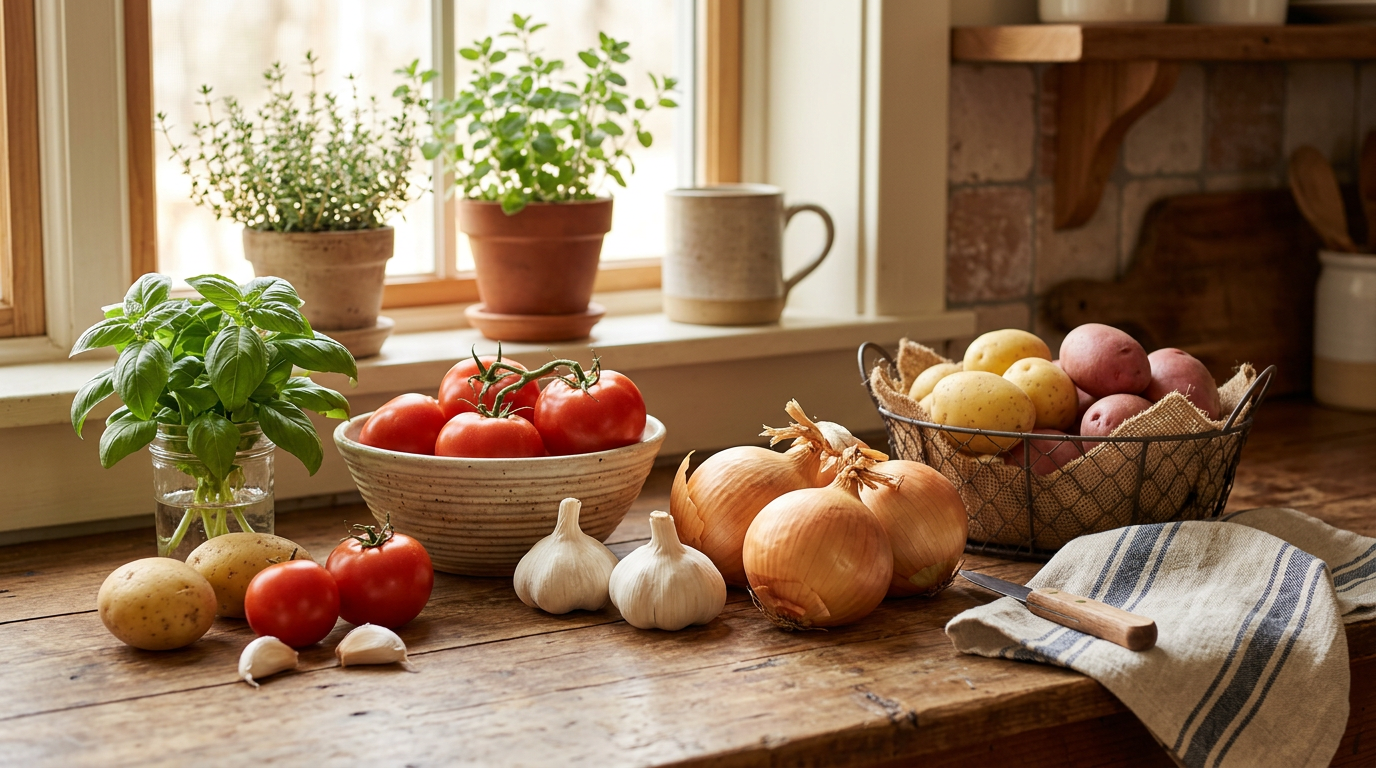
There's a quiet assumption in modern kitchens that the refrigerator is a cure-all for food preservation. We reach for it automatically, tucking away nearly everything we bring home from the market. But this habit, born from convenience more than wisdom, actually undermines the quality of many foods we eat regularly. Understanding which foods thrive at room temperature isn't just about saving electricity or counter space—it's about honoring the actual nature of what we're eating and getting the most from it.
The foods that suffer most in cold storage are those that have evolved over centuries in warmer climates, or those whose texture and flavor depend on subtle chemical processes that cold disrupts. Learning where your everyday foods truly belong is one of those small shifts that quietly improves your cooking and eating experience over time.
Tomatoes: Why Cold Breaks Them
Tomatoes are perhaps the most common casualty of refrigerator overuse. When you chill a ripe tomato below 55°F, you're interrupting the ripening enzymes and the development of volatile compounds that give tomatoes their distinctive aroma and complex flavor. The cold also damages the cell walls, making the flesh mealy and soft in an unappealing way—quite different from the pleasant softness of a naturally ripened fruit.
What happens at the cellular level is worth understanding: cold temperatures slow down the production of flavor compounds like (Z)-3-hexenal and other volatile organic compounds that make a tomato taste like a tomato. Once these processes are interrupted, they don't simply resume when the tomato returns to room temperature. The damage is done.
The practical approach is to keep tomatoes on the counter, ideally in a single layer, away from direct sunlight. A ripe tomato will stay fresh this way for several days. If you've cut into a tomato and have leftovers, that's different—use that piece within a day and keep it cut-side down on a plate at room temperature, or refrigerate if it will sit longer than 24 hours. But whole, ripe tomatoes have no business in the cold.
Potatoes and Onions: Starch and Sugar Conversion
When you refrigerate potatoes, something counterintuitive happens: the cold converts the starch to sugar. This might sound pleasant, but it changes the flavor and texture of the potato in ways that make it less suitable for most cooking. The sugar browning also occurs more readily when you cook these refrigerated potatoes, which can produce a less appealing color and introduce compounds you didn't intend.
Potatoes also absorb moisture in the refrigerator, which affects how they cook. A potato that should be fluffy becomes watery inside. This is why restaurant chefs and cooks who know food well store potatoes in cool, dark places—a pantry, a basement, or a root cellar if you have one. They want them around 50°F ideally, not the 38°F of a typical fridge.
Onions face a different but equally important problem: moisture. Onions are naturally low-moisture vegetables designed to store well in dry conditions. The humid environment of a refrigerator encourages them to become soft and to develop mold more quickly than they would at room temperature in a dry place. Onions belong in a cool, dark, well-ventilated space—a pantry, a mesh bag in a cupboard, or a vegetable bin that isn't sealed. They'll last for weeks this way.
The key insight here is understanding that refrigeration is about slowing microbial growth, not about ideal storage conditions for every food. Potatoes and onions have built-in storage mechanisms that work better without refrigeration.
Garlic: Sprouting and Softening in Cold
Garlic in the refrigerator begins to soften and become rubbery. The cold also encourages sprouting—you'll notice the small green shoot growing from the center of the clove, especially in spring. This isn't harmful, but it indicates that the garlic is being stimulated by cold in a way that compromises texture.
Garlic stores beautifully at room temperature when kept in a cool, dark place with good air circulation. A terra cotta garlic keeper, a paper bag with holes, or simply a bowl in a cupboard will preserve garlic for weeks. The goal is keeping it dark and slightly cool without moisture buildup.
Bread: How Cold Stales It Faster
This is a concept that often surprises people because it seems backward: bread stales faster in the refrigerator than at room temperature. The process is called retrogradation. The cold accelerates the recrystallization of starch molecules, which is what makes bread feel hard and dry. At room temperature, bread stales more slowly because the starch remains in a more stable state.
A fresh loaf of bread stays best in a closed paper or cloth bag at room temperature for 2–3 days. If you need to keep it longer, freezing is actually better than refrigerating—freezing essentially pauses retrogradation, while the refrigerator accelerates it. This is counterintuitive enough that it bears repeating: if you can't eat your bread within 3 days, freeze it rather than refrigerate it.
This principle applies to most baked goods—rolls, pastries, and cakes all benefit from room-temperature storage in an airtight container rather than refrigeration, unless they contain fresh cream or other highly perishable fillings.
Bananas: Accelerated Ripening and Deterioration
Bananas are sensitive to ethylene gas, the ripening hormone fruit produces naturally. Refrigeration interferes with this process in complex ways. The peel may turn dark (which actually indicates ripeness inside), but the banana flesh itself deteriorates more quickly than it would at room temperature. The cell walls break down, and the texture becomes mushy.
If you have bananas at different stages of ripeness, this is actually useful: bananas ripen at room temperature over several days. If you separate them from the bunch and place them at room temperature, they'll ripen more slowly. If you have one that's perfectly ripe and you want to slow it down slightly, moving it to a cooler room (around 60°F) helps more than the refrigerator. Once a banana is at your preferred ripeness for eating fresh, keep it at room temperature and enjoy it within a day or two.
Bananas also brown peel faster when refrigerated, though the interior quality degrades before the peel tells you there's a problem. For a household that eats bananas regularly, buying them at slightly different stages of ripeness and keeping them all at room temperature is more sensible than trying to manage them in the fridge.
Coffee Beans: Moisture and Aroma Loss
Coffee beans are hygroscopic, meaning they absorb moisture readily. The refrigerator is a damp environment relative to most cupboards, and moisture is one of the fastest ways to diminish coffee quality. The volatile aromatic compounds that make coffee smell and taste complex are also more easily lost in humid conditions.
Coffee beans should live in an airtight container in a cool, dark cupboard. Some people advocate freezing whole beans if they won't be used for several weeks, which can work if the beans are in a well-sealed container—the idea is that freezing pauses oxidation. But daily storage in a dark cupboard in an airtight container is simpler and preferable for most households.
This also applies to ground coffee, though ground coffee stales faster overall because of its larger surface area. If you buy whole beans and grind them as you use them, you'll notice a significant difference in flavor compared to pre-ground coffee, and this quality is best preserved at room temperature in the dark.
Citrus Fruits: When Cold Damages Nutrition and Flavor
While citrus can be refrigerated for extended storage, there's a trade-off. Room temperature storage preserves vitamin C content and flavor complexity better than refrigeration does. This is particularly true for citrus that you'll eat within a week. The cold slows the breakdown of acids and sugars that give citrus its bright flavor.
A bowl of lemons, limes, or oranges on the counter, away from direct sunlight, will stay fresh for several days to a week depending on how ripe they were when purchased. They'll taste better and be more nutritious than the same citrus stored in the fridge. If you have them longer than a week, then refrigeration makes sense to extend storage life.
Building a Better Rhythm
The deeper lesson in all of this is that food storage isn't one-size-fits-all. Each food has its own nature and needs, and learning what those are changes how you cook and eat. It means paying attention to how things feel when you prepare them, noticing what tastes good and what doesn't, and making small adjustments based on what you observe.
It also changes your relationship with shopping and cooking rhythms. When you store potatoes and onions in a cupboard, bread at room temperature, and tomatoes on the counter, you're naturally thinking about using them in a certain timeframe. This isn't a burden—it's actually how food was managed for centuries, and it tends to result in cooking that tastes better and wastes less.
The next time you put something in the refrigerator out of habit, pause for a moment. Does this food want to be cold? Is there a reason I'm doing this, or am I just following a pattern? These small questions, asked regularly, lead to a kitchen that works more sensibly and food that tastes as good as it should.
Related articles

How Slow Cooking Improves Focus
Understand why pace matters in food preparation.
9 Things You Should Never Put in the Dishwasher—And Why Hand Washing Matters
Some kitchen items deserve the gentle care of hand washing. Learn which treasured pieces to protect and why this simple practice preserves what matters most.
The One Food You Should Never Reheat—and Why It Matters More Than You Think
Some kitchen rules exist for good reason. Learn which common food poses real danger when reheated and why this matters for your family's health.