The Quiet Knowledge in Your Kitchen: Old Cooking Wisdom That Still Works
Some of the best cooking lessons aren't found in recipes—they're in the small habits and observations that made home kitchens run smoothly for generations.

There's a particular kind of knowledge that lives in kitchens, the sort that accumulates through repetition and attention rather than instruction. It's not always written down. It exists in the muscle memory of how to test if oil is hot enough, in knowing which vegetables will forgive you if you're a little late with dinner, and in understanding why some techniques work even when they seem to contradict what modern cooking advice suggests.
The kitchens of the past operated under different constraints than ours do today. Without precise thermometers, instant delivery, or year-round access to every ingredient, cooks learned to read their ingredients and trust their senses. They developed methods that were efficient not because they were trendy, but because they worked reliably, day after day, with whatever was on hand. Many of these approaches are worth revisiting—not as nostalgia, but as genuinely useful tools that solve real problems in ways that modern shortcuts sometimes overlook.
Understanding Your Ingredients Before You Cook Them
One of the most practical habits from traditional cooking is the practice of truly knowing your ingredients before you combine them. This sounds simple, but it's different from simply having items in your pantry.
When you buy vegetables, for instance, older cooking methods relied on cooks understanding the individual character of each vegetable at different stages of ripeness. A tomato that's still slightly firm will hold its shape in a slow-simmered sauce and won't turn to mush if you're not watching the pot carefully. A tomato that's already soft will break down quickly and contribute more liquid to your dish. This isn't something you need to guess about—it's something you learn by paying attention during the actual cooking process, adjusting your timing and heat based on what you see happening in front of you.
The same principle applies to meat. Traditional cooks knew that different cuts had different needs because they handled them regularly and paid attention. A tougher cut with more connective tissue benefits from slow, moist cooking that breaks down those proteins over time. A tender cut requires less time and actually deteriorates if you cook it too long. The difference in how these cook isn't mysterious or dependent on a precise temperature reading—it's visible and tactile if you're watching.
This approach requires something that modern cooking culture sometimes discourages: accepting that you won't be able to follow a recipe exactly as written every single time. The vegetable in your kitchen right now is not quite the same as the vegetable in the recipe writer's kitchen. The ambient humidity in your home affects how quickly water evaporates from your pot. Your stove might run slightly hotter than someone else's. Rather than seeing these variations as problems to be solved with technology, traditional cooking treated them as normal conditions that required attention and small adjustments.
The Real Purpose of Salt at Different Cooking Stages
Salt is one of the most misunderstood elements in modern cooking conversation, partly because advice has shifted so many times that people are genuinely confused about when and how to use it.
Older cooking understood salt as something with multiple jobs, not just as a finishing garnish or a forbidden ingredient to be minimized. Salt added early in cooking—to water for pasta, to meat before cooking, to vegetables as they soften—actually becomes integrated into the food rather than simply sitting on the surface. It helps vegetables release their moisture and cook down. It seasons proteins all the way through rather than just flavoring the outside. This is fundamentally different from salt added at the very end, which mostly hits your taste buds on the surface of your tongue.
The reason this matters practically is that it changes how much salt you actually need. When salt is incorporated early and thoroughly, a smaller amount can season your entire dish. When salt is only added at the end, you need more of it to achieve the same flavor impact because it's not penetrating the food. This is also why foods that are properly salted during cooking taste better than foods that are undersalted during cooking and then adjusted at the end—the distribution is different at a chemical level.
Traditional cooking also recognized that different dishes need different salt timing. Salt in bread dough needs time to fully hydrate and distribute. Salt in a quickly cooked vegetable dish can go in right when the vegetable hits the pan. These distinctions weren't made arbitrarily—they came from decades of watching how food actually behaved.
Why Cooking Time Matters More Than Temperature Precision
Modern cooking culture has become somewhat obsessed with temperature precision, particularly for meat and fish. There's value in this—knowing that a steak cooked to 130°F will be reliably medium-rare is useful information. But there's also a trap in this thinking: the belief that temperature is the only thing that matters.
Older cooking methods relied more heavily on visual and tactile cues because thermometers either didn't exist or weren't considered essential. A roast was done when it looked right and felt right when pressed. Fish was cooked through when it flaked apart easily. Baked goods were pulled from the oven when they looked properly browned and a toothpick came out clean. These methods aren't less accurate than temperature—they're just a different kind of accuracy. They account for the size of the item, the shape, the composition, and the actual oven you're cooking in.
The practical advantage of this is that you become more flexible and confident in your cooking. If you know that a chicken breast is done when it feels firm to the touch and the juices run clear, you can cook chicken whenever you want without having to own multiple thermometers or remember exact temperatures. If you understand that pasta is ready when it has a slight firmness to it when you bite it, you can stop checking the package time and just taste it.
This also solves a real problem: people often overthink and undercook things because they're anxious about specific temperatures, when a simpler sensory check would have given them accurate information and a finished dish.
The Strategic Use of Leftovers and Planning
In older home cooking, the distinction between "cooking" and "using leftovers" was less rigid than it is today. Planning was built into the cooking itself. If you were roasting a chicken for dinner, you were simultaneously creating stock for soup, planning how the leftover meat would be used, and thinking about what the bones would contribute.
This wasn't about waste reduction, though that was certainly part of it. It was about efficiency and flavor development. Stock made from bones you've already roasted has more depth than stock made from raw bones. Rice that's been cooked once and then fried develops a better texture than rice that's only been steamed. Bread that's a day or two old has the right moisture content for certain dishes, while fresh bread would turn them soggy.
The practical application of this approach is that it changes your relationship with your cooking schedule. Instead of planning individual meals, you're thinking in terms of cooking projects that naturally generate useful components for future meals. You roast vegetables not just for one dinner but with consideration for how they can be repurposed. You make broth when it makes sense to have bones on hand, not as a separate chore.
This approach also tends to reduce the mental load of cooking. You're not constantly trying to figure out what to make—you're working with what naturally exists as byproducts of your previous cooking. It's more sustainable and less stressful than trying to have a completely new inspiration every single night.
The Value of Slow Development and Patience
Perhaps the most countercultural aspect of traditional cooking knowledge is the comfort with processes that simply take time. There's no way to rush certain things, and older cooking accepted this rather than fought against it.
Beans need time to soften, and soaking them overnight isn't about being fussy—it's about acknowledging that they cook more evenly and thoroughly when they've been given this preliminary step. Bread dough needs time for gluten to develop and for flavor to emerge through fermentation. Stocks need hours to extract flavor and body from bones. These aren't arbitrary rules. They're about chemistry and biology that can't be sped up with higher heat or special equipment.
What's interesting is that accepting this actually reduces kitchen stress. When you know something needs four hours to cook, you don't spend the time anxiously checking it every few minutes or second-guessing your method. You set it going, trust the process, and go about your day. The impatience comes from fighting against the actual time the food needs.
This principle extends to skill development as well. Traditional cooking methods expected that you would improve at cooking by cooking regularly, paying attention, and making small adjustments based on results. You wouldn't become great at making pastry after one class or one video—you'd develop that skill through repetition and experimentation. This is less satisfying in some ways (there's no instant expertise), but it's more sustainable and tends to produce deeper understanding than trying to shortcut the learning process.
Reading Your Kitchen and Adapting as You Go
The cooking knowledge passed down through generations was highly practical and specific to individual kitchens. Your stove might run hot. Your kitchen might stay cool. The water in your area might have different mineral content. Rather than seeing these as problems to be overcome, traditional cooks simply accounted for them.
This habit of adjustment is worth deliberately cultivating. Early in your time using a new stove, you might make something that's slightly overdone or underdone. The knowledge you gain from this—"this stove runs about 25 degrees hot," or "the back burner heats much faster than the front"—becomes useful information you apply to everything you cook going forward. Some ovens brown things faster on one side; if you notice this, you simply turn your pan halfway through baking.
The permission to cook differently based on what you're observing, rather than trying to force every recipe into a standard mold, makes cooking both more successful and more pleasant. You're not fighting your tools; you're working with them intelligently.
Simple Kitchen Skills That Compound Over Time
Traditional cooking developed certain foundational techniques not because they were trendy but because they worked. Learning to properly dice an onion isn't about impressing anyone—it's about understanding how the size of your pieces affects cooking time and texture. Learning to taste your food as you cook isn't pedantic; it's the only reliable way to know if something needs more salt, more acid, or more time.
These basic skills create a foundation that makes every cooking task easier and more reliable. You don't need new recipes or techniques as much as you need to develop real competence with the fundamental ones. This is less exciting than learning to make something complicated, but it's far more useful.
The comfort of home cooking—the satisfaction of moving through your kitchen with real knowledge of what you're doing and why you're doing it—comes not from having every tool or from following complex recipes, but from developing these foundational understandings so deeply that they become intuitive.
Related articles

Stop Peeling Garlic the Hard Way – There's a 10-Second Trick
Learn the simple jar-shaking technique that loosens garlic skin in seconds, plus why this method works and how to make it part of your kitchen routine.
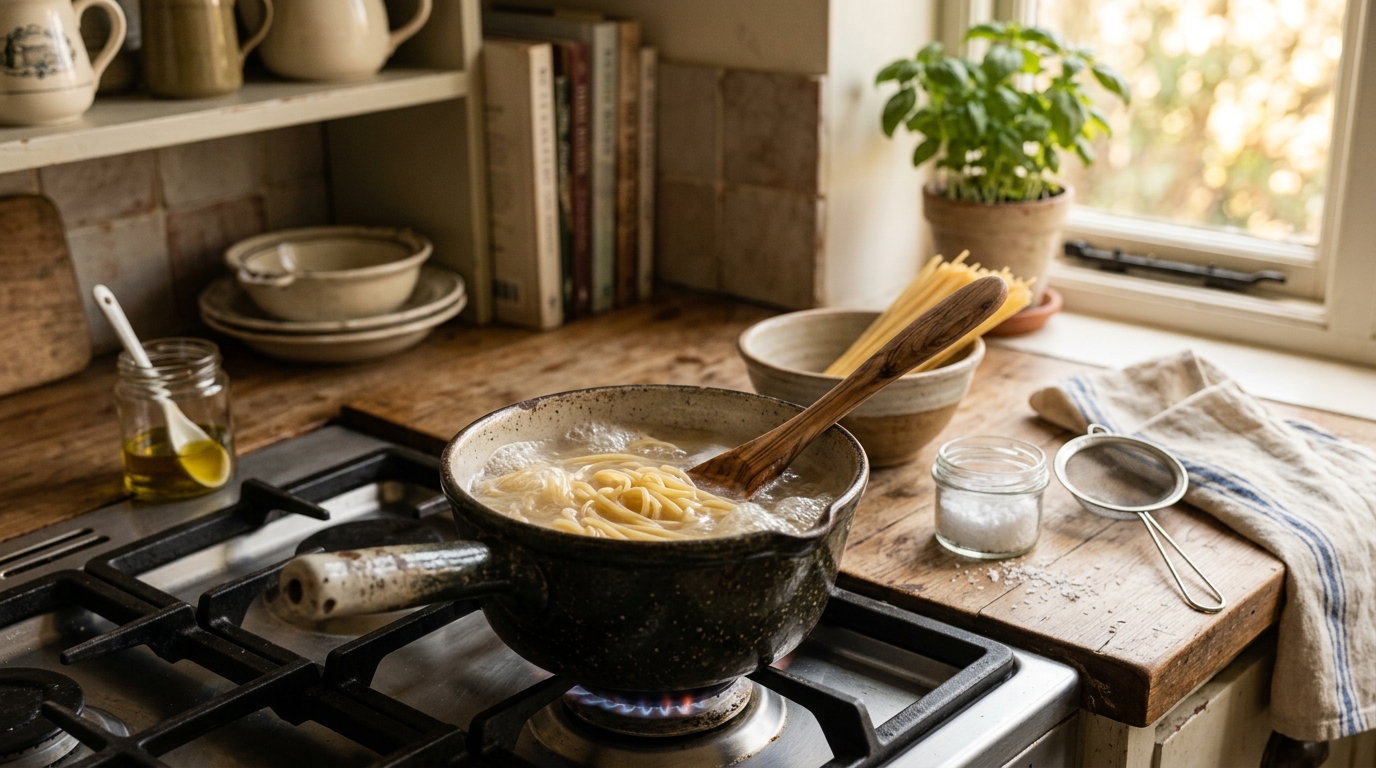
Most People Cook Pasta Wrong (And It's Costing Them Money)
The way you've been cooking pasta likely wastes water, money, and time. Here's what actually works.

Never Throw Away Lemon Halves After Squeezing – Here's Why
Those spent lemon halves hold surprising power. Learn how to extract their full value for your kitchen, home, and health.