
Most People Cook Pasta Wrong (And It's Costing Them Money)
The way you've been cooking pasta likely wastes water, money, and time. Here's what actually works.
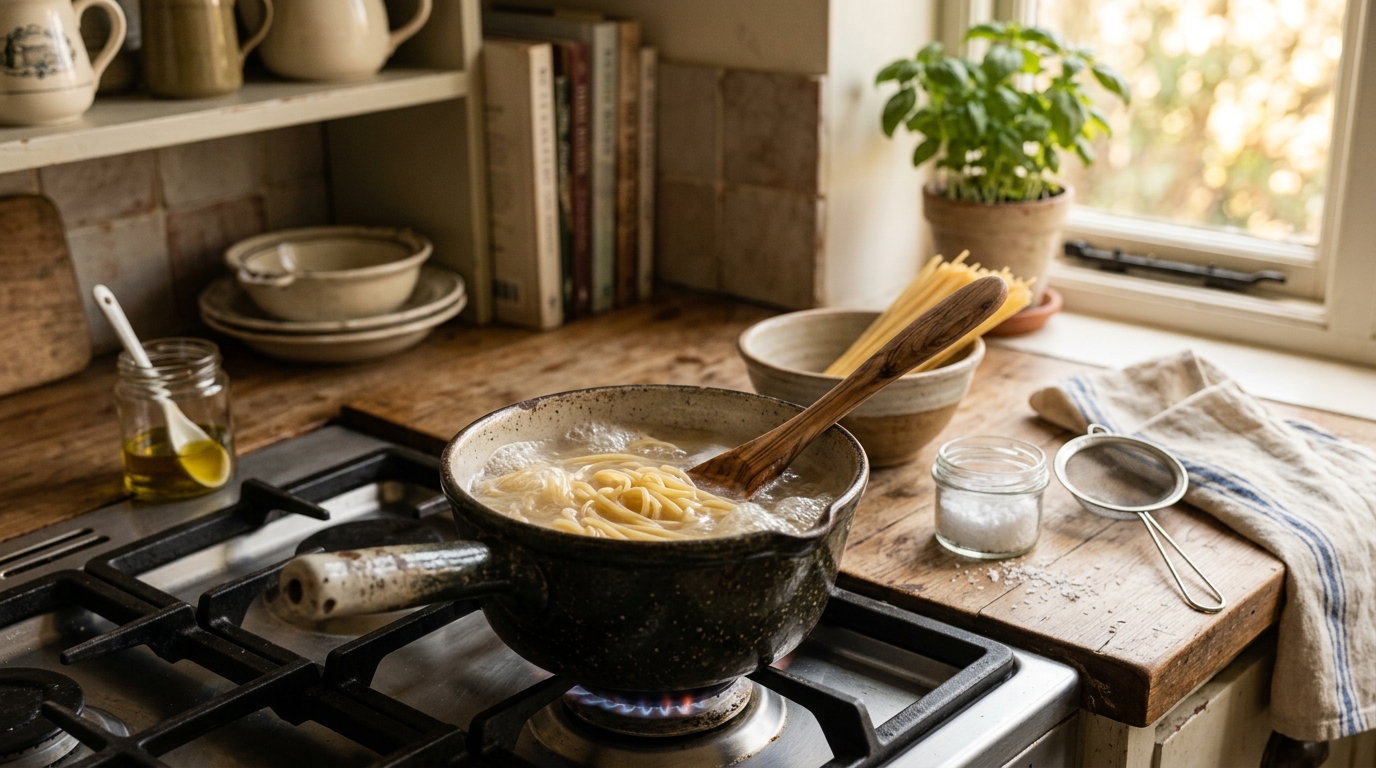
There's a particular frustration that comes with boiling a large pot of water, waiting for it to heat, and then discovering your pasta turned out mushy or unevenly cooked. It feels wasteful, and frankly, it is. But the problem usually isn't the pasta itself—it's the approach most of us inherit without much thought, and never question.
For years, I followed the standard advice: fill a large pot with water, salt it generously, bring it to a rolling boil, add pasta, stir occasionally, and drain when done. It worked, mostly. But it also meant heating enormous amounts of water, waiting impatiently for it to boil, and accepting that some pasta pieces cooked faster than others. The whole process felt inefficient, which it was.
Then I started paying attention to what actually happens when you cook pasta, rather than just following steps. That's when things changed.
Why We Boil So Much Water (And Why We Don't Have To)
The conventional wisdom says you need lots of water—usually a gallon or more per pound of pasta. The reasoning sounds logical: more water means the starch from the pasta won't make the water too cloudy, and the pasta won't stick together. Both of these things are true, technically. But they're not actually problems you need to solve with a gallon of boiling water.
The starch clouding the water? That's not a failure—that's pasta starch doing exactly what it should. That starch is part of what creates the texture of the pasta, and it also helps sauce cling to the noodles. Removing all of it means you end up with slippery pasta that fights to hold onto sauce. The cloudiness you're looking at is actually a sign your pasta is cooking well.
The sticking problem is real, but it's solved by something much simpler than an ocean of water: stirring the pasta in the first minute of cooking. That's it. Most pasta sticking happens in those first moments when the starch on the outside starts to dissolve. Stir for about 60 seconds, and the problem essentially solves itself. After that, a quick stir every couple of minutes is more than enough.
So what does this mean practically? You can cook a pound of pasta in about 2-3 quarts of water instead of a gallon. Two quarts. Not a gallon. This changes everything about the process.
The Real Cost of Excess Water
Let's talk about what "costing you money" actually means. It's not just about wasting a few extra gallons of water, though that adds up. It's the energy required to heat all that water in the first place.
Bringing a gallon of water from cold to a rolling boil takes roughly 15-20 minutes on most stovetops, depending on your burner and pot. Bringing 2-3 quarts takes about 6-10 minutes. That's almost half the time, which means almost half the energy. If you cook pasta twice a week, you're talking about significant energy savings over a year. Over a decade, it's genuinely substantial.
But there's another cost that's less obvious: your time and attention. Every extra minute you're standing there waiting for water to boil is a minute you're not doing something else. That feels minor in a single instance, but these small delays accumulate. They make cooking feel slower and more burdensome than it needs to be.
Less water also heats faster and cools faster, which means you can get dinner on the table more quickly, and you're less likely to have a dangerous pot of boiling water sitting on your stove longer than necessary.
How to Cook Pasta With Less Water (The Right Way)
Here's the specific method that works, tested across different pasta shapes and quantities:
For 1 pound of pasta: Use 2.5 quarts of water and 2 teaspoons of salt. Yes, less salt too, since it's more concentrated in less water. Bring the water to a boil, add the pasta, and stir continuously for exactly 1 minute. After that, stir every 2-3 minutes for the remaining cook time. The pasta will tell you when it's done—taste it a minute or two before the box says, and you'll learn exactly what your preferred texture feels like.
The reason you stir consistently at first is important: when pasta first hits hot water, the outside surface becomes sticky and gelatinous before it hydrates properly. If pieces are touching each other during this phase, they'll bond together. One minute of continuous stirring prevents this. After that, the outside has enough structure to hold its shape, and regular stirring is just maintenance.
You'll notice the water gets noticeably cloudier than you're used to. Don't drain it off. This cloudy water is starch, and if you're making a sauce in the same pot (which you should be), this starch-water is liquid gold. It helps the sauce coat the pasta evenly and creates a silkier texture than sauce alone ever could. Even if you're not making a sauce right in the pot, reserve a cup of this cooking water before you drain the pasta. You'll use it.
Why This Changes Your Pasta Dishes
When you cook pasta with less water and use that starchy water intentionally, your finished dishes taste noticeably better. The sauce clings to the pasta instead of sliding off. The texture is more cohesive. This isn't a subtle difference—it's the reason Italian restaurants use starch water as a matter of course, not a hack.
If you're making a simple sauce (just tomatoes and olive oil, for instance), you're not really finished cooking when the pasta is done. The final step is combining the hot pasta with the warm sauce and tossing it together for a minute, adding a splash of that starch water to help it all come together into one unified dish rather than pasta drowning in sauce.
This single practice—using the cooking water intentionally—elevates basic pasta from "something that tastes okay" to "something that tastes like it was made with intention." And it costs nothing, because you're using water you were going to make anyway.
Different Shapes and Adjustments
The 2.5 quart baseline works well for most long pastas (spaghetti, linguine, fettuccine) and medium pastas (penne, rigatoni). If you're cooking very small pasta (orzo, ditalini), you might reduce slightly to 2 quarts—smaller pieces release starch faster and need less water. For very large pasta or filled pastas (lasagna noodles, ravioli), you can use a bit more water—about 3 quarts—because larger pieces release starch more slowly.
The salt ratio should stay roughly consistent: about 2 teaspoons per 2.5 quarts of water. This makes the water taste noticeably salty, which is the goal. The pasta should taste like "well-seasoned pasta," not like you happened to add a pinch of salt. If you're reducing salt for health reasons, reduce it slightly, but know that the pasta will taste flatter as a result, and you'll need to compensate with more salt in whatever sauce you're making.
The Long View
It might seem strange to focus on how you cook pasta. It's such a simple, ordinary thing. But these ordinary moments are where most of our cooking actually happens. The everyday meals matter more than the occasional fancy dinner, both in terms of time and resources. Small improvements to how you do these routine tasks compound over time into real savings and better results.
This approach to pasta cooking came from people who cooked pasta several times a week, every week, for decades. They worked out what actually worked versus what was just tradition. They cared about efficiency because their time and resources mattered. These were not professional cooks in a restaurant with unlimited budgets. They were home cooks solving real problems.
That's the value of learning how things actually work instead of just following steps. Once you understand why less water works better for pasta, you start questioning other assumptions in your kitchen. You start paying attention to whether the conventional wisdom actually serves you, or whether you're just doing things the way you've always done them because that's what you were told to do.
The next time you cook pasta, try it with 2.5 quarts of water instead of a gallon. Stir consistently for that first minute. Notice how much faster the water boils. Pay attention to how the pasta actually cooks. Taste the cooking water and recognize what that starch does for your sauce. Then notice whether your finished dish tastes better, and whether the whole process felt more manageable.
You might find that this small change is enough to make cooking feel a little less like a chore and a little more like something you understand and control. That matters.
Related articles

Stop Peeling Garlic the Hard Way – There's a 10-Second Trick
Learn the simple jar-shaking technique that loosens garlic skin in seconds, plus why this method works and how to make it part of your kitchen routine.

Never Throw Away Lemon Halves After Squeezing – Here's Why
Those spent lemon halves hold surprising power. Learn how to extract their full value for your kitchen, home, and health.
If Your Onions Make You Cry Every Time, Try This First
Stop dreading onion prep. Learn why onions make you cry and discover the real, surprisingly simple solutions that actually work in a home kitchen.