
Grandma Knows: How to Remove Oil Stains from Clothes
Oil stains on clothes resist water but respond well to the right treatment. Learn how baking soda and dish soap remove oil from fabric effectively.
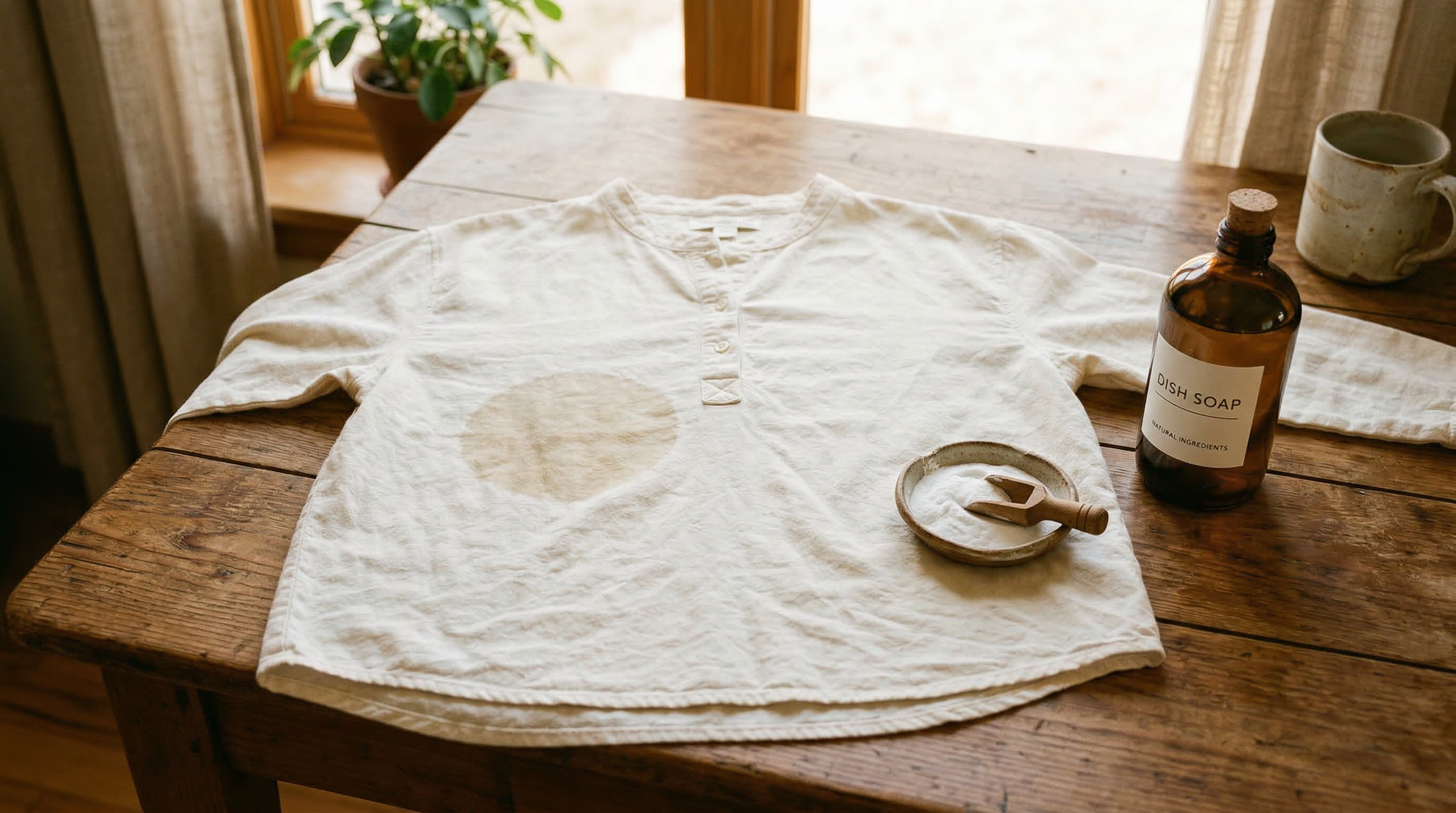
Oil stains have a quality that makes them particularly frustrating: they're often invisible until after a garment has been washed and dried. A drop of cooking oil or salad dressing lands on a shirt, appears to blend into the fabric, and seems like nothing. Then, after laundering, a dark, translucent stain becomes clearly visible — often permanently set by the heat of the dryer.
The chemistry is straightforward once understood. Oil doesn't mix with water, so it isn't affected by washing with water and standard detergent alone. It needs to be treated with a surfactant before laundering, and ideally before any heat is applied.
The Invisible Oil Stain Problem
Oil darkens fabric slightly when wet, but this effect can be subtle — particularly on mid-toned or patterned fabrics. When a garment enters the washing machine, the water and detergent may remove surface dirt but leave the oil behind. The tumbling and heat of the dryer then bake the oil into the fabric fibers, making it much more visible and much harder to remove.
This is why developing the habit of treating potential oil spots immediately — even when the stain isn't obvious — saves garments from the dryer-set oil problem.
Don't Add Water First
Water doesn't dissolve oil. Adding water to a fresh oil stain before treating it with a surfactant doesn't help and may slightly hinder treatment by wetting the fabric and changing how it absorbs the cleaning agents. Start with dry absorption instead.
Absorb the Oil First
For a fresh oil stain, apply an absorbent powder immediately. Baking soda, cornstarch, or talcum powder all work. Sprinkle a generous amount directly onto the stain and press gently into the fabric with your fingers. Do not rub. Let it sit for at least fifteen to thirty minutes — longer for heavier oil deposits.
The powder draws oil out of the fabric through physical absorption. As it works, the powder will begin to clump or change texture. Brush it off gently and reapply if the stain still feels oily to the touch. Repeat this step until the powder no longer darkens or clumps on the stain.
Dish Soap: The Essential Treatment
After absorption, apply dish soap directly to the stain. A generous amount — enough to cover the stain area — works better than a thin application. Work it into the fabric with your fingers or a soft brush, using gentle circular motions from the outside of the stain inward.
Let the dish soap sit for ten to fifteen minutes. The surfactants in dish soap surround oil molecules and allow them to be lifted away with water. This is the same chemistry that makes dish soap effective on greasy kitchen items, applied to fabric.
Rinse with warm water — slightly warm, not hot. Warm water makes oils slightly less viscous and improves surfactant activity, both of which help the rinse be more effective. Check the stain after rinsing. Repeat the dish soap treatment if any oiliness remains before laundering.
For Dried or Set Oil Stains
An oil stain that has dried — but not been through a dryer — can often be treated effectively, though it requires more time. Apply dish soap to the dry stain and work it in thoroughly, then cover with a layer of baking soda. The baking soda provides mild abrasion and helps the soap penetrate the dried oil layer. Let this sit for thirty minutes to an hour before rinsing.
For older oil stains, warming the stained area slightly with a hair dryer on a low setting can re-liquefy dried oil enough to make it treatable. Apply dish soap to the slightly warmed stain, let it sit, then treat normally. This counterintuitive use of heat is for loosening dried oil only — stop applying heat once you begin cleaning.
Engine Oil and Heavy Grease
Cooking oil and engine oil require the same basic approach, but engine oil is denser and often more fully saturated into fabric. For work clothes with heavy machine oil stains, WD-40 or a similar light machine oil applied before dish soap can help re-liquefy dried deposits. This seems paradoxical — applying oil to an oil stain — but it works by dissolving the dried oil compounds back into a liquid state that the subsequent dish soap can then emulsify.
Salad Dressing and Compound Stains
Many common oil stains come from salad dressings, which combine oil with vinegar, herbs, and sometimes egg yolk. The vinegar component is water-soluble and comes out with washing. The oil and egg components require the surfactant approach. Any remaining color from herbs or spices may need a separate treatment after the fat is removed — a small amount of white vinegar applied after the oil is gone can address herbal pigments.
Synthetic Fabrics
Synthetic fabrics like polyester and nylon can be particularly prone to oil stain retention because their nonpolar surface has an affinity for oil. These fabrics often need more repeated treatments than natural fabrics. Applying dish soap, rinsing, and checking multiple times before laundering gives better results than a single application.
The Final Check
Oil stains on wet fabric look different from oil stains on dry fabric. After washing, take the garment out of the machine and check the stained area before it goes in the dryer. Run your fingers over it — remaining oil has a subtle slickness. Hold the fabric up to a light source. If the stain is still present, treat it again before drying. Once heat-set, oil stains in synthetic fabrics particularly can be very difficult to fully remove.
Related articles
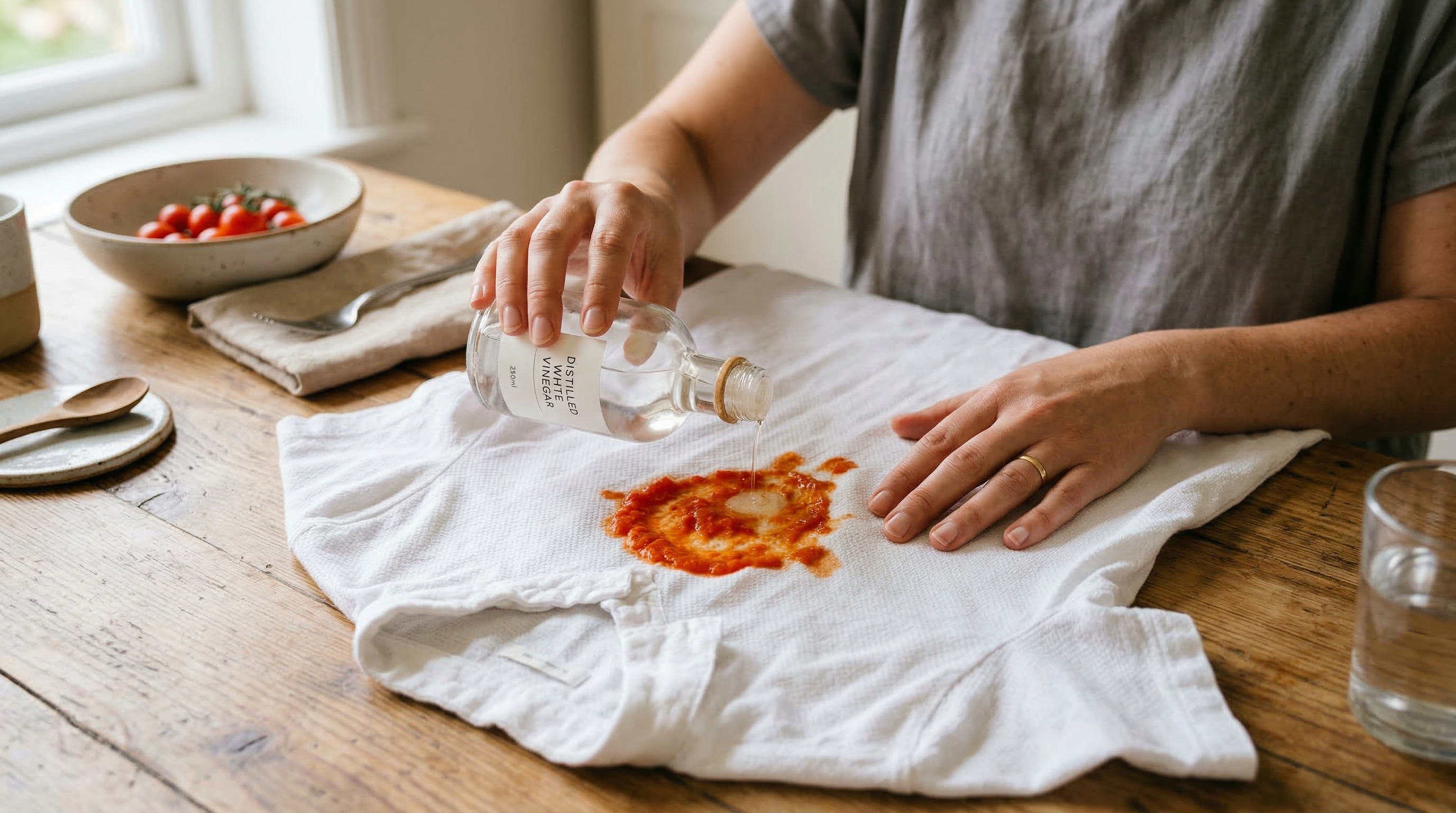
Grandma Knows: How to Remove Tomato Sauce from Clothing
Tomato sauce stains are vivid and quick to set. Learn the right sequence of treatments to remove tomato stains from clothing before they become permanent.
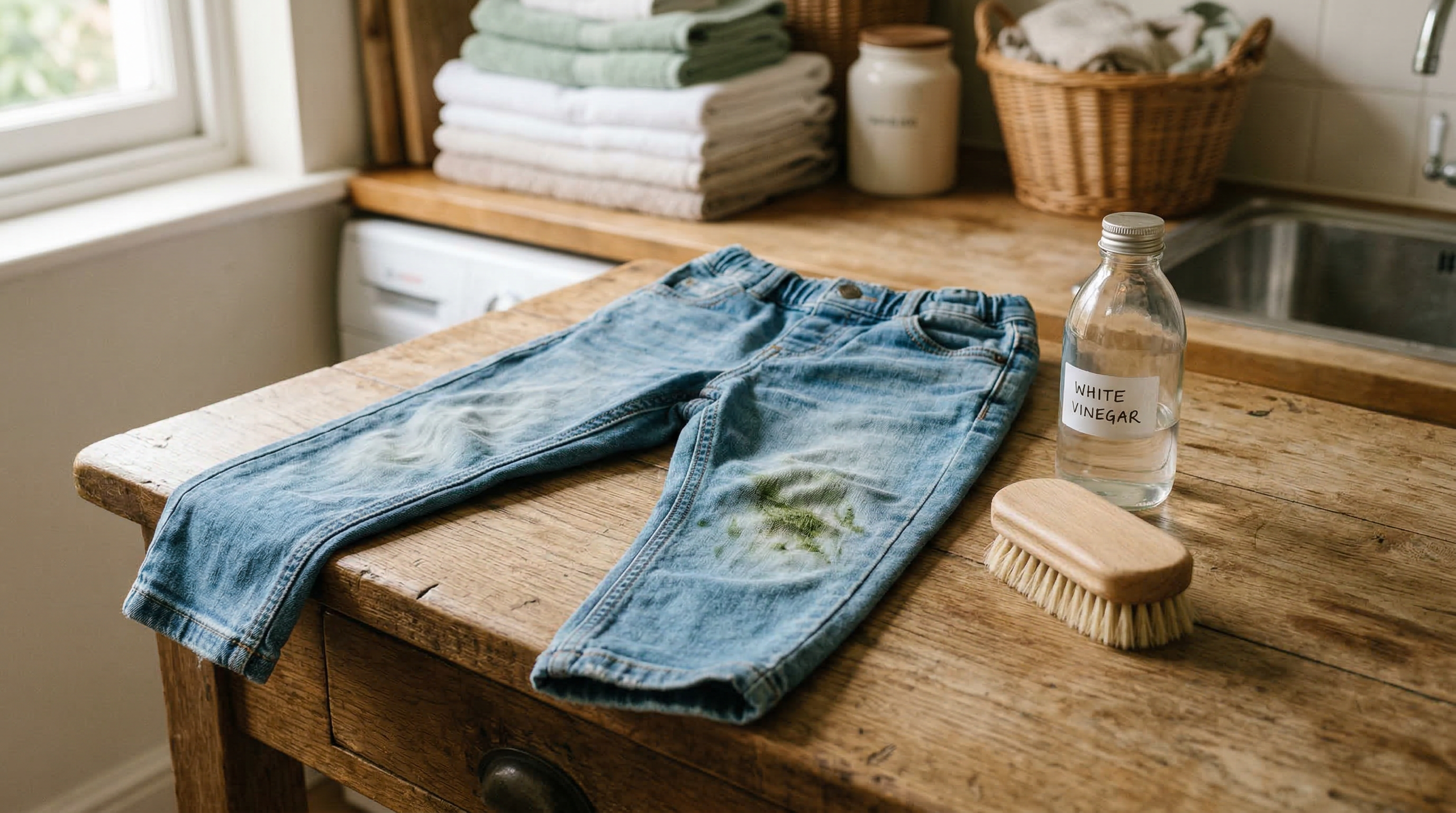
Grandma Knows: How to Remove Grass Stains from Clothes
Grass stains on clothes are stubborn but very treatable. Learn the household methods that break down chlorophyll and get fabric clean again.
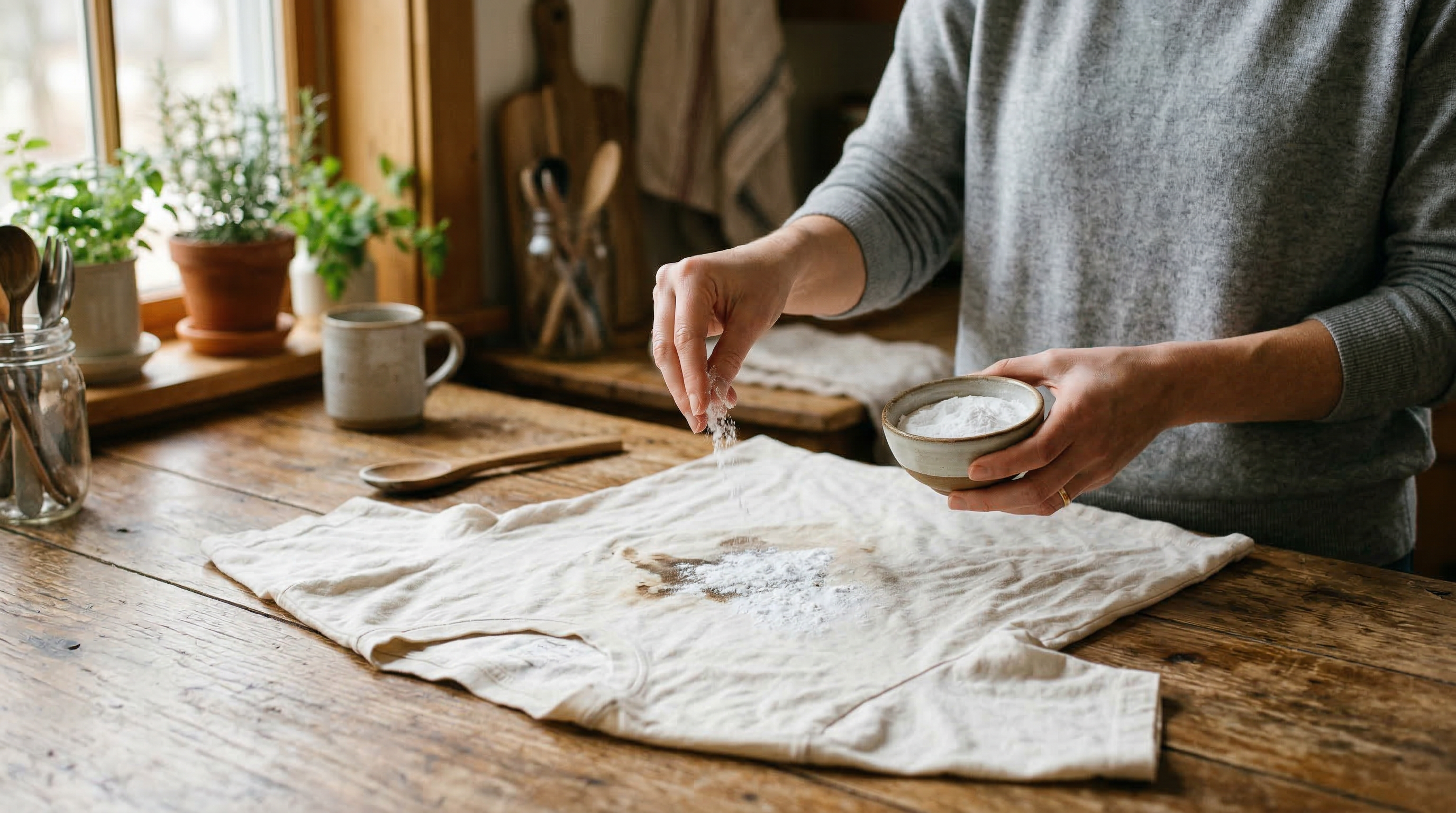
Grandma Knows: How to Remove Grease from Clothes
Grease stains on clothes are tricky but not impossible. Discover proven household methods using baking soda, dish soap, and patience.