
Grandma Knows: How to Use Salt for Cleaning
Salt is one of the most useful cleaning tools in any home. Learn how to use it on stains, odors, pots, drains, and more with practical step-by-step guidance.

Salt is one of those things that most people walk right past when they're thinking about cleaning supplies. It sits in a small container near the stove, mostly thought of as a cooking ingredient. But for a very long time — before spray bottles, before branded cleaners, before the cleaning supply aisle existed at all — salt was one of the most relied-upon tools for keeping a home clean and orderly.
It isn't magic. It works because of some straightforward physical and chemical properties that make it genuinely useful in specific situations. Understanding why it works helps you use it more confidently, and it helps you avoid wasting your time in situations where something else would serve you better.
This guide focuses on real household situations where salt earns its place — with enough detail to actually get the job done.
Why Salt Works as a Cleaning Agent
Salt is a mineral — sodium chloride — and it has a few properties that make it useful for cleaning. First, it is abrasive. The crystals have edges that can scrub without scratching most surfaces the way harsher abrasives would. This makes it useful for loosening stuck-on residue without damaging what's underneath.
Second, salt draws out moisture through a process called osmosis. When you apply salt to something wet — like a fresh stain — it pulls the liquid upward and away from the fibers or surface. This is why acting quickly with salt on a spill can prevent a stain from setting deep.
Third, salt creates an environment that is hostile to bacteria and mold. It disrupts the water balance inside microbial cells, which is the same reason it has been used to preserve food for centuries. This property makes it useful for places in the home where bacteria and mold tend to grow.
Finally, salt combined with other common household ingredients — particularly lemon juice and white vinegar — can enhance the cleaning power of both. These combinations are not gimmicks. The acid in lemon and vinegar helps break down mineral deposits and grease, while the salt adds abrasion and antimicrobial action.
Using Salt on Fresh Stains
The most important word when using salt on a stain is fresh. Salt works best on stains that are still wet or only partially dry. Once a stain has fully set into fabric fibers, salt alone will not lift it. This is worth understanding clearly so you know when to reach for it.
For liquid spills on fabric — whether it's a tablecloth, a cloth napkin, upholstery, or clothing — the process is simple but timing matters.
- Blot up as much of the liquid as possible first using a clean cloth. Press firmly but do not rub, which pushes the stain deeper into the fibers.
- While the area is still damp, pour a generous amount of fine table salt directly over the stain. Use enough to cover the stain completely with a visible layer.
- Leave it in place for several minutes — anywhere from five to fifteen minutes depending on how much liquid was absorbed. You will often see the salt begin to change color as it draws the stain out of the fabric.
- Brush or shake off the salt, then rinse with cold water. Warm or hot water can set protein-based stains like blood or egg, so use cold water as a default.
- Follow with your usual washing method for the item.
Red wine is probably the most well-known application for this method, and it does work well when you act quickly. The salt draws the wine up before it has time to bond with the fabric. Coffee and tea respond similarly. Fruit juice and berry stains also respond well to this approach.
Blood stains are a slightly different situation. Salt still helps here, but cold water is critical. Hot water causes blood proteins to coagulate and bond more firmly to fibers. Apply salt, let it sit briefly, then rinse only with cold water.
Cleaning Cast Iron and Heavy Pans
Cast iron cookware requires a different kind of care than standard pots and pans. You don't want to use soap on a seasoned cast iron skillet if you can help it, because soap breaks down the protective oil layer that keeps the pan non-stick and rust-free. This is exactly where salt becomes useful.
When a cast iron skillet has stuck-on food residue, pour a tablespoon or two of coarse salt into the pan while it is still slightly warm but cool enough to handle safely. Use a folded paper towel or a stiff brush to scrub the residue with the salt. The coarse crystals act as an abrasive that lifts the residue without stripping the seasoning the way soap would.
After scrubbing, wipe the pan clean with a dry cloth or paper towel. If needed, rinse very briefly with plain water, then dry the pan immediately and thoroughly on the stove over low heat. Apply a light coat of cooking oil before storing.
This same salt-scrub method works well on other heavy pans where you want light abrasion without chemical cleaners — including enamel-coated Dutch ovens with stubborn residue at the bottom, though you should be gentler there to protect the enamel surface.
Cleaning the Inside of a Wooden Cutting Board
Wooden cutting boards absorb liquid, which means they can develop odors and bacteria over time even when washed regularly. Soap helps on the surface, but salt and lemon together can reach a bit further into the wood grain and address the odor at a deeper level.
Sprinkle a layer of coarse salt across the surface of the board after its regular wash. Cut a lemon in half and use it as a scrubbing tool, pressing the cut side down and working it across the salt in circular motions. The lemon juice mixes with the salt to create a mildly acidic scrub that deodorizes, lifts surface staining, and works against bacteria.
Let the mixture sit on the board for a few minutes before scraping it off and rinsing with water. Dry the board standing upright rather than flat, so air can circulate on both sides and prevent warping.
This is a particularly useful routine for boards that have been used for onions, garlic, or fish — the kinds of strong odors that tend to linger despite regular washing.
Unclogging and Deodorizing Drains
A slow or sluggish drain is usually caused by a buildup of grease, soap residue, and general organic matter. Salt helps here in combination with boiling water, and in some cases with baking soda as well.
For routine drain maintenance — not a fully blocked drain, but one that's draining slowly — pour half a cup of salt directly down the drain. Follow immediately with a full kettle of boiling water. The heat and the salt together help dissolve grease buildup on the interior walls of the pipe. For a kitchen drain that sees a lot of cooking grease, doing this once a week or every two weeks can prevent slow draining from becoming a real problem.
For stronger results, add half a cup of baking soda before the salt, then pour the boiling water over both. The baking soda and salt together create a more thorough scrubbing action as the water moves through.
It is worth being clear that this method will not clear a fully blocked drain. If water is standing completely still with no movement at all, a different approach is needed. But for prevention and mild buildup, this routine is genuinely effective and causes no harm to standard pipes.
Removing Rust Stains from Enamel and Porcelain
Rust stains in sinks, bathtubs, and toilet bowls are caused by iron particles in water oxidizing on contact with the surface. They are particularly common in homes with older pipes or areas with high iron content in the water supply.
Salt mixed with lemon juice or white vinegar makes a useful paste for these stains. The acid dissolves the iron oxide that forms the rust stain, while the salt provides the abrasion to lift the loosened residue.
Apply enough salt to cover the stain, then squeeze lemon juice over it to form a paste. Let it sit for at least thirty minutes, or up to a few hours for older, more set-in stains. Use a cloth or soft brush to scrub, then rinse thoroughly.
On enamel and porcelain, avoid anything too harsh or abrasive that could scratch the surface gloss. The salt crystals used here are fine enough for this application as long as you're not bearing down with heavy pressure. Gentle, patient scrubbing works better than aggressive force on these surfaces.
This method works well on light to moderate rust staining. Deeply embedded rust that has been there for years may require a commercial rust remover, but for the kind of rust rings and stains that accumulate in a normal household, the salt and lemon approach handles most of it.
Refreshing and Cleaning Refrigerator Shelves
The inside of a refrigerator sees spills, condensation, and slow-forming odors from food stored over time. Commercial refrigerator cleaners exist, but many people prefer not to use strong chemical cleaners inside a space where food is kept.
A solution of warm water and salt makes a gentle but effective cleaning rinse for refrigerator shelves, drawers, and walls. Mix about a tablespoon of salt into a bowl of warm water and use a soft cloth to wipe down all surfaces. The mild abrasive nature of the dissolved salt helps lift residue without scratching the plastic interior, and it leaves no chemical smell behind.
For specific odors from spilled liquids or foods that have been sitting, apply salt directly to the spill, let it sit for a few minutes to absorb both the moisture and some of the odor, then wipe away. Follow with the saltwater rinse.
This is best done during a routine fridge cleanout — when you remove everything, wipe it down, check expiration dates, and reorganize. Doing this once a month or every six weeks keeps odors from building up and prevents the kind of sticky residue that becomes much harder to clean if left too long.
Treating Grease Splatter on Stovetops
A stovetop collects grease splatter during everyday cooking, and if it isn't addressed regularly, that grease bakes onto the surface and becomes progressively harder to remove. Salt is useful here not as a substitute for a proper stovetop cleaner, but as part of the daily routine that keeps the problem manageable.
While the stovetop is still warm — not hot, but warm — sprinkle a small amount of fine salt directly onto greasy areas. Let it sit for a minute or two, then wipe with a damp cloth. The salt absorbs some of the grease and provides light abrasion that loosens it from the surface before it has a chance to fully harden.
On gas stoves with grates, the grates themselves can be sprinkled with salt and scrubbed with a damp brush. On smooth electric or induction cooktops, use fine salt carefully to avoid scratching the glass surface, and use a soft cloth rather than a brush.
This works best as a regular habit — a quick wipe after cooking — rather than as a heavy-duty cleaner for built-up stovetop grime. For that, something stronger is usually necessary.
When Salt Is Not the Right Choice
It helps to know the limits of any cleaning method, and salt is no different. There are situations where it simply isn't the right tool.
- Salt can be corrosive to metals over time. Avoid leaving salt pastes or solutions sitting on metal surfaces for long periods, particularly stainless steel, as it can cause pitting.
- Salt is not effective on dried, set-in stains. Once a stain has fully bonded with fabric fibers, osmosis alone cannot pull it out. An enzyme-based cleaner or oxygen bleach is more appropriate.
- On delicate fabrics — silk, wool, certain synthetic blends — abrasive scrubbing with salt can damage the fibers. Use with caution or not at all on these materials.
- Salt does not disinfect in the way that alcohol or bleach-based cleaners do. It reduces bacterial growth in certain conditions, but it is not a substitute for proper disinfection on surfaces that come into contact with raw meat or illness.
- For fully blocked drains, salt and boiling water are preventive measures, not a cure. A mechanical approach — a drain snake or plunger — is what's needed there.
Used in the right situations and at the right time, salt is a genuinely useful cleaning tool that costs almost nothing and requires no special handling or storage. The value is in knowing exactly when it earns its place — and when something else is the better choice.
Related articles
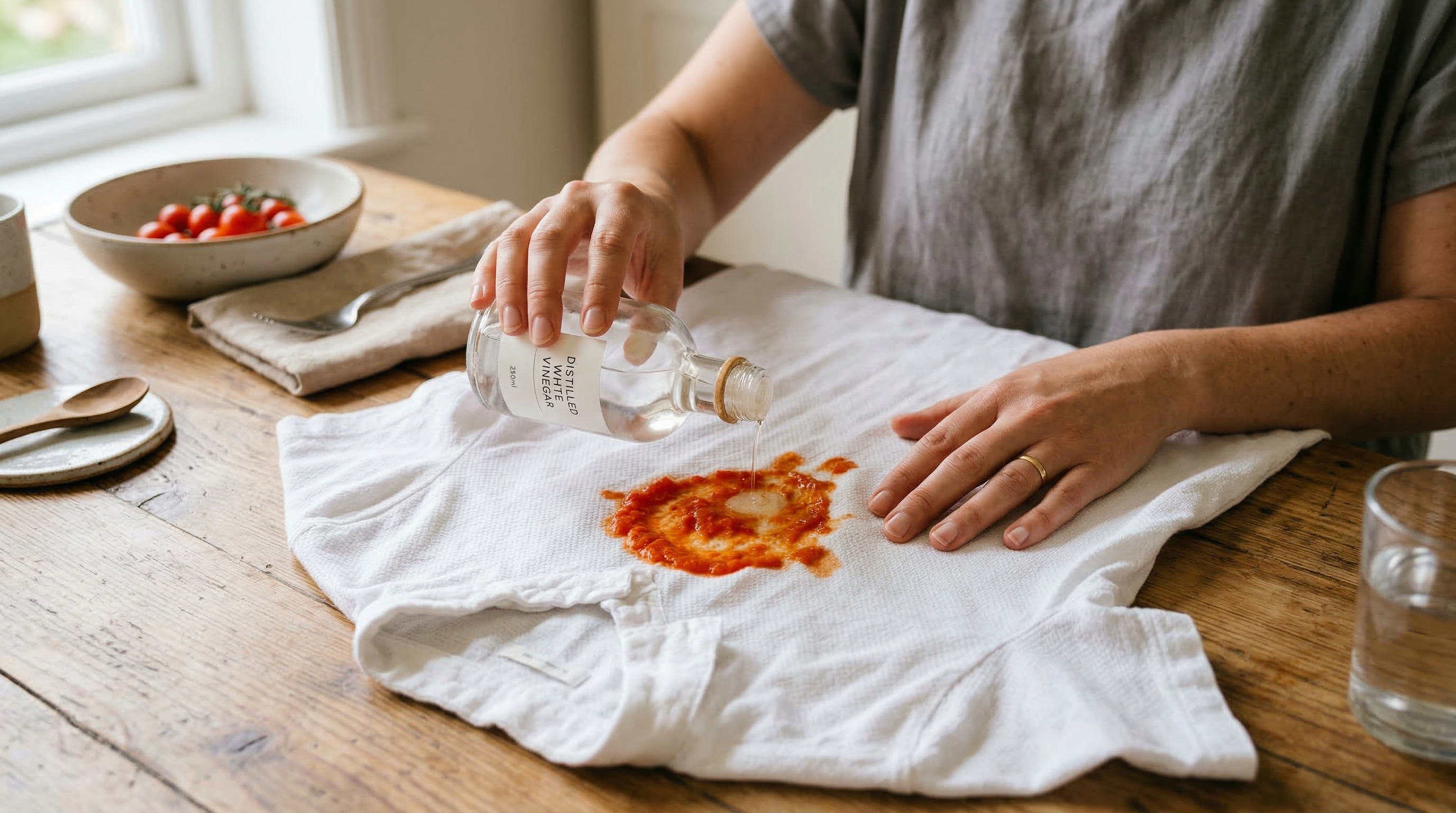
Grandma Knows: How to Remove Tomato Sauce from Clothing
Tomato sauce stains are vivid and quick to set. Learn the right sequence of treatments to remove tomato stains from clothing before they become permanent.
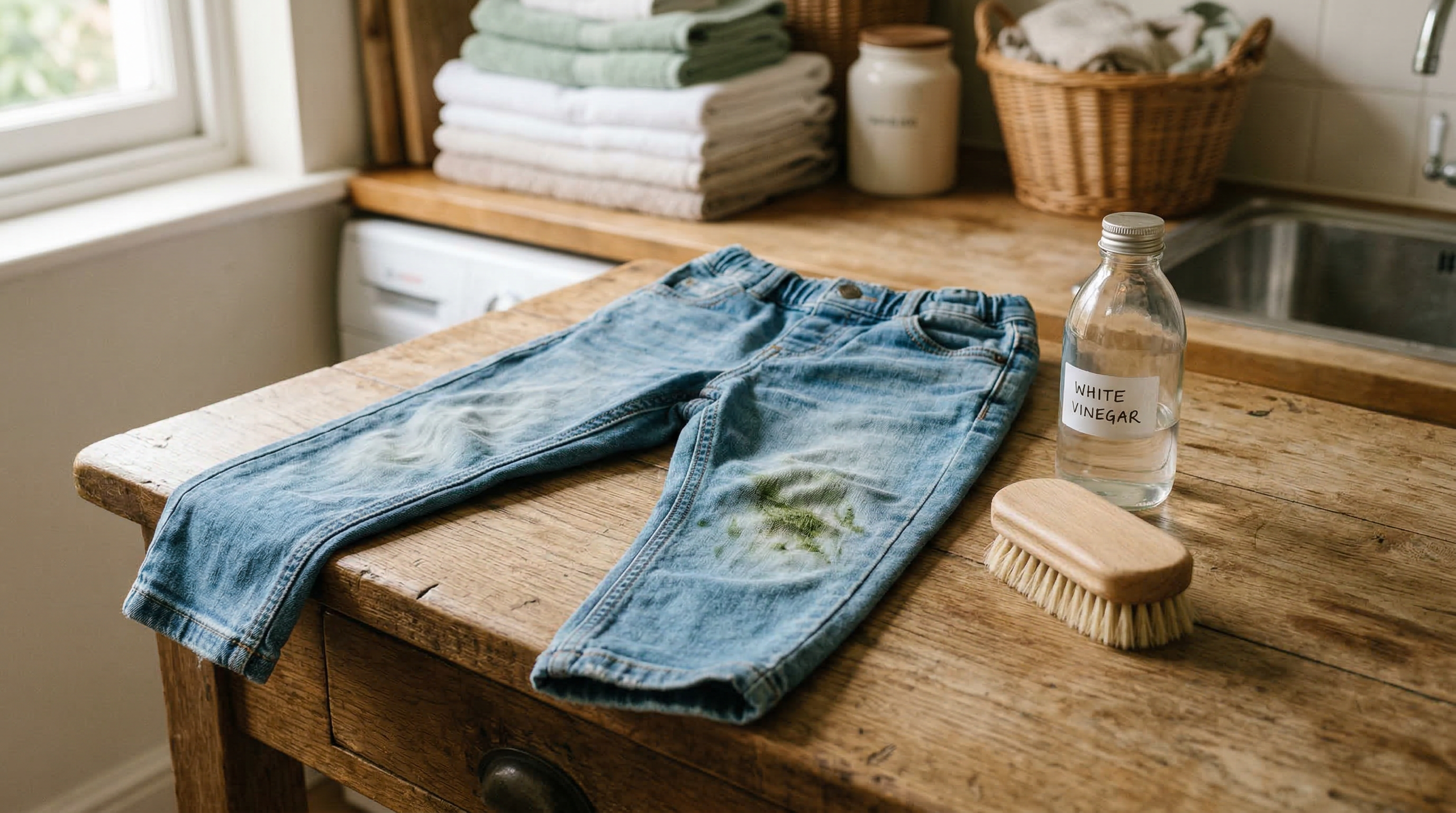
Grandma Knows: How to Remove Grass Stains from Clothes
Grass stains on clothes are stubborn but very treatable. Learn the household methods that break down chlorophyll and get fabric clean again.
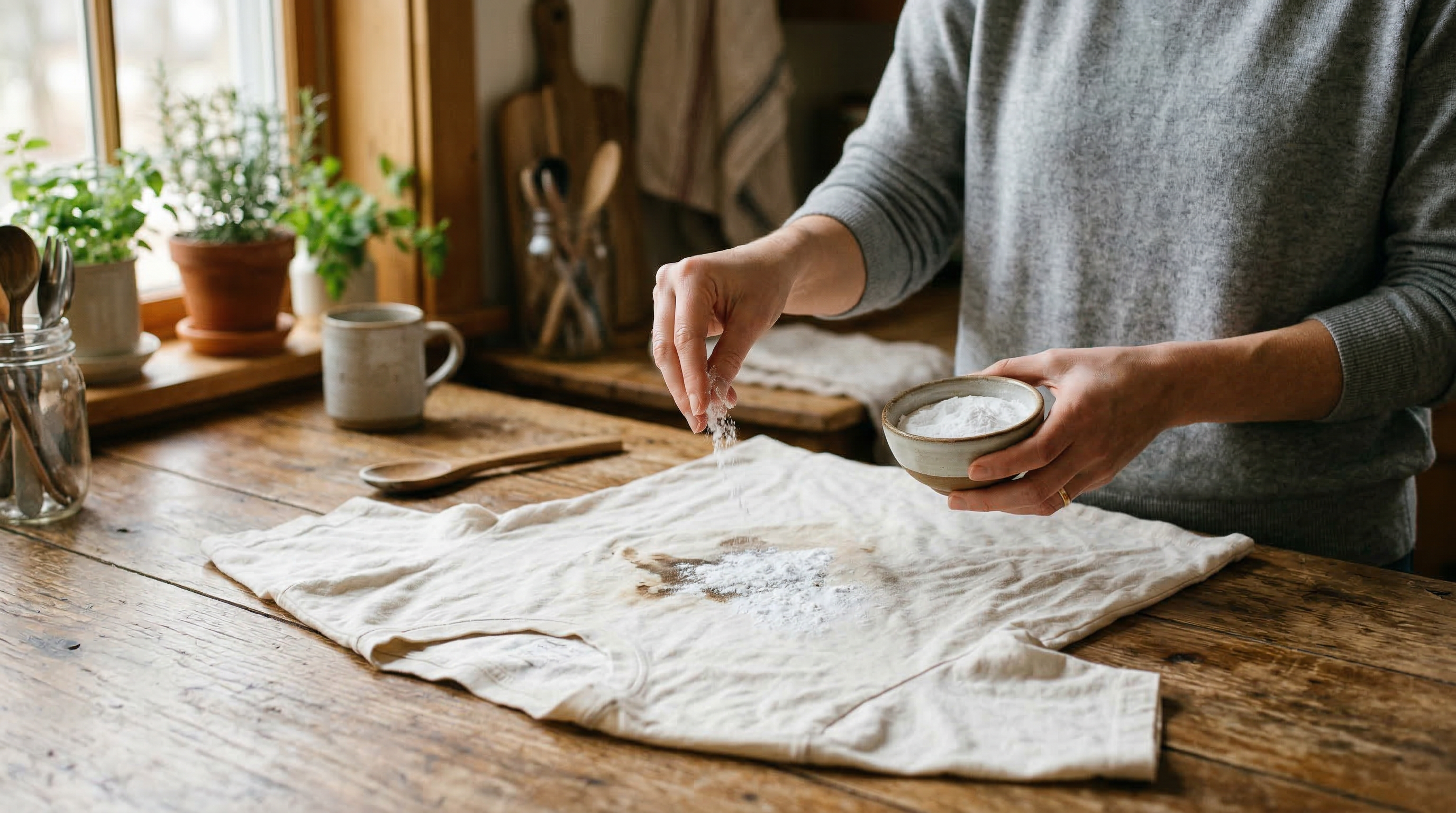
Grandma Knows: How to Remove Grease from Clothes
Grease stains on clothes are tricky but not impossible. Discover proven household methods using baking soda, dish soap, and patience.