
Grandma Knows: How to Use Lemon for Cleaning
Learn how to use lemon for cleaning around the house — from limescale and grease to odors and stains. Practical methods that really work.

There is something almost perfect about a lemon. It smells clean without being sharp, it is strong enough to cut through grease, and it is gentle enough to use on surfaces you care about. It has been sitting in home kitchens for generations not just for cooking, but for keeping things clean, fresh, and working the way they should.
The reason lemon works so well as a cleaner comes down to its chemistry. Lemon juice is naturally acidic, with a pH of around two to three. That level of acidity is high enough to dissolve mineral deposits, break down grease films, kill certain bacteria, and lift tannin-based stains. At the same time, it is mild enough that it will not corrode most household surfaces the way stronger acids would.
Understanding why it works helps you use it in the right situations — and avoid using it where it could cause problems. Not every surface responds well to acid, and knowing the difference saves you from making a small mess worse.
What Lemon Actually Does to Dirt and Buildup
Most household grime falls into a few categories: mineral deposits from hard water, grease and oil residue, organic stains from food or drink, and biological growth like mold or mildew. Lemon juice addresses most of these, but in different ways.
Mineral deposits — the chalky white film around your faucets, inside your kettle, or on your showerhead — are alkaline by nature. Hard water leaves behind calcium and magnesium carbonates as it evaporates. An acid like lemon juice reacts with these carbonates and dissolves them. That is the same basic chemistry that makes vinegar useful for limescale, but lemon juice also leaves a cleaner smell and is slightly less harsh on chrome and plated finishes.
Grease responds to lemon differently. The acidity helps break apart the fatty molecules enough to loosen their grip on surfaces, especially when combined with a small amount of salt or baking soda for gentle abrasion. On its own, lemon juice works better as a degreaser on light buildup than on heavy cooking grease that has been baked on for months.
Tannin stains — the brownish marks left by tea, coffee, or red wine — are also vulnerable to citric acid, which helps lift and lighten them. This is why rubbing a cut lemon on a tea-stained mug often brings results that dishwashing liquid alone cannot.
Cleaning the Kitchen with Lemon
Cutting Boards
Wooden cutting boards absorb odors over time. Garlic, onion, raw fish — these smells sink into the grain of the wood and linger long after washing. Rubbing the surface with a cut lemon, cut-side down, pulls much of that odor out. The acid also has a mild antibacterial effect on surface bacteria, though it is not a substitute for proper cleaning with hot water and soap.
For deeper deodorizing, sprinkle a small amount of coarse salt onto the board first. The salt acts as a gentle abrasive, helping the lemon juice work into the grain more effectively. Let the juice sit for two to three minutes, then rinse thoroughly with warm water and allow the board to dry upright so air circulates on both sides.
This method works particularly well after cutting raw meat or strongly scented vegetables. It does not replace sanitizing, but it does make a noticeable difference in how the board smells over time.
The Microwave
Splattered food inside a microwave dries and hardens quickly, and it tends to trap smells. A lemon can loosen both with very little effort.
Fill a microwave-safe bowl with about a cup of water and squeeze in the juice of half a lemon. Drop the spent lemon half into the bowl as well. Microwave on high for three minutes, then leave the door closed for another five minutes. The steam from the lemon water softens dried food residue, and the citric acid in the steam helps neutralize odors at the same time.
After five minutes, open the door and wipe down the interior with a damp cloth. Most food particles will wipe away without scrubbing. The turntable plate can be removed and washed normally.
Grease Around the Stovetop
A light film of cooking grease builds up around burners and on the surrounding surface more quickly than most people notice. It collects dust and becomes sticky, then darker over time.
For fresh or light grease, squeezing lemon juice directly onto the area and letting it sit for five minutes before wiping is often enough. For stickier buildup, mix lemon juice with a small amount of dish soap and apply with a sponge. The acid starts breaking apart the grease, and the soap helps lift and rinse it away.
Avoid using this method on the burners themselves or on gas ignitors. Stick to the surrounding enamel or stainless steel surfaces where grease tends to pool.
Tea and Coffee Stains on Mugs
The inside of a frequently used mug develops a tannin stain that ordinary washing does not fully remove. It is not harmful, but it looks dingy and can affect the taste of the next drink if the stain is heavy.
Squeeze a small amount of lemon juice into the mug and add a pinch of salt. Use a soft cloth or your fingers to rub the mixture around the inside of the mug for about a minute. Rinse well with warm water. For stubborn staining, let the lemon juice sit for ten minutes before scrubbing.
This also works on teapot interiors and the inside of glass carafes, which develop a brownish film over time even when washed regularly.
Cleaning the Bathroom with Lemon
Limescale on Faucets and Fixtures
If you live in an area with hard water, mineral buildup on faucets is a constant battle. It forms at the base of fixtures, around the aerator, and anywhere water sits and then evaporates. Left alone, it thickens over months into a rough, white crust that becomes harder to remove.
Cut a lemon in half and press the cut side directly against the affected area. For a faucet spout or aerator, you can slice the lemon and wrap the slices around the fixture, then secure them with a small rubber band or piece of plastic wrap to hold them in place for twenty to thirty minutes.
The citric acid works into the deposit during that time and dissolves enough of the mineral layer to wipe or scrub away. For moderate buildup, one application is usually sufficient. For heavier deposits that have been building for months, you may need to repeat the treatment two or three times over consecutive days, or soak a cloth in lemon juice and lay it against the area for a longer period.
After treating, rinse the area thoroughly with clean water and dry it. Leaving acid residue on chrome or plated fixtures for too long can dull the finish, so rinsing promptly matters.
Shower Doors and Glass
Hard water leaves streaks and spots on glass shower doors that look cloudy even after wiping. These are the same mineral deposits as on fixtures — just spread more thinly across a larger surface.
Squeeze lemon juice onto a soft cloth and wipe down the glass surface. Let it sit for five minutes, then rinse with water and buff dry with a clean cloth. The key step here is the buffing. Wiping the glass dry immediately after rinsing prevents new water spots from forming before the glass has a chance to dry on its own.
This works best as regular maintenance — doing it once a week or every two weeks keeps the buildup from becoming heavy. If the glass has been neglected for a long time, you may need a stronger approach for the initial cleaning and then maintain with lemon afterward.
Mold on Tile Grout
Grout in a shower or around a bathroom sink is porous, which makes it a common place for mold to take hold. The citric acid in lemon juice has some effect on surface mold, particularly the lighter pinkish or early-stage black mold that appears in corners and along grout lines.
Apply lemon juice directly to the affected grout lines and let it sit for ten to fifteen minutes. Then scrub with an old toothbrush using small circular strokes. Rinse and check the result. For moderate mold, this will lighten or remove it.
For heavy or deeply embedded mold — especially the kind that has turned grout from white to dark gray or black all the way through — lemon alone will not be sufficient. In those cases, a diluted bleach solution or a commercial grout cleaner is a more appropriate tool. Lemon works best for early-stage mold or as part of a regular cleaning routine that prevents mold from taking hold deeply.
Freshening and Deodorizing with Lemon
The Refrigerator
A refrigerator picks up food odors over time, particularly from strong cheeses, leftovers, and produce that has passed its peak. Placing a half lemon cut-side up on a small dish on one of the shelves absorbs some of these odors over two to three days. Replace it when it dries out.
For a more thorough refresh, wipe down the interior walls and shelves with a cloth dampened with diluted lemon juice — about a tablespoon of juice in a cup of warm water. This leaves the interior smelling clean without introducing any chemical scent. It is also completely safe around food.
The Garbage Disposal
A kitchen garbage disposal can develop a persistent smell from food residue that collects under the splash guard and along the grinding chamber walls. Dropping a few lemon peels into the running disposal every week or two helps control this.
The peels clean the grinding mechanism as they break apart, and the oils in the lemon rind release a fresh scent. Run cold water during and after the process. This is a simple habit that takes about thirty seconds and makes a real difference over time.
Musty Smells on Surfaces
A wooden surface — a shelf, a drawer interior, an old bread box — can develop a faint musty smell that is hard to locate and harder to eliminate. Wiping the surface with diluted lemon juice, letting it air dry completely, and then repeating the process once more usually resolves it. The acid helps neutralize the organic compounds responsible for that stale smell.
The surface must dry completely between treatments and after the final one. Leaving moisture behind in wood encourages the same kind of microbial growth that caused the smell in the first place.
When Lemon Is Not the Right Choice
Lemon juice is acidic, and some surfaces do not tolerate acid well. Natural stone surfaces — marble, granite, travertine — are composed largely of calcium carbonate, the same mineral that makes up limescale. Applying lemon juice to marble, for example, will etch and dull the surface. This damage is permanent without professional restoration.
Cast iron cookware should also never be cleaned with lemon juice. The acid strips the seasoning that makes cast iron non-stick and prevents rusting. Any acid-based cleaner will do this, not just lemon.
Brass fixtures that are lacquered should be avoided as well. The lacquer is there to protect the underlying metal, and acid can lift or cloud it. Unlacquered brass is a different matter — lemon juice with salt is actually an old and effective method for polishing it.
On painted walls or delicate fabrics, test a small hidden area first. Lemon juice can lighten some dyes and painted finishes, which is useful for certain stain-removal tasks but potentially damaging if the surface is one you want to preserve.
Getting the Most from Your Lemons
A lemon that has already been squeezed for cooking is still useful for cleaning. The spent half still holds enough juice and citric acid to tackle a faucet, wipe down a cutting board, or scrub a mug. Keeping spent lemon halves in a small dish near the sink means they are always within reach when a quick cleaning task comes up.
Lemon juice can also be squeezed in advance and stored in a small jar in the refrigerator for up to a week without losing much of its cleaning power. This is useful if you prefer to have it ready without cutting a fresh lemon each time.
Combining lemon juice with baking soda produces a fizzing reaction that provides a burst of cleaning action. The fizz helps lift light surface grime from grout and sink basins. However, the reaction also neutralizes the acid somewhat, which reduces the limescale-dissolving effect. For mineral deposits, use lemon juice on its own. For surface scrubbing, the lemon-and-baking-soda combination works well.
The combination of lemon juice and salt is one of the most consistently useful cleaning mixtures in everyday home life. The salt adds gentle mechanical abrasion while the lemon provides the chemical action. Together they handle tasks that neither would manage as well alone — scrubbing a stained sink basin, cleaning tarnished copper, or working on a stubborn mark on a ceramic dish.
Related articles
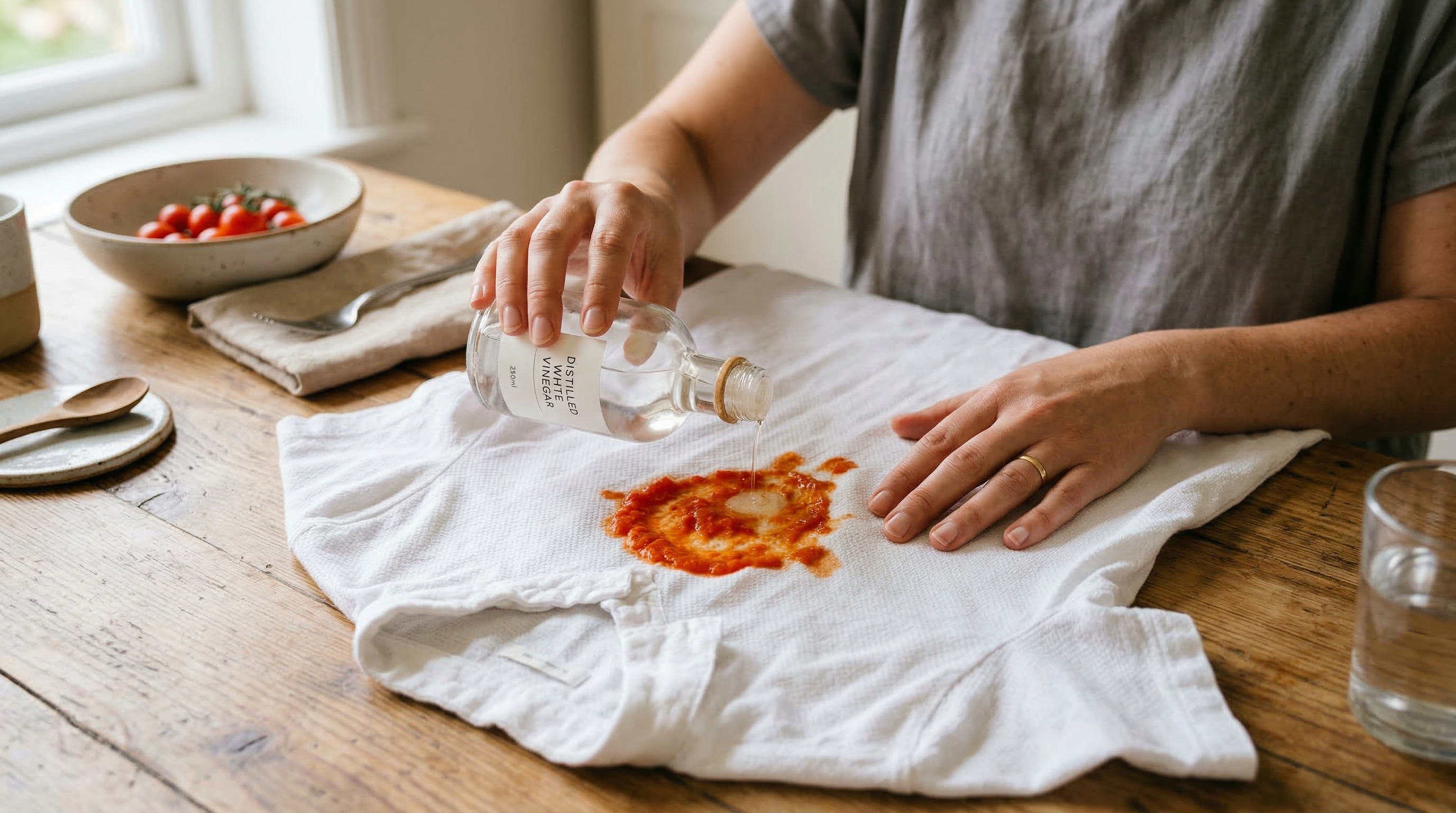
Grandma Knows: How to Remove Tomato Sauce from Clothing
Tomato sauce stains are vivid and quick to set. Learn the right sequence of treatments to remove tomato stains from clothing before they become permanent.
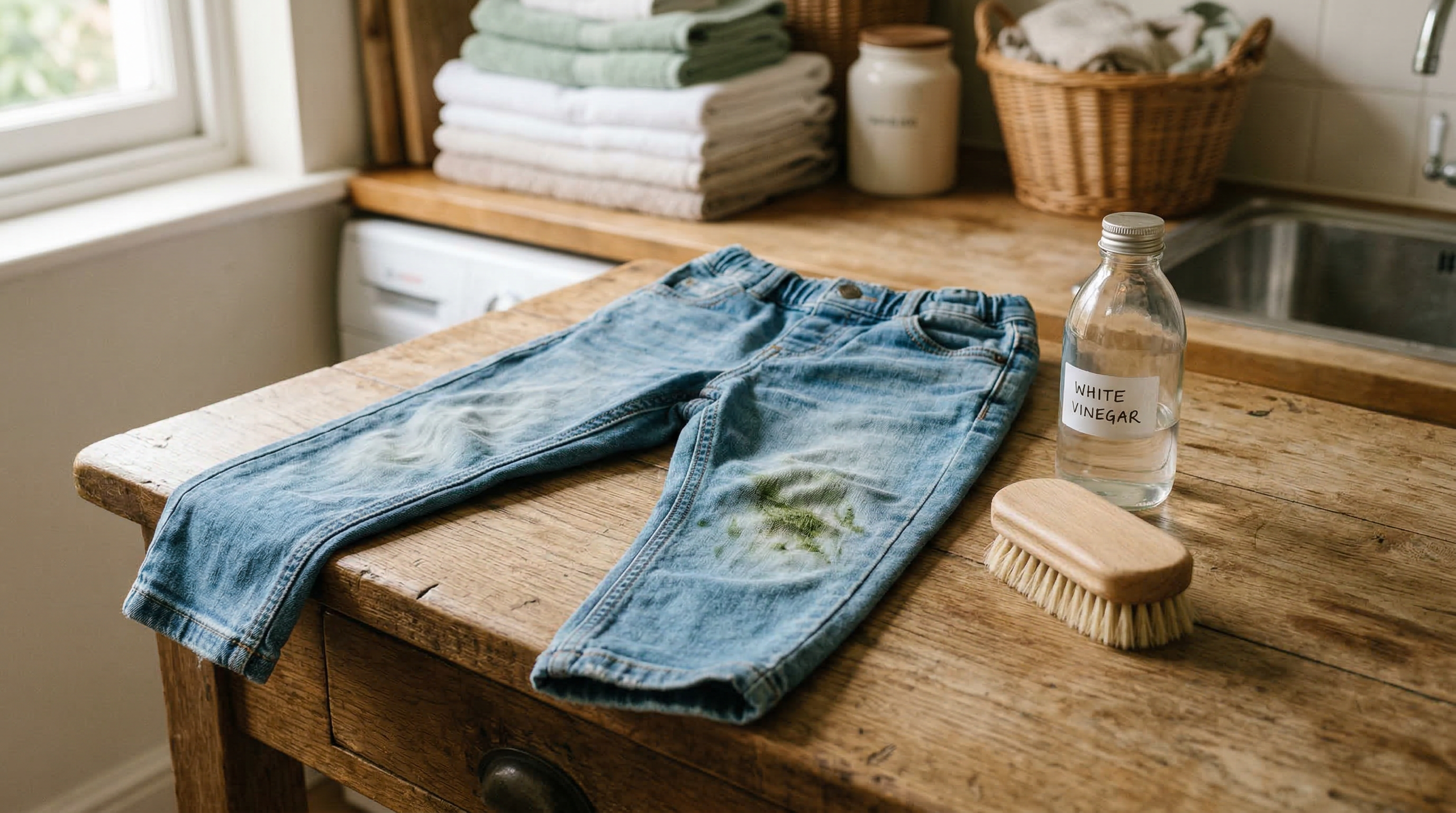
Grandma Knows: How to Remove Grass Stains from Clothes
Grass stains on clothes are stubborn but very treatable. Learn the household methods that break down chlorophyll and get fabric clean again.
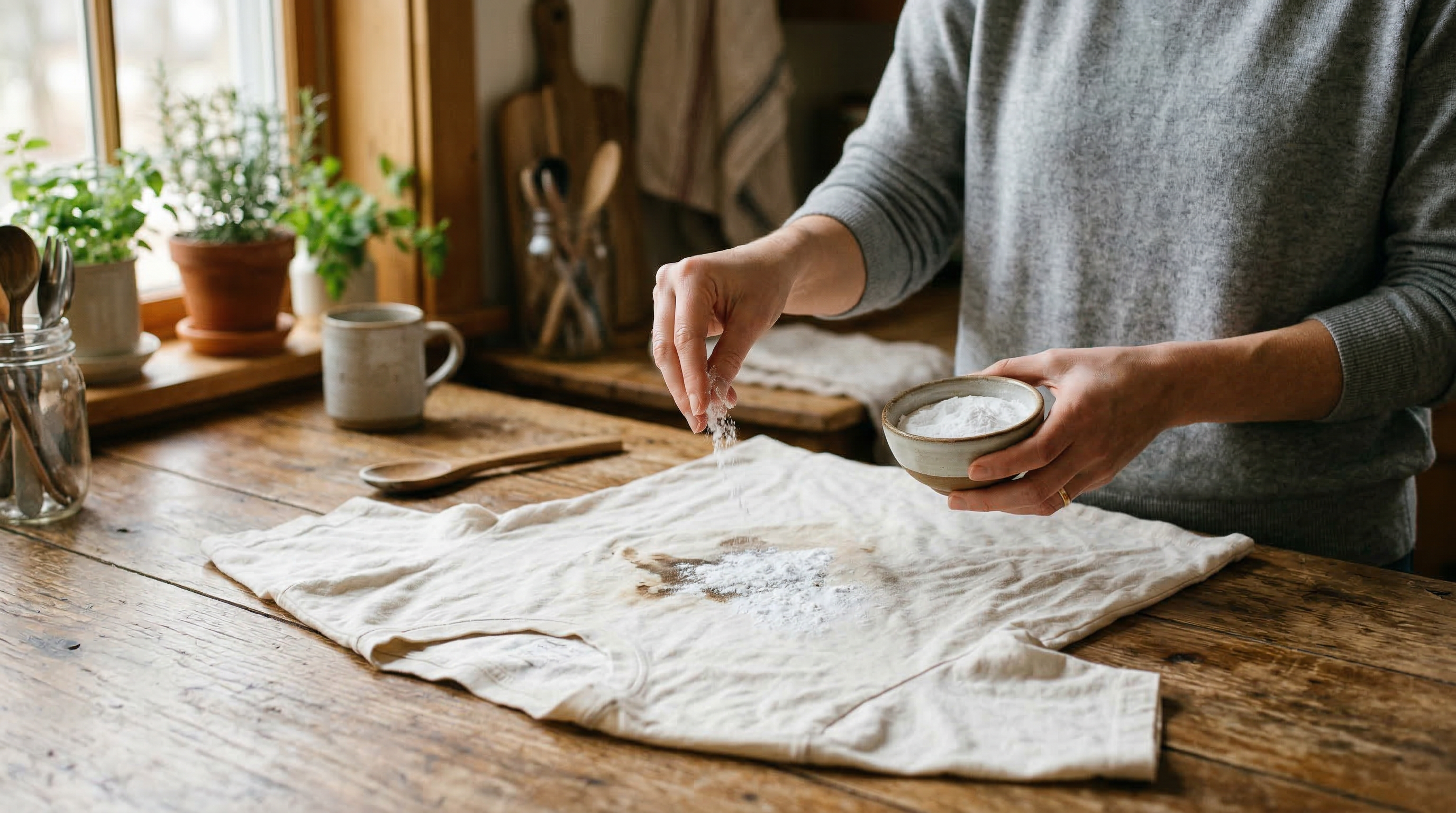
Grandma Knows: How to Remove Grease from Clothes
Grease stains on clothes are tricky but not impossible. Discover proven household methods using baking soda, dish soap, and patience.