
The Dirtiest Spot in Your Kitchen That You're Probably Ignoring
The places we clean most often aren't always the germiest. Here's what actually needs attention—and why traditional wisdom about kitchen care still matters.
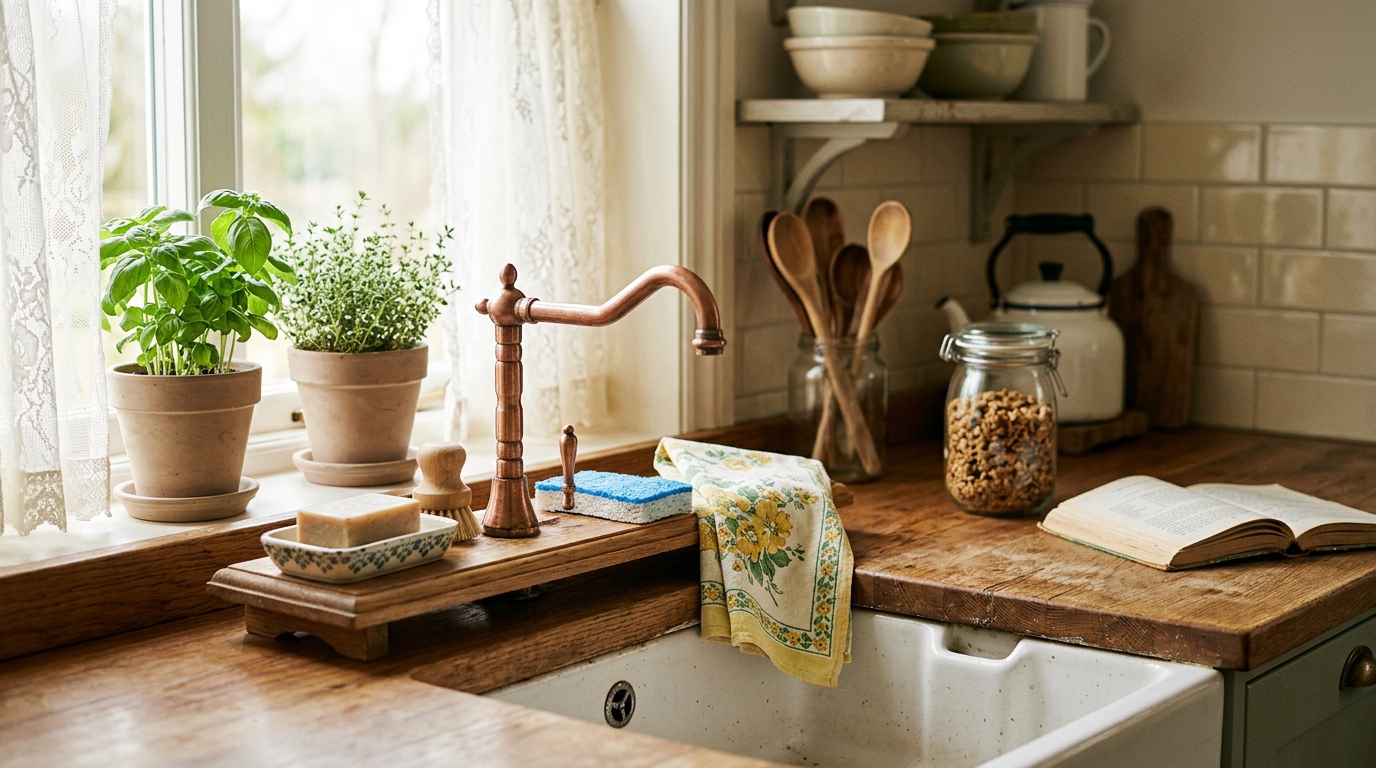
There's a peculiar thing that happens in kitchens across every home: we develop blind spots. We wipe down countertops religiously, scrub the sink until it gleams, and mop the floor with devotion. Yet some of the most contaminated surfaces in our cooking spaces remain virtually untouched, week after week, hiding in plain sight. Understanding where bacteria and food residue actually accumulate—and why—changes how we approach kitchen cleanliness in a way that feels less like obsessive sanitizing and more like practical maintenance.
The reason this matters isn't about achieving magazine-perfect sterility. It's about preventing the small discomforts and illnesses that ripple through family life: the mysterious stomach upset, the lingering cold that won't quite leave, the minor food safety issues that could have been prevented. When we understand the real patterns of how kitchens get dirty, we can clean smarter, not harder, and protect the people we feed with intention rather than anxiety.
Where the Real Problem Lives
If you ask most people what the dirtiest part of their kitchen is, you'll hear: the sponge, the cutting board, maybe the sink drain. These are reasonable guesses, and yes, they do accumulate bacteria. But the actual germiest real estate in most kitchens is far less obvious: it's your kitchen faucet handle, specifically the base where it meets the sink, and the underside of your faucet spout. If you're really honest with yourself about how often you actually clean these areas, the answer is probably never, or close to it.
Think about the journey of your hands throughout a cooking session. You touch raw chicken, handle soil-covered vegetables, open the trash, scratch your face. Then you reach for that faucet handle to wash your hands. You're transferring bacteria directly onto a surface that will be touched dozens of times daily by every family member. The handle gets wet from splashes, dries inconsistently, and creates the exact environment where bacteria thrive. Yet because it looks clean—because it's made of smooth stainless steel or chrome—we assume it is clean.
The underside of the faucet spout presents a different problem. This is where water drips, where bits of food splash up during rinsing, where moisture collects and never fully dries. It's one of the most overlooked surfaces in home kitchens, and it's directly above where you place clean dishes, drinking glasses, and food that's about to be eaten.
The Physics and Biology of Kitchen Grime
To understand why these spots become problems, it helps to understand how kitchen contamination actually works. Bacteria don't randomly appear—they follow moisture, food residue, and warm temperatures. Your kitchen faucet is a perfect storm: it's consistently moist, it's touched with hands that carry biological material, and the area around it creates microclimates where water pools and evaporates slowly.
Traditional kitchen wisdom—the kind that was learned through necessity rather than laboratory study—understood this intuitively. Older homes, before modern plumbing, had different challenges, but the principle was the same: you clean surfaces that accumulate moisture and use. The faucet was part of the daily cleaning ritual, not because of germ theory, but because people noticed that neglecting it led to problems. Families that kept functional kitchens understood, through trial and error, which surfaces needed regular attention.
The handle matters more than most people realize because it's a transfer point. Every time you touch it with wet hands, bacteria can be suspended in that moisture and transferred to the handle. Every time you touch it with dry hands after handling raw food, you're leaving behind bacteria colonies. These colonies grow in the micro-grooves of the handle surface, in any small gaps between the handle and the sink, in places where a quick rinse won't reach.
The underside of the spout has a different problem: gravity. Everything that splashes upward—bacteria from raw meat, particles from vegetables, water with trace amounts of food residue—collects underneath. It dries slowly, partially, creating conditions where certain bacteria actually prefer to live and multiply. This is particularly concerning because this area is above where you rinse vegetables, fill drinking glasses, and prepare food.
Why We Miss These Spots
There are several reasons why kitchen faucets remain uncleaned in most homes. First, there's the visibility problem. We clean things we see get dirty. We notice food splatters on the stovetop, crumbs on the counter, water spots on the sink basin. The faucet handle and spout don't visibly accumulate grime in an obvious way. They don't look the way a dirty surface looks, so we mentally file them under "already clean."
Second, there's a practical hesitation. The faucet is a functional object we use multiple times per day. Unlike a cutting board that you can take to the sink and scrub thoroughly, the faucet is stationary and integrated into your workflow. It feels like it would require special attention or special products, which makes the task feel larger than it is.
Third, and perhaps most importantly, kitchen cleaning has become siloed. We have specialized tasks: we clean the stovetop on one day, the oven on another, the microwave when it spatters. We don't have a unified system for regular, daily attention to all surfaces. The faucet falls through the cracks because it doesn't fit neatly into any particular cleaning category.
The Simple Solution That Actually Works
Here's what works, and it doesn't require special products or significant effort: include the faucet handle and underside of the spout in your daily sink cleaning routine. Not weekly—daily. This is the kind of small habit that prevents problems from developing rather than trying to solve them after they've accumulated.
When you're washing dishes or wiping down the sink, take your dishcloth or a damp cloth and wipe down the entire faucet: the handle, the base of the handle, the spout (especially the underside), and the area around where the faucet meets the sink. Use the same cloth you're using for other cleaning, with warm soapy water. This takes about 20 seconds. Do this while the cloth is already warm and soapy, as part of the flow of your kitchen cleaning, not as a separate task.
The reason this works better than you might expect is that you're preventing buildup before it starts. Bacteria colonies take time to establish. If you wipe daily, you're removing bacteria before they've had time to multiply significantly. You're also removing the residue they feed on. It's the difference between managing a surface continuously and trying to clean an entrenched problem.
If your faucet is chrome or stainless steel, you can also, once or twice a week, use a cloth dampened with white vinegar to wipe the handle and spout. This serves two purposes: it provides a gentle antimicrobial treatment, and it helps prevent water spots and discoloration. The vinegar smell dissipates quickly, and it's one of the few cleaning agents that's safe to use on food-contact surfaces.
The Broader Pattern: Surfaces That Touch Everything
Once you start thinking about this problem, you begin to notice other surfaces in the kitchen that have similar issues: high-touch surfaces that don't look visibly dirty but are actually contaminated. The light switch near the sink. The refrigerator handle. The cabinet knobs where you reach most often. The area of counter immediately around where you prep food, even though it doesn't look messy. The underside of cabinet handles.
These are all transfer points. They're surfaces touched with hands that have been in contact with food, and then touched again before those hands are washed. Traditional kitchens, which were often organized around specific workflow patterns, understood this intuitively. Work surfaces were positioned so you'd naturally move from washing to food prep to cooking. Cleaning was integrated into that flow.
The faucet handle is simply the most frequently touched and most overlooked of these surfaces. But understanding why it matters teaches you something useful about kitchen hygiene in general: the germiest spots aren't always the ones that look dirty. They're the ones that are touched frequently, exposed to moisture, and never actually cleaned.
Making It Part of Your Routine
The key to actually maintaining this habit is integration. Don't add it as a separate task. Instead, fold it into something you're already doing. The most logical place is as the final step of washing dishes or wiping down the sink after a meal. Your cloth is already warm and soapy. Your hands are already wet. You're already in the sink area. The addition of wiping the faucet is just an extra 20 seconds before you rinse out your cloth and hang it to dry.
Another option is to keep a small cloth or old cloth napkin near the sink specifically for quick faucet wipes. This removes the mental barrier of having to find a cloth. You can grab it, give the faucet a quick wipe during any sink time, and rinse it out immediately. This feels so minimal that it actually becomes easier to do consistently than any "proper" cleaning routine would be.
What you're doing here is applying a principle that's older than modern kitchen design: you're working with the patterns of how you actually use your space rather than against them. You're not trying to create a new cleaning routine or add time to your day. You're noticing what you're already doing and adding one small step to it.
Why This Matters Beyond Just Cleanliness
When you clean your kitchen faucet regularly, you're doing more than reducing bacteria counts, though that's real and measurable. You're also creating a feedback loop of care in your kitchen. You'll notice your faucet looks better maintained. You'll become more aware of other surfaces that need attention. You'll start thinking more intentionally about the spaces where your family eats.
This is how the practice of caring for a home actually works. It's not a master plan you implement all at once. It's small, consistent attention to the things that matter. You clean the faucet, and suddenly you notice the cabinet handles need attention too. You wipe them, and suddenly the whole sink area feels more cared for. These small practices accumulate into homes that function well and feel good to live in.
There's also something grounding about daily attention to details like this. It's the opposite of the modern impulse to either obsessively sanitize everything or to ignore the invisible until something goes wrong. It's a middle path: you notice, you attend, you maintain. You work with the reality of how homes actually get dirty, and you prevent problems through consistent small actions rather than through either anxiety or neglect.
Your kitchen faucet, wiped daily, becomes one of those small practices that quietly protect your family and keep your kitchen functioning as it should. It's not glamorous. It's not the kind of thing anyone will ever notice or compliment. But it's exactly the kind of detail that distinguishes kitchens where people stay healthy and things work well from kitchens where problems emerge gradually, without clear cause. Start today, make it habitual by next week, and you'll have solved one of your kitchen's dirtiest problems with almost no effort.
Related articles

Stop Peeling Garlic the Hard Way – There's a 10-Second Trick
Learn the simple jar-shaking technique that loosens garlic skin in seconds, plus why this method works and how to make it part of your kitchen routine.

Most People Cook Pasta Wrong (And It's Costing Them Money)
The way you've been cooking pasta likely wastes water, money, and time. Here's what actually works.

Never Throw Away Lemon Halves After Squeezing – Here's Why
Those spent lemon halves hold surprising power. Learn how to extract their full value for your kitchen, home, and health.