Stop Throwing Away Old Towels – Here's a Smart Use
Old towels don't belong in the trash. Learn how to give them useful second lives in your home with these practical, time-tested methods.
There's a moment in most households when a beloved towel reaches the end of its life as a bath towel. The fibers soften, the color fades, maybe there's a stain that won't come out no matter how hard you try. For many of us, the instinct is to toss it. But this is where intention meets practicality—and where a towel's real usefulness often begins.
In homes where nothing is wasted thoughtlessly, old towels are never simply discarded. They're understood as raw material with genuine value. A worn bath towel contains hundreds of hours of carefully crafted absorbency still waiting to serve. The fabric is already broken in, soft from use, and in many cases more absorbent than when it was new. This article is about seeing that potential clearly and using it wisely.
Understanding Why Old Towels Have Real Value
Before diving into specific uses, it's worth understanding why old towels deserve a second life at all. Most quality towels are made from cotton or cotton blends designed to last decades with proper care. A towel that's worn thin or stained hasn't actually lost its fundamental structure—it's simply changed character. The fibers are still there, still capable of holding and releasing water, still soft enough to handle with care.
Unlike clothing that wears in unpredictable ways, towels degrade consistently. The edges might fray, the corners might weaken, but the main body of fabric often remains entirely sound. This predictability makes towel repurposing simpler than with other worn textiles. You know how the fabric will behave. You know it will remain absorbent. You know it will withstand repeated washing.
There's also something practical about the scale of a towel. It's large enough to be useful but not so large that you're committing a huge amount of material to a single purpose. A bath towel provides roughly four square feet of fabric. A hand towel gives you about two square feet. This is enough to be meaningful without being wasteful if the project doesn't work out.
Kitchen Uses That Make Immediate Sense
The kitchen is where old towels find their most natural second life. This is partly because kitchens demand absorbency constantly, and partly because kitchen work is honest work—towels can get truly stained and still be perfectly functional.
The most straightforward conversion is into kitchen towels or dish cloths. A bath towel can be cut into four to six useful kitchen towels depending on how large you want them and whether you're comfortable with finished or unfinished edges. The cut doesn't need to be fancy. Straight lines work perfectly. Some people finish the edges with a simple stitch or a bias tape; others leave them raw, and they fray into softness after a few washes.
What makes this genuinely useful rather than obvious is understanding which towels work best for which purposes. A towel that's wearing thin in spots is perfect for everyday dish drying—those thin areas won't snag on plates or glasses. A thicker towel with more structure works better for handling hot pots or for drying your hands after washing vegetables. A towel with staining is ideal for tasks where appearance truly doesn't matter: wiping down counters, drying produce, or cleaning up spills.
Another kitchen use that goes beyond the obvious: old towels make excellent pot holders and trivets when folded properly. A kitchen towel folded into thirds and then into quarters creates a substantial, multi-layered hot pad that protects your table from hot pots and pans. This is genuinely safer than thin commercial pot holders because the folded structure creates more material between your table and heat. Keep several of these folded and ready in a basket near your stove.
Towels also work beautifully as liners for bread baskets and proofing vessels. Linen is traditional, but a soft old towel serves the exact same purpose: it allows air circulation while protecting delicate dough from drafts. The absorbency prevents condensation from making your rising bread sticky.
Using Old Towels for Cleaning and Household Tasks
Beyond the kitchen, old towels become your quiet workforce in the rest of the home. The key to using them well here is matching the task to the towel's current state.
For general cleaning—wiping baseboards, dusting shelves, polishing mirrors—cut towels into smaller rectangles about the size of a standard washcloth. A bath towel yields roughly eight to ten pieces this size. Store them in a basket or drawer in your cleaning area. Use them for damp cleaning and they'll outlast paper towels significantly. Unlike paper towels, they won't disintegrate when they're truly wet. They're also kinder to delicate surfaces—a soft towel won't scratch wood furniture the way some commercial rags can.
Stained towels are perfect for this work because the goal is function, not appearance. In fact, a visibly worn towel in your cleaning arsenal sends a clear message: this household respects its tools and uses things fully.
For bathroom use, old towels can be designated as bath mats, foot towels, or hand towels in the shower. This extends their useful life significantly. A bath towel that's too thin and worn for regular use is still perfectly adequate for standing on after a shower, where the demands are actually less stringent than daily bath use.
Towels also serve wonderfully as drawer liners, particularly in damp climates or in furniture near exterior walls. Cut them to fit your drawers, and they'll protect wooden interiors while allowing air circulation. This is especially useful for linen drawers or storage for quilts and blankets—the towel absorbs moisture that might otherwise encourage mildew.
Laundry and Pressing Applications
In the laundry room, old towels become essential tools. They're invaluable for hand-washing delicate items—lay a towel on the bottom of your basin to protect fine fabrics from the hard surface of ceramic. They're also useful laid flat on your work surface when you're hand-pressing items like linens or lace.
An old towel makes an excellent pressing cloth when you're ironing. Lay it between your iron and delicate fabrics to prevent shine or damage. The towel's absorbency actually helps with pressing—it absorbs the steam and allows you to press more efficiently. Keep a worn, damp towel nearby when ironing to press your iron against (it cleans the sole plate while providing steam).
Towels are also surprisingly useful for air-drying clothes and delicates. If you're trying to dry a sweater or delicate garment flat, lay it on a soft, absorbent old towel. The towel wicks moisture away from the garment while supporting its shape. This works far better than laying it directly on furniture or a bed.
Storage and Organization Solutions
Old towels can be rolled or folded into organizers and storage solutions throughout your home. Their substance and softness make them good for wrapping fragile items, protecting items in storage, or creating soft dividers in drawers or baskets.
Cut into strips, old towels become ties for bundling herbs to dry, securing rolled linens, or organizing items in drawers. Soft towel strips won't leave marks the way plastic ties or string sometimes can.
Towels also work as protective coverings for items in storage. If you're storing your good china or winter quilts, wrap them loosely in old towel pieces rather than plastic. The towel allows the items to breathe while protecting them from dust and light.
Garden and Outdoor Uses
Outside the house, old towels have practical applications in garden work and maintenance. A soft towel is gentler on plant stems when you need to tie them to supports. It's also useful as a moisture barrier when potting plants—lay it at the bottom of a container to slow drainage if you have plants that prefer consistent moisture.
Towels can be cut into strips and used as garden ties or plant supports. Unlike synthetic ties, they won't cut into stems as they grow. For freshly planted seedlings that need support, a soft towel strip is often more appropriate than anything else you have on hand.
Wet towels are also useful for protecting young or tender plants from unexpected frost. Drape a damp towel over plants in the evening if frost threatens, and remove it the next morning. The moisture in the towel helps insulate the plant and can prevent frost damage.
Craft and Sewing Possibilities
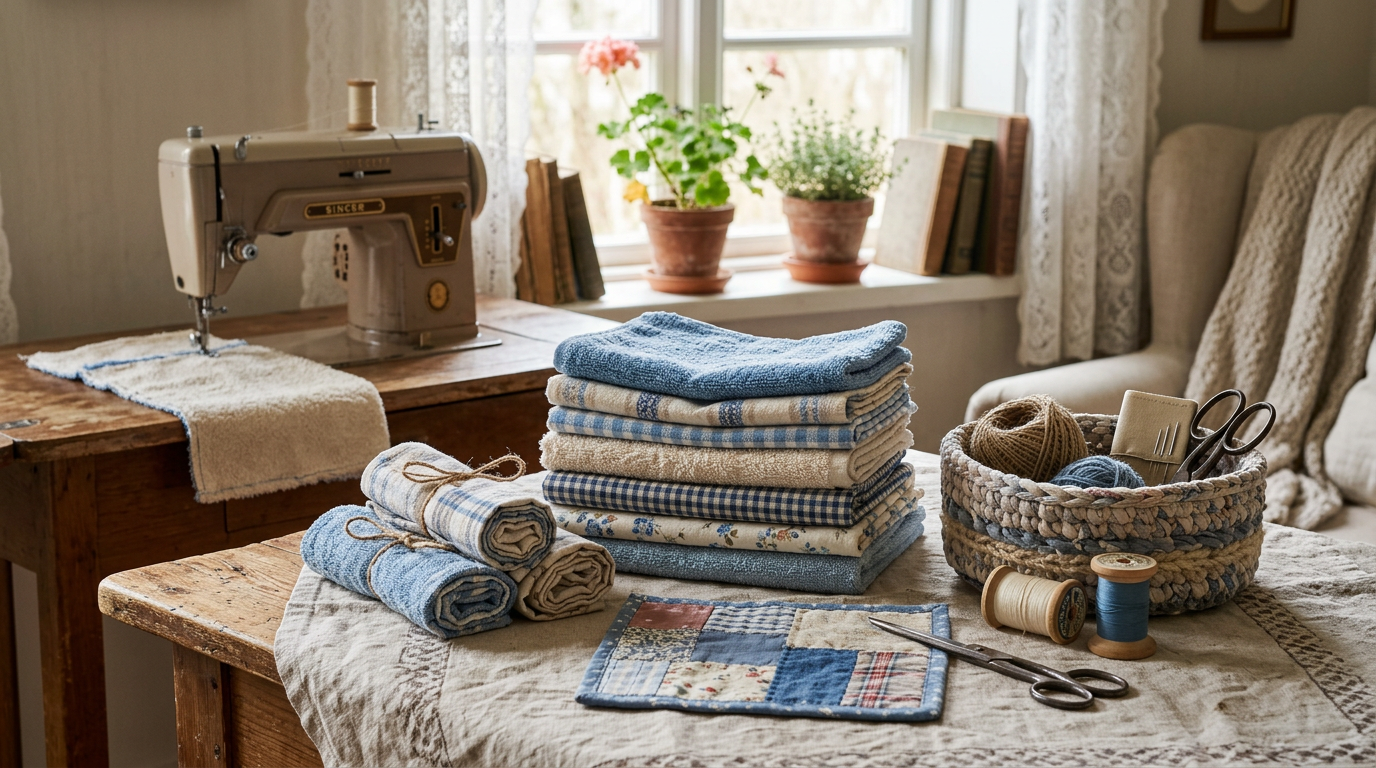
If you have any sewing ability at all, old towels offer genuine possibilities. Toweling is excellent for making small quilts, coasters, or place mats because it's durable and the material forgets nothing—every stitch shows character, not perfection.
Simple sewing projects using old towel pieces include: small quilts for babies or dolls, aprons, tote bags, or pillowcases for sleeping pillows. You can also piece towels together to make a larger throw blanket—no special skill required, just straight seams and a willingness to let imperfection be part of the charm.
Even without sewing, old towels can be frayed, braided, or woven into mats or decorative pieces. Children often enjoy this kind of creative work, and it teaches respect for materials and resourcefulness at the same time.
Pet Care and Outdoor Furniture
For households with pets, old towels are essential. They make comfortable, washable bedding for dog beds, cat corners, or cages. Because they're washable and replaceable, you can change them frequently without guilt. Pets also seem to prefer the softness of real toweling to synthetic fabrics.
Old towels also serve outdoor furniture beautifully. Use them to line cushions, drape over chairs for comfort, or protect patio furniture from weather. A worn towel doesn't need to look perfect on a garden chair—it just needs to be functional and comfortable.
The Practice of Intentional Use
What ties all these uses together isn't the specific application, but the underlying practice: looking at something worn and seeing possibility instead of waste. This habit of mind—of assuming items have use until proven otherwise—changes how a household functions.
When you develop this practice with towels, you naturally extend it to other items. Old sheets become cleaning rags. Worn-out clothing becomes stuffing or patches. Small scraps become twine or braiding material. Nothing is automatically trash; everything is first evaluated for remaining usefulness.
This isn't about deprivation or making do with less comfort. It's about respecting the work that went into making something and honoring that by using it fully. A towel that serves in your kitchen, then becomes a pet bed, then ends its life as a cleaning rag, hasn't been wasted—it's been used completely.
Keep a basket or bin dedicated to old towels waiting for their next purpose. As you need items—a pet bed, cleaning cloths, kitchen towels—you'll have a ready supply. This system also means you're never quite without what you need, and you never feel wasteful.
The comfort of this practice, like the comfort of a soft old towel itself, comes from knowing that your household respects its resources and uses them fully. There's no guilt in the linen closet, no awkward questions about whether you should throw something away. Instead, there's a quiet confidence that materials will be used as long as they're useful, and then released when they truly can't serve anymore. That's a peaceful way to run a home.
Related articles
Letting Craft Projects Grow Slowly
Learn how gradual progress adds meaning to creative work.
Letting Craft Projects Unfold Naturally
Discover the value of allowing projects to develop over time.

How Crafting Supports Mental Rest
Understand how focused handwork allows the mind to unwind.