
Grandma Knows: How to Remove Red Wine from Clothes
Red wine on clothes doesn't have to be permanent. Learn time-tested methods that actually work — using salt, cold water, and household staples.
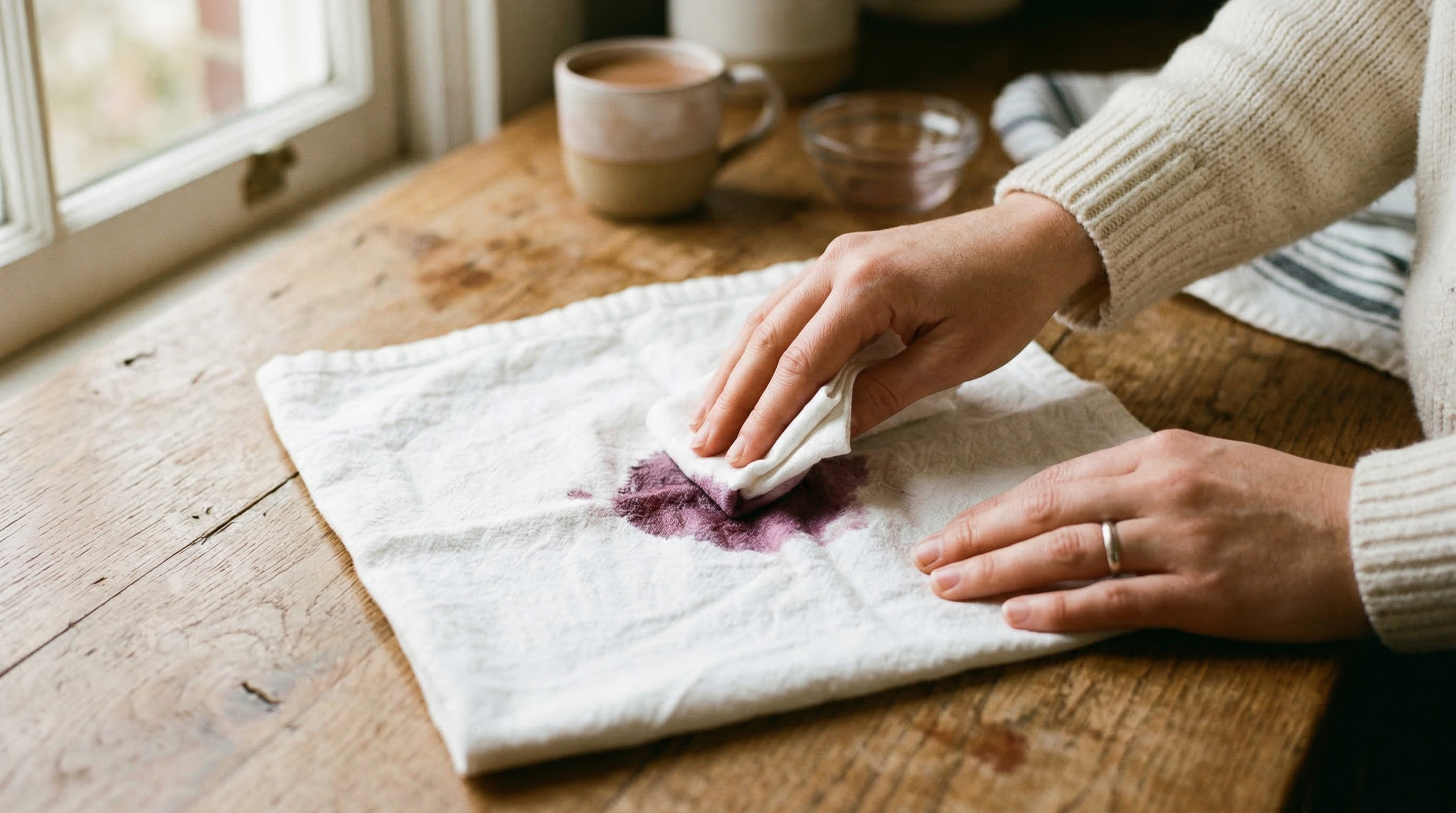
A glass tips, a moment of distraction, and suddenly there's a dark red stain spreading across fabric you care about. It's one of those household situations that feels urgent, and rightly so — red wine contains compounds that begin bonding to fabric fibers almost immediately. But the stain is not beyond saving, not even when it's already dry.
The key is understanding what you're working against. Red wine gets its deep color from pigments called anthocyanins, the same compounds that give red grapes their color. These molecules are water-soluble when fresh but begin to oxidize and bind more stubbornly to fibers as they dry. That's why your first few minutes matter — but it also means that with the right approach, even older stains respond to treatment.
Why Red Wine Stains Are Stubborn
Fabric is not a flat surface. Under magnification, most cloth looks more like a field of tangled fibers with gaps and channels between them. When liquid lands on fabric, it doesn't just sit on top — it wicks into those channels and surrounds individual fibers. Red wine's color compounds follow the liquid, clinging to the fiber surface as the water evaporates.
Cotton and linen absorb liquid quickly because their fibers are naturally porous. Synthetic fabrics like polyester are less absorbent but can trap stain compounds in their weave. Wool and silk require gentle handling because they're sensitive to heat and harsh chemicals. Knowing what your fabric is made of will shape which method you choose.
The First Response: Act Without Scrubbing
The most important rule when red wine lands on fabric is to blot, never rub. Rubbing pushes the wine deeper into the fibers and spreads the stain outward. Use a clean white cloth or paper towel and press firmly onto the stain, lifting straight up rather than wiping across.
Work from the outer edge of the stain toward the center. This prevents the stain from spreading further as you absorb liquid from it. Replace your cloth or paper towel as it absorbs wine — using a saturated cloth just redistributes the stain.
If you're away from home when the spill happens, salt is one of the most accessible first responders. Pour a generous amount of salt directly onto the wet stain. Salt draws moisture out of fabric through osmosis — the salt crystals absorb the liquid along with the wine pigments. Let it sit for a few minutes before brushing it away. This won't remove the stain entirely, but it limits how deeply the wine penetrates before you can treat it properly at home.
Cold Water First, Always
Heat is the enemy of fresh stains. Hot water causes proteins and pigments to set into fabric, which is exactly what you don't want. Always treat a red wine stain with cold water first.
For a fresh stain on a washable fabric, hold the garment under cold running water from the back of the stain. Let the water pressure push the wine back out through the same fibers it entered. This alone can remove a significant amount of pigment before any cleaning agent is applied.
If the garment isn't with you at a sink, pour cold water gently over the stain and continue blotting. The goal is to dilute the wine while it's still fluid.
Salt and Boiling Water: A Traditional Method
This method works particularly well on cotton tablecloths and napkins, and has been used in households long before specialty stain removers existed.
After blotting the fresh stain and rinsing with cold water, lay the fabric taut over a bowl or basin. Pour a layer of salt generously over the stain. Then, from a height of about twelve inches, slowly pour boiling water directly onto the salted stain. The force and heat of the water, combined with the salt's absorbent action, drives the wine out of the fibers. The height of the pour matters — it creates enough pressure to flush pigment through the fabric rather than just moving it around.
This method works best on natural fibers like cotton and linen. Avoid it on delicate fabrics like silk or wool, where boiling water can cause shrinkage or fiber damage.
Dish Soap and Hydrogen Peroxide
For white or light-colored fabrics, a mixture of dish soap and hydrogen peroxide is highly effective. Hydrogen peroxide is a mild bleaching agent that breaks down the color compounds in red wine without the harshness of chlorine bleach.
Mix one part dish soap with two parts hydrogen peroxide. Apply this mixture to the stain and let it sit for twenty to thirty minutes. You'll often see the stain visibly lighten as the peroxide works. Rinse thoroughly with cold water and check before washing.
Do not use this mixture on dark or colored fabrics. Hydrogen peroxide can lift color from dyed fabric just as readily as it lifts the wine pigment. Test on a hidden seam first if you're uncertain.
Club Soda: What It Actually Does
Club soda is often recommended for fresh spills, and it does work — but not for the reasons people usually assume. It's not the carbonation itself that lifts the stain. The bubbles help keep the stain from settling by agitating the liquid at the fiber surface. The mineral content of club soda also contributes mild cleaning action.
Pour club soda over a fresh stain and let it bubble actively. Blot gently while it fizzes. Club soda is best used as an immediate measure to buy time, not as a complete treatment on its own.
White Wine as a Counter Measure
Pouring white wine over a red wine stain is a method that circulates in many households. White wine dilutes the red wine and helps prevent the pigments from setting. It's not a removal method on its own — it's a holding measure that makes subsequent cleaning easier.
If white wine is what's at hand when red wine spills, use it freely on the stain and follow up with proper treatment as soon as you're able. It won't make the stain worse, and it may slow the setting process.
Dealing with Dried Red Wine Stains
A dried red wine stain requires rehydration before it will respond to treatment. The oxidized pigments have bonded more firmly to the fibers, but they haven't become permanently fixed unless heat has been applied since the spill.
Soak the stained area in cold water for at least thirty minutes to soften the dried stain. Then apply a paste made from equal parts dish soap and baking soda. Work it gently into the stain with your fingers or a soft brush and let it sit for an hour. The baking soda provides gentle abrasion while helping to lift loosened pigment away from the fibers. Rinse thoroughly and assess before washing.
For stubborn dried stains, an enzyme-based laundry pre-treatment works by breaking down the organic compounds in the wine. Apply it according to the product directions, giving it adequate time to work before laundering.
Sofa and Upholstery Stains
Upholstery can't be soaked or machine washed, which makes red wine spills on furniture more challenging. The method is the same — blot immediately, work from the outside in, and avoid rubbing.
Mix one tablespoon of dish soap with two tablespoons of cold water and apply the foam (not the liquid) to the stain using a clean cloth. Work it gently into the fabric and blot away. Follow with a cloth dampened with plain cold water to rinse, then blot dry.
For upholstery with a fabric code of W or WS, water-based cleaning is safe. Avoid this method on fabrics coded S or X, which require solvent-based cleaners or professional treatment.
Carpet Stains
On carpet, the same principles apply as on upholstery. Blot immediately without rubbing. Dilute with cold water and continue blotting. Apply a solution of dish soap and cold water to the stain and work it in gently with a clean cloth. Rinse by pressing a cold, damp cloth over the area and blotting away the soapy residue.
Avoid soaking carpet heavily — excess moisture can reach the backing and padding beneath, leading to mildew. Work with a moist cloth rather than pouring water directly.
When the Method Doesn't Work
Some stains resist home treatment — particularly old stains on delicate fabrics, or stains that have been through a dryer before being treated. Heat from a dryer sets wine pigments firmly into fabric, and the resulting stain may be permanent. This is why checking a garment for stains before drying is a habit worth building.
Silk and wool require special care. Many of the methods described here — particularly boiling water and hydrogen peroxide — can damage these fabrics. For delicate items with wine stains, professional dry cleaning is often the safest path.
Synthetic fabrics like polyester can be treated with most of these methods, but may hold onto stain compounds more stubbornly than natural fibers. Patience and repeated applications often help more than any single treatment.
A Note on Products
Many commercial stain removers are effective on red wine, particularly those that contain enzymes or oxygen-based bleaching agents. These products are worth keeping in a household cabinet — they extend the range of what home treatment can accomplish. But the methods described here use things available in nearly every kitchen, which matters most in the moments immediately after a spill when the outcome is still in your hands.
Related articles
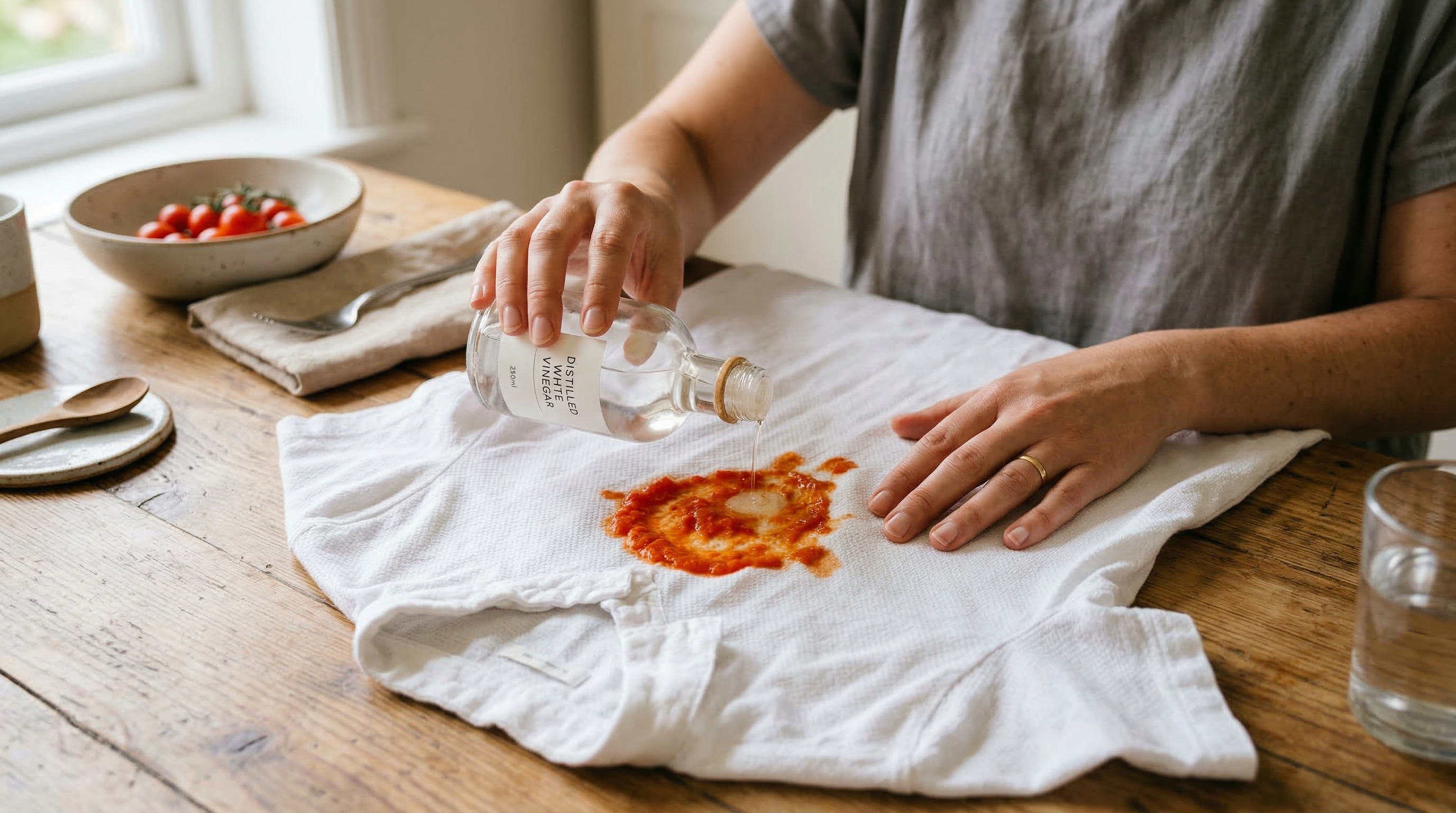
Grandma Knows: How to Remove Tomato Sauce from Clothing
Tomato sauce stains are vivid and quick to set. Learn the right sequence of treatments to remove tomato stains from clothing before they become permanent.
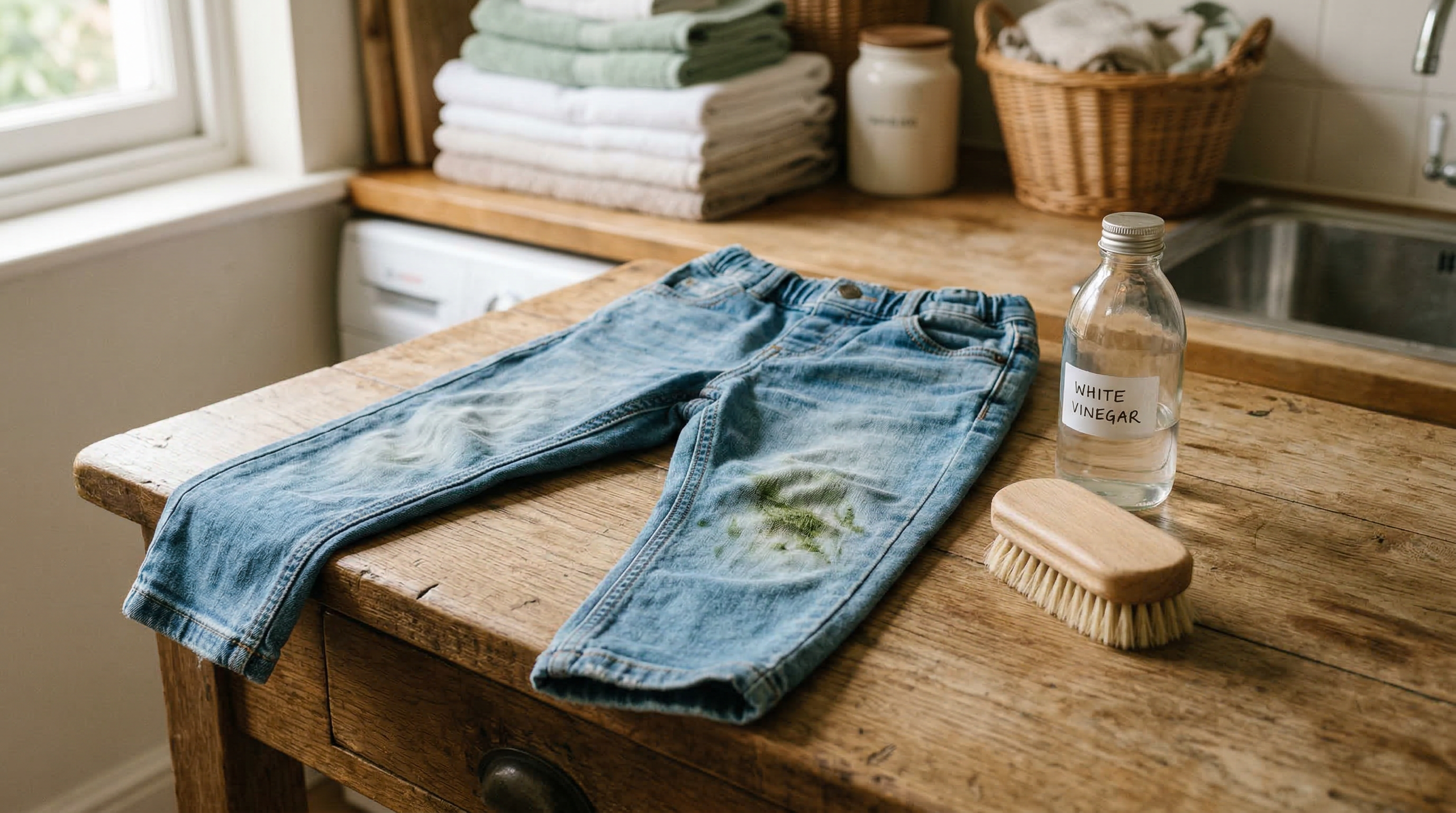
Grandma Knows: How to Remove Grass Stains from Clothes
Grass stains on clothes are stubborn but very treatable. Learn the household methods that break down chlorophyll and get fabric clean again.
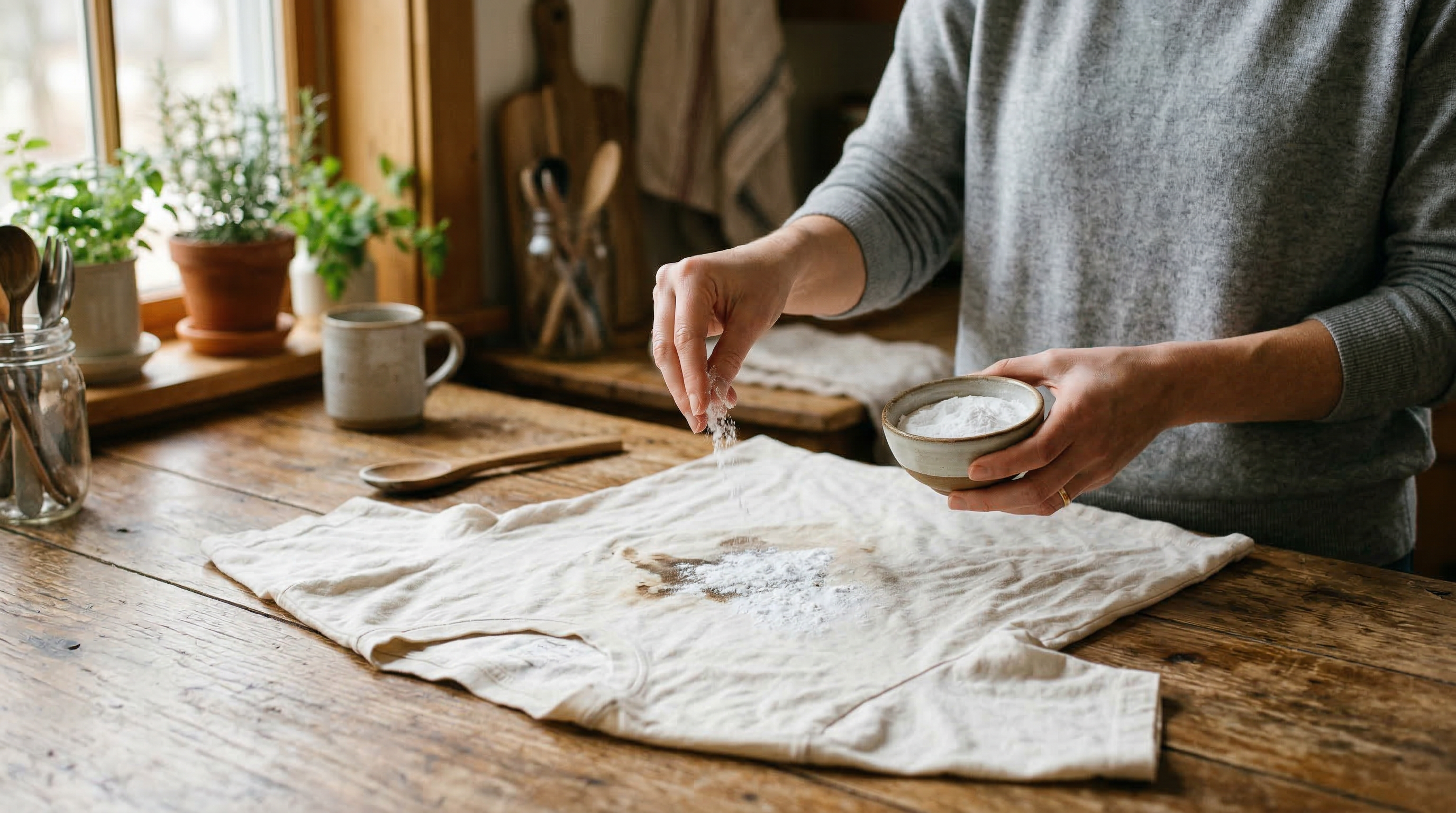
Grandma Knows: How to Remove Grease from Clothes
Grease stains on clothes are tricky but not impossible. Discover proven household methods using baking soda, dish soap, and patience.