
Grandma Knows: How to Remove Candle Wax from Fabric
Candle wax on fabric requires a different approach than liquid stains. Learn the freeze-and-scrape method and how to remove remaining color and oil.
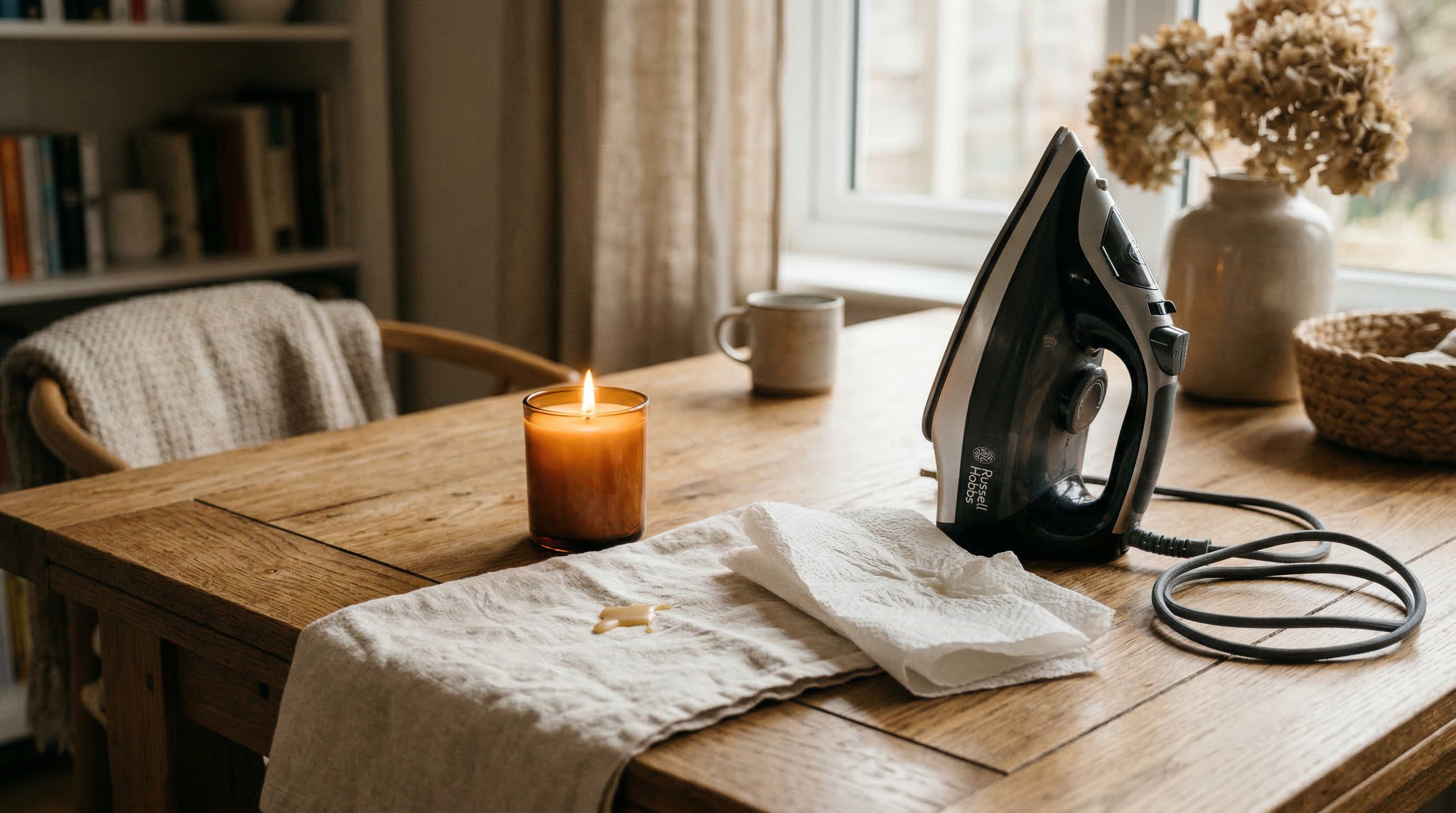
Candle wax on fabric presents a different challenge than liquid stains. Wax is a solid at room temperature — it doesn't soak into fabric the way a liquid does, but it does adhere firmly to fibers and can leave behind both a waxy residue and, in the case of colored candles, a dye stain. The approach to wax removal is therefore fundamentally different: before any cleaning agent is involved, the wax itself must be physically removed.
Understanding What Wax Does to Fabric
When hot wax drips onto fabric, it flows into the weave of the cloth and coats individual fibers as it cools. As it solidifies, it physically encases fibers in a layer of wax. Colored candles release dye into this process, staining the fibers underneath the wax coating.
The goal is first to remove the solid wax without damaging the fabric, and then to address any residual oiliness or color that remains after the wax is gone.
Let It Solidify Completely
If wax has just dripped, don't try to clean it immediately. Wait for it to solidify fully. Touching or wiping hot or warm wax spreads it further into the fabric and makes removal harder. Once the wax has fully hardened, you have more control over the removal process.
If you're in a hurry, placing ice in a plastic bag and pressing it against the wax accelerates solidification. A few minutes of cold will make even recently dripped wax brittle enough to handle.
The Freezing Method
Freezing makes wax brittle, which allows it to be broken away from fabric fibers without dragging. Place the stained garment in the freezer for an hour, or apply ice directly to the wax for several minutes until it's thoroughly cold.
Once frozen, flex the fabric gently and the wax will crack. Use a dull knife, the edge of a credit card, or your fingernail to carefully break away the bulk of the wax. Work carefully to avoid damaging the fabric weave. Don't be too aggressive — the goal at this stage is to remove the large pieces. Small residue will be addressed in later steps.
The Iron Method: Removing Wax Residue
After removing the bulk of the wax mechanically, small waxy residue remains in the fabric fibers. Heat is the key to removing it — the same property that makes wax a liquid at high temperatures allows you to draw it out of fabric with a warm iron.
Place a layer of paper towels or a clean brown paper bag on an ironing board. Lay the stained fabric, wax side down, on top of the paper. Place another layer of paper over the back of the fabric. Press with a warm iron — not hot — over the area. The warmth melts the residual wax, which is absorbed into the paper towels above and below the fabric.
Move to a clean section of paper regularly as the paper absorbs wax. If you continue pressing on a wax-saturated paper section, the wax simply redeposits back into the fabric. Repeat with fresh paper until no more wax transfers.
Use a warm iron, not hot. High heat can set any dye that's transferred into the fabric along with the wax, and can damage synthetic fabrics.
Addressing the Dye Stain from Colored Candles
Colored candles often leave a dye stain after the wax has been removed. This is a separate problem from the wax itself. The dye used in candles is usually solvent-based or oil-based, which means it requires a different approach than water-soluble stains.
Apply a small amount of rubbing alcohol to a clean cloth and press it onto the dye stain. Work from the outside inward. The alcohol dissolves the candle dye and lifts it from the fabric. Replace the cloth as it picks up color.
Follow with dish soap worked gently into the area and rinsed with cold water. For stubborn dye stains on white fabric, a small amount of hydrogen peroxide can address residual discoloration.
Treating Upholstery
Upholstery can't be put in the freezer, but the ice method works the same way. Place ice in a plastic bag and hold it against the wax until it's thoroughly cold and brittle. Break away the solid wax carefully, then use the paper-and-iron method on the upholstery — though take care not to over-heat upholstery fabric, and test in an inconspicuous area first.
For the dye component on upholstery, rubbing alcohol applied with a cloth and blotted gently is the most accessible home treatment.
Treating Carpet
The same approach applies to carpet: freeze, break away solids, then use the paper-and-iron method on the carpet surface. Move slowly and use low heat to avoid affecting the carpet backing or adhesive. Rubbing alcohol addresses any remaining dye stain.
After treating wax on carpet, vacuum thoroughly to remove any wax particles loosened during the process.
White and Ivory Candles
White or uncolored candles leave only the waxy residue — no dye component. After the mechanical removal and iron-and-paper treatment, the wax is usually gone without any residual color. A final treatment with dish soap can address any oiliness remaining from the wax compounds, and laundering handles the rest for garments.
What to Avoid
Rubbing hot or warm wax into the fabric makes the problem significantly worse. Trying to scrape cold but not frozen wax often pulls or damages fabric fibers without removing the wax cleanly. Using very high heat with the iron can melt synthetic fibers or set dye stains — warm heat is always preferable to hot for this process.
Wax removal is one of those fabric care tasks where patience and the right temperature matter more than any particular cleaning product. The combination of cold to remove solids and controlled heat to remove residue handles almost every case reliably.
Related articles
Grandma Knows: How to Remove Tomato Sauce from Clothing
Tomato sauce stains are vivid and quick to set. Learn the right sequence of treatments to remove tomato stains from clothing before they become permanent.
Grandma Knows: How to Remove Grass Stains from Clothes
Grass stains on clothes are stubborn but very treatable. Learn the household methods that break down chlorophyll and get fabric clean again.
Grandma Knows: How to Remove Grease from Clothes
Grease stains on clothes are tricky but not impossible. Discover proven household methods using baking soda, dish soap, and patience.