
Grandma Knows: How to Use Vinegar for Limescale
Learn how to remove limescale with vinegar using simple, proven household methods. Find out why it works and when to use it.

There is a white, chalky crust forming around the base of your kitchen tap. The showerhead is starting to spray at odd angles. The kettle has a gritty film on the inside. If any of this sounds familiar, you are dealing with limescale — one of the most common and persistent problems in any home that runs on hard water.
The good news is that you do not need any special products to deal with it. White vinegar — the plain, inexpensive kind you probably already keep in the kitchen — cuts through limescale reliably and without much effort. It has been used in homes for generations, and it works just as well today as it ever did. But using it well means understanding what you are actually dealing with and applying the right method for each situation.
What Limescale Actually Is
Limescale is a solid deposit left behind by hard water. Hard water contains dissolved minerals — mostly calcium carbonate and magnesium — that have been picked up as groundwater moves through chalk and limestone rock. When that water is heated, or simply when it evaporates, those minerals do not disappear. They stay behind and gradually build up as a hard, white or off-white crust.
The harder your local water supply, the faster limescale accumulates. In some parts of the country, you can see visible buildup around a tap within just a few weeks of cleaning it. In softer water areas, it may take months before you notice anything at all.
Limescale is not a hygiene problem in the way that mold or bacteria are. But it does cause real, practical issues over time. It blocks the small holes in showerheads and reduces water pressure. It coats heating elements in kettles and boilers, making them work harder and use more energy. It leaves surfaces looking dull and stained, and it can eventually cause damage to fixtures if it is left long enough.
Why Vinegar Works Against Limescale
White vinegar is a mild acid — specifically, it contains acetic acid, typically at around five percent concentration in the bottles sold for household use. Limescale is an alkaline substance. When an acid comes into contact with an alkaline mineral deposit, a chemical reaction takes place. The calcium carbonate breaks down, releasing carbon dioxide gas and dissolving the deposit into a form that can simply be wiped or rinsed away.
This is not a slow or complicated process. In most cases, you will see the reaction happening almost immediately — small bubbles forming where the vinegar meets the scale. The longer you leave the vinegar in contact with the deposit, the more it dissolves. That is why soaking is often more effective than scrubbing, at least for the initial treatment.
The reason vinegar has lasted as a household solution while commercial descalers have come and gone is partly that it is safe to use on most household surfaces, it leaves no harmful residue, and it costs very little. It also does not release any fumes that require ventilation or protective equipment.
Cleaning Taps and Faucets
Taps are one of the most common places limescale builds up, especially around the base and the spout. The scale here tends to be layered — thin deposits that have built up slowly over months — and vinegar handles this type well.
The most effective approach is not to wipe the tap with vinegar but to let the vinegar sit against the affected area for an extended period. Soaking paper towels or a cloth in undiluted white vinegar and wrapping them around the scaled areas works well. Press the cloth firmly so it stays in contact with the surface, and leave it in place for at least an hour. For heavy buildup, leaving it for two to three hours gives better results.
After soaking, the scale should have softened considerably. Use a soft cloth or an old toothbrush to gently scrub away what remains. An old toothbrush is particularly useful for getting into the joins and crevices around the base of the tap where scale often accumulates undisturbed.
Rinse thoroughly with water once you are done. Chrome and stainless steel taps can tolerate this treatment regularly without any damage, but avoid leaving vinegar on brass or gold-finished taps for long periods, as the acid can affect the finish over time.
Descaling a Showerhead
A blocked showerhead is one of the most satisfying limescale problems to solve, because the results are immediately visible — water pressure and spray pattern often return to normal within a single treatment.
If the showerhead can be removed, take it off and submerge it completely in a container of undiluted white vinegar. Leave it to soak for at least two hours, or overnight if the buildup is heavy. After soaking, use an old toothbrush to scrub the spray holes, then rinse thoroughly before reattaching.
If the showerhead cannot be removed easily, fill a plastic bag with vinegar and secure it around the showerhead with a rubber band, making sure the head is fully submerged in the vinegar. This method works almost as well as full removal and requires no tools. Leave it for two to three hours, then remove the bag, scrub with a brush, and run the shower briefly to flush out any loosened deposits from inside.
The small spray holes are where limescale causes the most disruption in a showerhead. After soaking, if some holes are still partially blocked, a toothpick or a thin piece of wire can be used carefully to clear them. The scale should be soft enough at this point that very little pressure is needed.
Descaling a Kettle
Inside a kettle, limescale coats the heating element and the base. This is probably the most common limescale problem in households with hard water, because every time the kettle is boiled, more minerals are deposited as the water heats and some evaporates.
To descale a kettle, fill it with equal parts white vinegar and water — roughly half and half — up to around three-quarters full. Bring the mixture to a boil, then switch off the kettle and let the solution sit inside for at least twenty minutes. For a kettle with significant buildup, an hour is better.
Pour out the solution and rinse the kettle several times with fresh water. Boil a full kettle of plain water and discard it before using the kettle for drinks. This removes any vinegar taste or smell that might linger.
If some scale remains after the first treatment, the process can be repeated. Stubborn deposits on the sides or base can also be scrubbed gently with a soft brush while the solution is still inside.
It is worth descaling a kettle every couple of months in a hard water area, or whenever you notice the boiling time has become noticeably longer than usual. A thickly scaled heating element has to work harder and takes significantly more time to reach a boil.
Cleaning Toilet Bowls
Limescale in the toilet tends to form as a ring or stain around the waterline, and sometimes further down the bowl where water sits. It often appears yellowish or rust-tinged because minerals from the water mix with iron traces from old pipes, which makes it look worse than the typical white scale seen elsewhere.
For toilet limescale, pour one to two cups of undiluted white vinegar into the bowl and use a toilet brush to spread it around the affected areas, including under the rim. Let it sit for at least thirty minutes — ideally an hour or more. Then scrub with the brush and flush.
For more stubborn staining at the waterline, you can also soak strips of paper towel in vinegar and press them directly against the ring, holding them in place around the bowl. Leave this for a few hours before scrubbing. This keeps the acid in direct contact with the deposit rather than letting it dilute and drain away.
Pouring vinegar into the toilet cistern and letting it sit overnight is another method that works on internal components and any scale that has built up inside the tank itself. This is particularly useful if you notice the flush becoming slower or less powerful, which can sometimes be caused by scale on the flush valve.
Limescale Around Sink Drains and Tiles
Around sink drains and on bathroom tiles, limescale often appears as a dull film or a series of white spots and streaks. This kind of buildup is usually thinner than what forms on metal fittings, and it responds well to a direct vinegar application without needing a long soak.
Spray undiluted white vinegar directly onto the affected tiles or around the drain and let it sit for ten to fifteen minutes. Wipe with a damp cloth or sponge and rinse. For grout lines, where scale can accumulate alongside soap residue and make the grout look discolored, an old toothbrush and vinegar applied directly works well.
On natural stone tiles — marble, travertine, or limestone — do not use vinegar. These materials are themselves calcium-based and acidic cleaners will etch and damage the surface. Stick to pH-neutral cleaners for natural stone.
When Vinegar Works Best — and When It Does Not
Vinegar performs best on moderate, regular limescale buildup — the kind that has accumulated over weeks or a few months. It dissolves calcium carbonate efficiently and leaves surfaces clean without any residue.
Where it struggles is with very old, very thick deposits that have built up over years without any treatment. At a certain point, scale becomes so dense and layered that diluted acetic acid simply cannot penetrate it quickly enough to be practical. In those cases, a stronger commercial descaler may be needed for the initial treatment, after which vinegar can be used regularly to prevent the problem from returning.
Vinegar also does not do much for discoloration or staining that is not caused by limescale. Iron stains, hard water rust marks, and general soap scum may look similar to limescale but respond to different treatments. If you apply vinegar and see no reaction at all — no softening, no bubbling, no change — the residue is likely not calcium-based limescale.
Making It a Regular Routine
One of the most practical things about using vinegar for limescale is that it works much better as a preventive habit than as an occasional rescue treatment. A short monthly session with vinegar on taps and the showerhead, combined with a quarterly kettle descale, keeps limescale from ever becoming a serious problem.
Wiping taps dry after use also makes a real difference. Every drop of hard water that dries on a surface leaves behind a tiny mineral deposit. Over time, these invisible traces stack up into visible scale. A dry cloth kept near the sink for a quick wipe takes very little effort and noticeably slows the rate of buildup.
Hard water is simply a fact of life in many areas, and limescale will always come back. But with a bottle of white vinegar and a consistent routine, it stays manageable — and surfaces stay clean without the need for expensive products or a great deal of effort.
Related articles
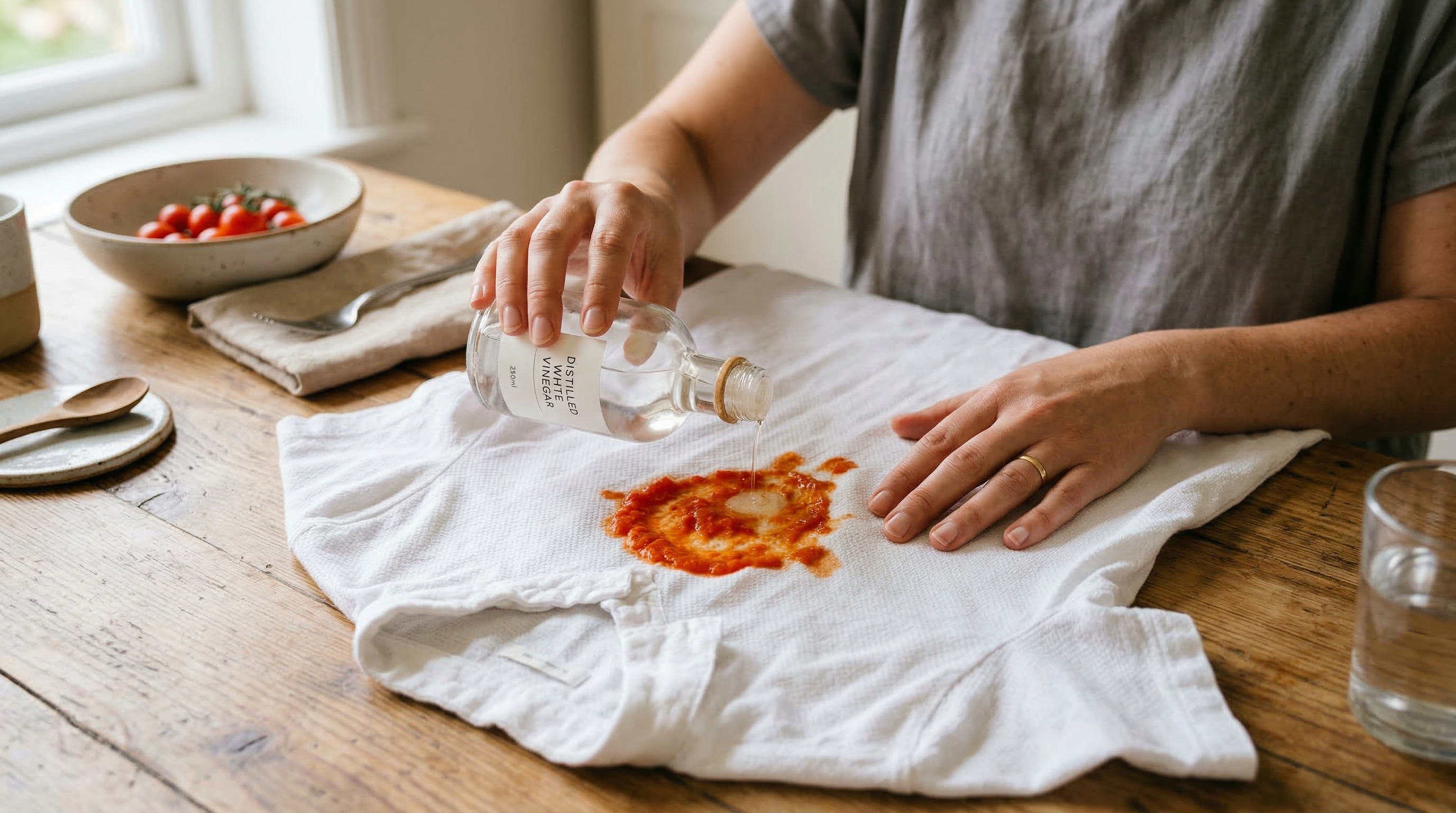
Grandma Knows: How to Remove Tomato Sauce from Clothing
Tomato sauce stains are vivid and quick to set. Learn the right sequence of treatments to remove tomato stains from clothing before they become permanent.
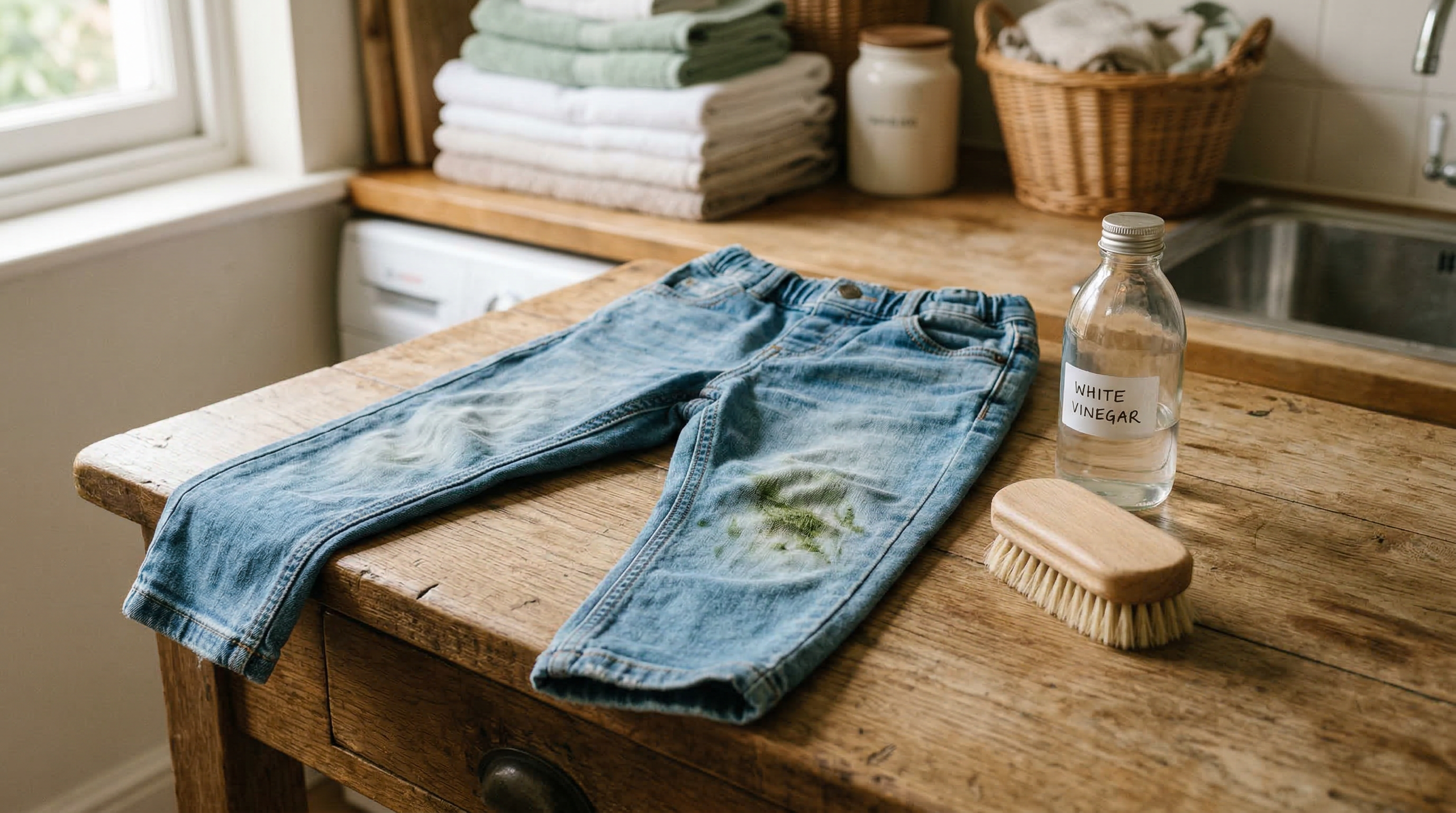
Grandma Knows: How to Remove Grass Stains from Clothes
Grass stains on clothes are stubborn but very treatable. Learn the household methods that break down chlorophyll and get fabric clean again.
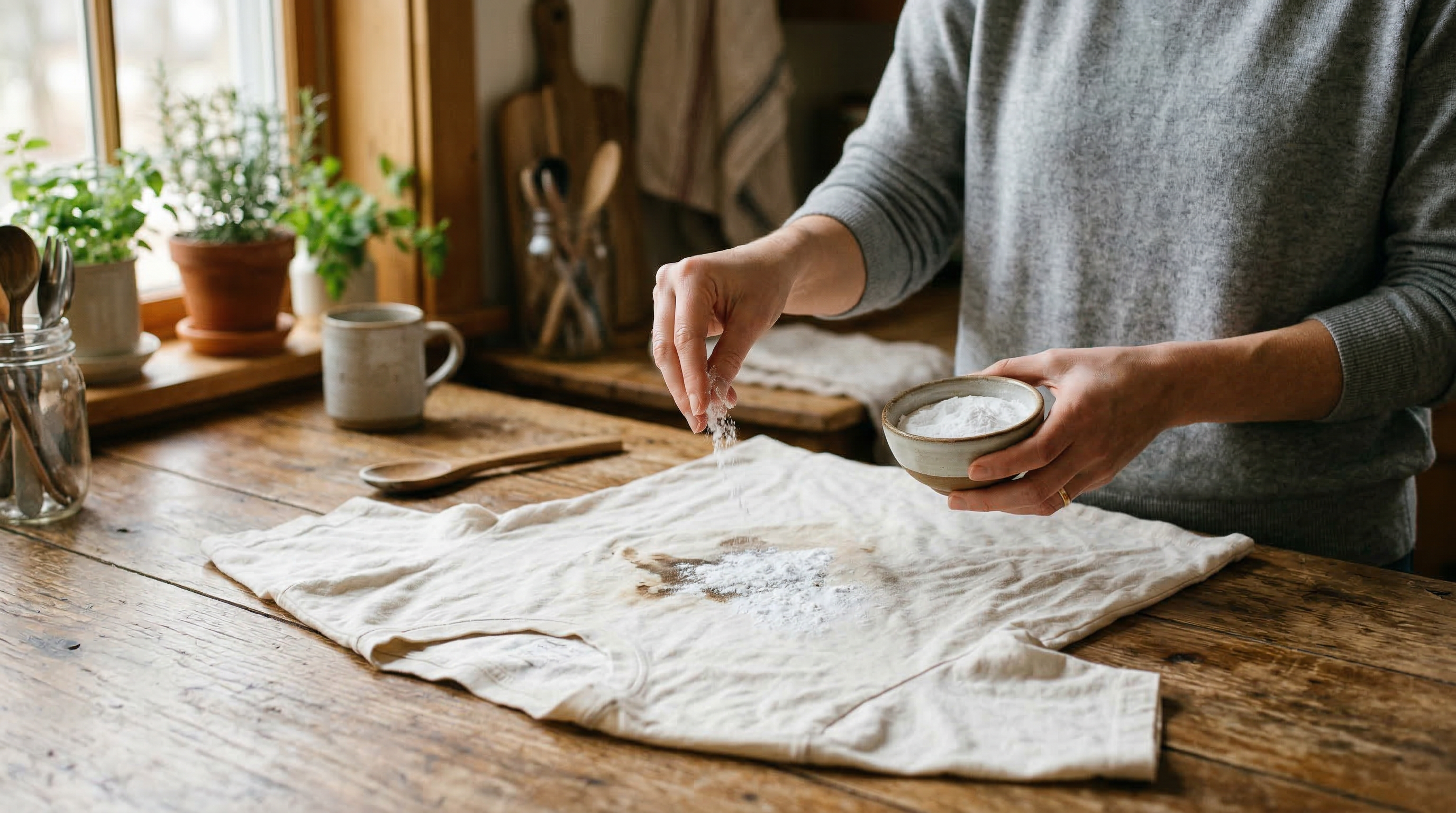
Grandma Knows: How to Remove Grease from Clothes
Grease stains on clothes are tricky but not impossible. Discover proven household methods using baking soda, dish soap, and patience.