
Grandma Knows: How to Remove Red Wine from Sofa
Red wine spilled on your sofa? Learn practical, proven methods to remove the stain using everyday household items before it sets.
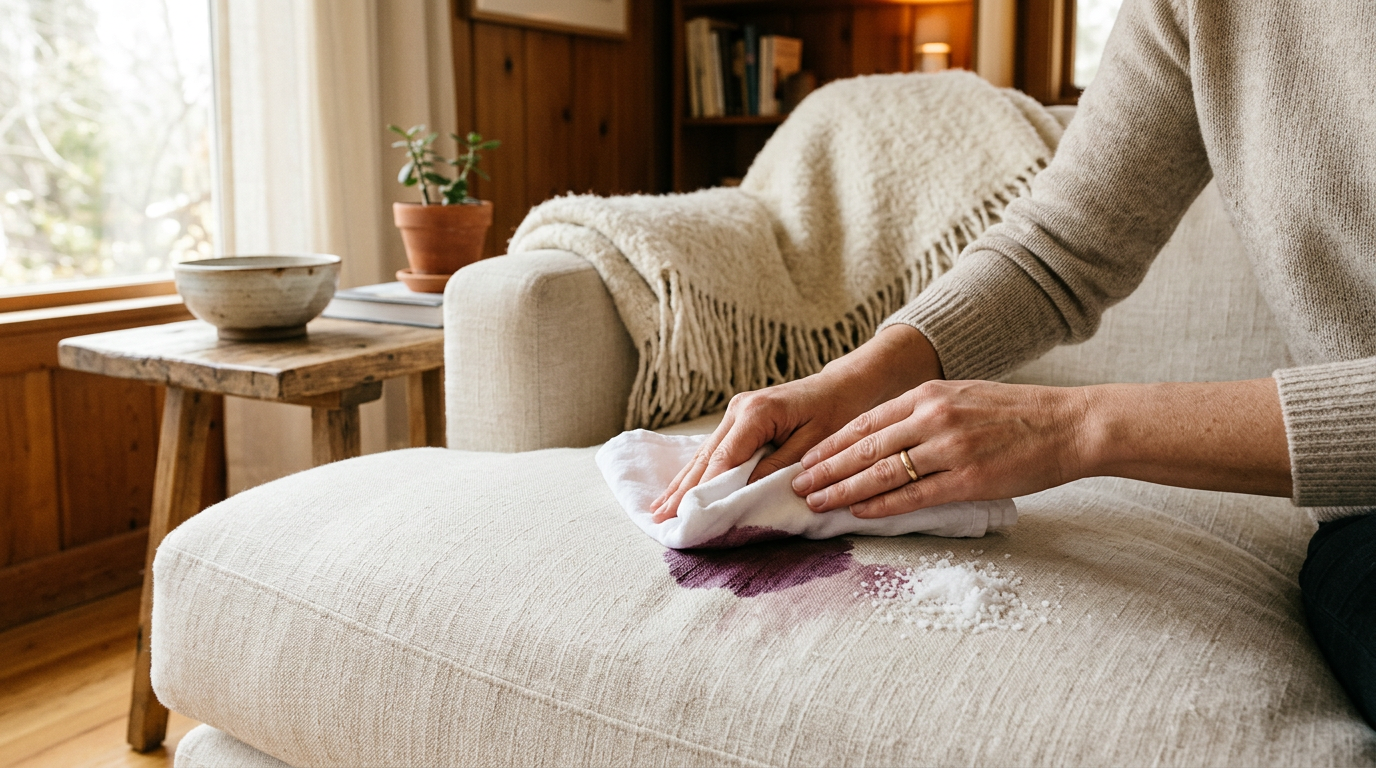
A glass tips over, and in a single second, a deep red stain spreads across the sofa cushion. It happens fast, and the first reaction is usually panic. But panic is the one thing that won't help here. What helps is moving quickly, thinking clearly, and knowing exactly what to reach for.
Red wine stains on upholstery are one of the most common household accidents, and also one of the most mishandled. The instinct to scrub hard and fast often makes things worse. Understanding what's actually happening to the fabric — and why certain methods work — makes all the difference between a stain that disappears and one that becomes permanent.
Why Red Wine Stains Are So Stubborn
Red wine contains a group of natural pigments called anthocyanins. These are the same compounds that give red grapes, blueberries, and beets their deep color. When wine hits fabric, those pigments begin bonding to the fibers almost immediately. The longer they sit, the deeper that bond becomes.
Wine is also mostly water, which means it spreads quickly through absorbent materials like upholstery foam and fabric weave. Heat accelerates the bonding process, which is why hot water or a warm cloth can actually lock a stain in rather than lift it out. Cold water slows the process, which is why it's usually the first thing to reach for.
The other factor is tannin — a naturally occurring compound in red wine that acts almost like a weak dye. Tannins are used in leather tanning and ink-making for exactly this reason. On upholstery fabric, tannins can create a secondary layer of staining beneath the surface color, which is why some red wine stains seem to come back faintly even after cleaning.
What to Do in the First Two Minutes
Speed matters more than anything else in the first moments after a spill. The goal right now is not to clean the stain — it's to stop the wine from traveling deeper into the fabric.
Blot the spill with a clean, dry cloth or a folded paper towel. Press firmly and hold for a few seconds, then lift straight up. Do not rub. Rubbing spreads the pigment sideways and pushes it deeper into the fibers. Think of blotting as lifting the wine out, not wiping it away.
Work from the outer edge of the stain inward toward the center. This prevents the stain from spreading further as you press on the wet fabric. Replace the cloth or paper towel as it becomes saturated — a soaked cloth just redistributes the wine instead of absorbing it.
Once you've removed as much liquid as possible, you're ready to treat the stain properly. At this point, the stain is still largely on the surface and top layers of the fabric. The real work begins now.
Salt: The First Household Responder
Plain table salt is one of the oldest and most reliable tools for handling a fresh wine spill on fabric. It works through a simple physical process: salt is highly hygroscopic, meaning it draws moisture toward itself. When poured generously over a wet wine stain, it pulls the diluted pigment up and out of the fibers before the wine has a chance to set.
After blotting, pour a generous amount of salt directly onto the damp stain. Don't be shy — a thin sprinkle won't do much. You want a small mound that covers the entire stain and can actively draw moisture out. Leave it for three to five minutes. You'll often see the salt begin to turn pink or purple as it works.
Then gently brush or vacuum the salt away. What you remove with the salt contains a portion of the wine pigment. The stain will likely not be gone, but it will be noticeably lighter, and the fabric will be much easier to treat in the next step.
Salt works best on fresh, wet stains. On a dry or partially dried stain, salt has little effect because there's no active moisture left for it to pull out.
Cold Water and Dish Soap: The Follow-Up Treatment
After salt, a simple solution of cold water and a small amount of liquid dish soap handles a significant portion of wine stains on their own. Dish soap is designed to break down organic compounds — fats, proteins, and pigments — and red wine responds well to it on most types of upholstery fabric.
Mix one tablespoon of liquid dish soap with two cups of cold water. Dampen a clean cloth with the solution and begin blotting the stain, again working from the outside edge inward. Apply light pressure and keep rotating to a clean section of cloth so you're always lifting stain out rather than pushing it back in.
After working through the stain, rinse the area by blotting with a cloth dampened with plain cold water. This removes soap residue, which can actually attract dirt and cause its own discoloration over time if left in the fabric. Finally, blot with a dry cloth and allow the area to air dry completely.
For linen, cotton, or microfiber upholstery, this method alone often removes a fresh stain entirely. On velvet or silk, proceed more carefully — these fabrics require very light pressure and minimal moisture to avoid watermarks or pile damage.
Baking Soda: A Gentle Second Stage
Baking soda plays a different role than salt. Rather than drawing moisture out, it works as a mild abrasive and deodorizer that helps lift residual pigment from fibers after the initial treatment. It's particularly useful when a stain has been partially treated but some color remains.
Once the fabric is damp — either from a fresh spill or from the dish soap treatment — sprinkle a light, even layer of baking soda over the stain. Let it sit for fifteen to twenty minutes. As it dries, it absorbs the remaining moisture along with whatever color is still loosely bound to the fabric surface.
Vacuum or gently brush away the baking soda once it has dried. In many cases, particularly on lighter upholstery fabrics, this step noticeably reduces or eliminates any remaining faint pink or gray shadow left by the wine.
Baking soda also helps with the smell. Older wine stains, especially on cushions that were treated hastily or not fully dried, can develop a musty or slightly sour odor over time. A baking soda treatment after cleaning neutralizes this without adding a strong scent of its own.
Club Soda: What It Actually Does
Club soda is one of the most repeated stain-removal suggestions for wine, but it's often used without any understanding of why it sometimes helps and why it sometimes doesn't. The truth is modest but worth knowing.
The carbonation in club soda creates a mild fizzing action that can help dislodge pigment particles from fabric fibers. The bubbles essentially agitate the stain from below, loosening it from the weave. However, club soda is mostly water — the carbonation dissipates quickly, and its actual lifting ability is limited compared to salt or a soap solution.
Where club soda genuinely earns its reputation is as an immediate response tool when nothing else is available. At a dinner party or in a situation where salt and dish soap aren't at hand, pouring club soda over the stain and blotting immediately can buy time and reduce initial penetration. Think of it as a holding measure rather than a complete solution.
Use cold club soda, pour it gently rather than aggressively, and blot immediately. Pouring too forcefully spreads the stain. Follow up with salt or a soap solution as soon as possible.
Dealing with a Stain That Has Already Dried
A dried red wine stain requires a different approach because the pigment has already begun bonding to the fabric fibers. The goal shifts from prevention to breaking that bond and releasing the pigment so it can be lifted away.
Start by very lightly dampening the stain with cold water — just enough to rehydrate the surface without soaking the fabric deeply. This softens the dried pigment and makes it more receptive to treatment.
Then apply a paste made from one part dish soap and one part hydrogen peroxide directly to the stain. Hydrogen peroxide is a mild oxidizing agent, which means it breaks apart the molecular structure of the pigment itself. This is why it lightens stains — it doesn't just move them, it chemically alters the color compounds.
There is one important caution here: hydrogen peroxide can lighten fabric color along with the stain. Always test on an inconspicuous area of the sofa first — the underside of a cushion or a hidden seam. On white, cream, or very light upholstery, it works well. On dark or richly colored fabric, it can cause fading that is worse than the original stain.
Apply the paste, leave it for ten minutes, then blot — do not rub — with a clean damp cloth. Repeat if necessary. Finish by blotting with plain cold water to remove residue, then allow to dry fully.
Upholstery Fabric Differences That Matter
Not all sofas respond the same way to cleaning, and using the wrong approach for a specific fabric can cause damage that no amount of follow-up treatment will fix.
- Cotton and linen blends: Generally forgiving and respond well to all the methods described above. These fabrics can handle slightly more moisture and mild scrubbing pressure without damage.
- Microfiber: Very effective at trapping stains due to its dense fiber structure, but also responds well to water-based cleaning methods. Blot gently — aggressive rubbing can disturb the surface pile and leave a rough texture.
- Velvet: Requires a very light touch. Too much moisture or pressure will flatten the pile permanently. Use minimal liquid, blot very gently, and allow to dry without touching the surface.
- Leather and faux leather: Red wine should be blotted up immediately. For residual staining, use a damp cloth with a tiny amount of mild soap. Avoid soaking the surface or using baking soda, which can dry out the material. Condition leather after cleaning to prevent stiffness.
- Wool: Sensitive to both heat and alkaline substances. Use cold water only, avoid baking soda, and work very gently. Wool fibers can felt or shrink if handled too roughly when wet.
If your sofa has a care label, check it before applying any liquid. Labels marked "W" indicate water-based cleaning is safe. Labels marked "S" mean solvent-based cleaners only — water can leave permanent watermarks. Labels marked "X" mean vacuuming only, no liquid treatments at all.
After the Stain Is Gone: Drying Matters
One of the most overlooked steps in the entire process is proper drying. A sofa cushion or arm that stays damp for too long can develop mildew inside the foam or batting, which creates a persistent musty smell that's very difficult to remove later.
After treating a stain, blot away as much moisture as possible with dry towels. If the cushion cover is removable, take it off so air can circulate around the entire surface. Point a fan toward the damp area if possible, or place the cushion near an open window in dry weather. Avoid direct sunlight on colored fabrics — extended sun exposure can fade upholstery.
Check the area once dry. Sometimes a stain that appears gone while wet becomes slightly visible again once the fabric dries completely. If this happens, a second light treatment with baking soda or the dish soap method usually resolves it.
When to Call a Professional
Some situations genuinely call for professional upholstery cleaning. A large spill on an expensive or delicate sofa, a stain that has been treated incorrectly and set further, or fabric marked with an "S" or "X" care code are all situations where a professional cleaner will get better results than any home method.
Professional upholstery cleaners use equipment that extracts moisture deeply and evenly, which home blotting can't replicate. They also have access to enzyme-based and solvent-based products specifically formulated for different fabric types and stain compounds.
If a stain has been sitting for more than 48 hours and multiple home treatments haven't made visible progress, a professional is the practical next step. Continuing to apply more solutions at that point risks oversaturating the fabric or creating secondary damage.
Related articles
Grandma Knows: How to Remove Tomato Sauce from Clothing
Tomato sauce stains are vivid and quick to set. Learn the right sequence of treatments to remove tomato stains from clothing before they become permanent.
Grandma Knows: How to Remove Grass Stains from Clothes
Grass stains on clothes are stubborn but very treatable. Learn the household methods that break down chlorophyll and get fabric clean again.
Grandma Knows: How to Remove Grease from Clothes
Grease stains on clothes are tricky but not impossible. Discover proven household methods using baking soda, dish soap, and patience.