
Grandma Knows: How to Remove Red Wine from Carpet
Spilled red wine on the carpet? Learn practical, proven methods to lift the stain fast using everyday household items.
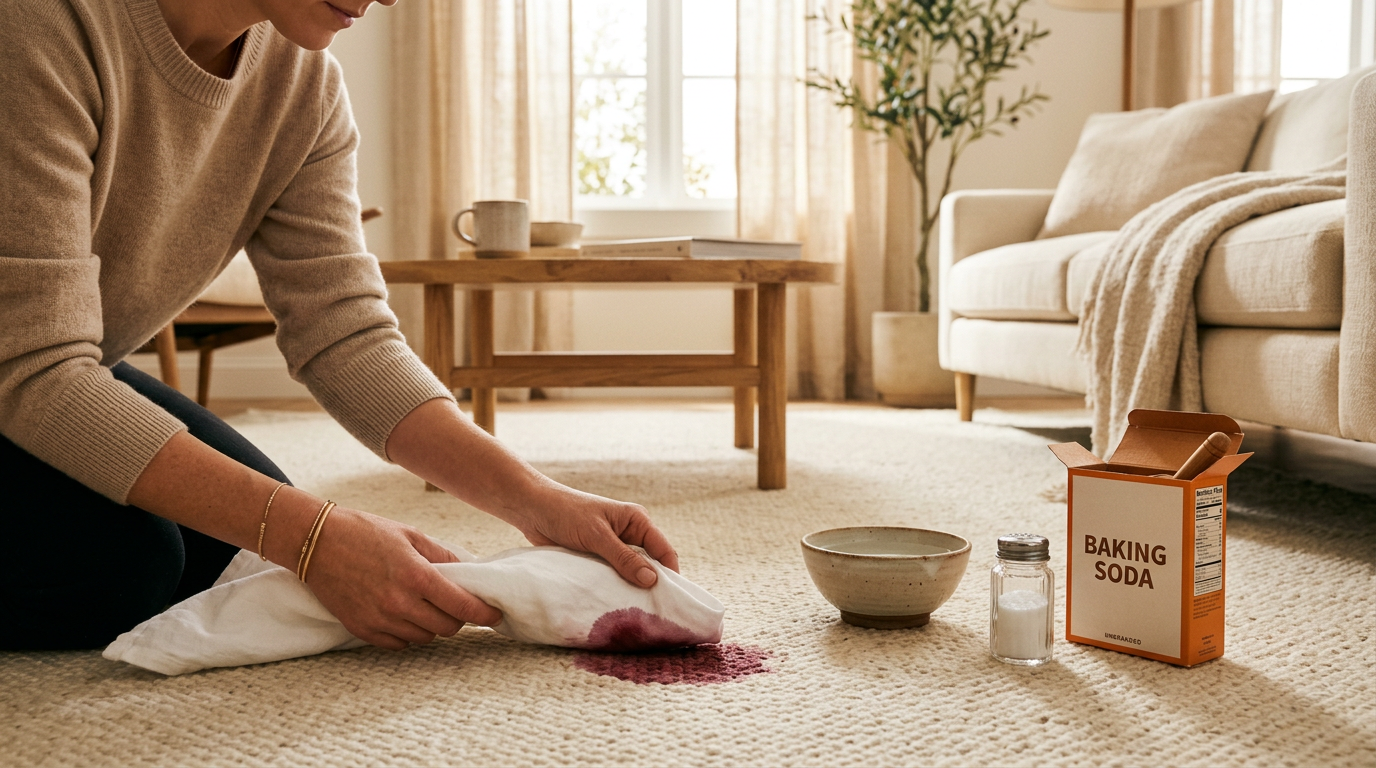
A glass tips over. Red wine spreads across the carpet in what feels like slow motion. That sinking feeling is familiar to almost anyone who has ever hosted a dinner or settled in for a quiet evening at home. The stain looks alarming, and the instinct is to panic and grab whatever is closest. But how you respond in the first few minutes — and what you reach for — makes all the difference between a stain that lifts cleanly and one that sets permanently into the fibers.
The good news is that red wine stains, even on carpet, are very manageable when you understand what is actually happening to the fabric and why certain household items work so well against it.
Why Red Wine Stains So Deeply
Red wine contains compounds called tannins, which are natural plant-based pigments. These tannins bond quickly to the protein fibers in carpet material, especially wool and nylon blends. The wine also contains chromogens — the primary color molecules responsible for the deep red and purple tones — along with a natural dye structure that behaves similarly to the dyes used in fabrics themselves.
When wine soaks into carpet, it moves downward and outward, spreading through the fibers and padding beneath. As it dries, the water in the wine evaporates and leaves the pigments behind in a more concentrated form. This is why a stain that looks manageable when wet can look much darker and more defined once it dries. Time is genuinely your most important factor here.
Heat also plays a role. Hot water or a hot iron applied to a red wine stain can set it permanently by causing the chromogens to bond even more tightly with the fibers. This is one of the most common mistakes people make when trying to clean up quickly.
The First Two Minutes Matter Most
Before reaching for any cleaning solution, the very first thing to do is blot. Not rub — blot. Use a clean white cloth, a stack of paper towels, or even a clean kitchen rag. Press firmly into the stain and lift straight up. The goal is to absorb as much liquid as possible before it travels deeper into the carpet fibers and the padding below.
Work from the outside edge of the spill toward the center. This prevents the stain from spreading further as you apply pressure. If you start from the middle, you push the wine outward and make the stained area larger.
Keep blotting with fresh sections of cloth until you are no longer picking up color. At this stage, even if the stain still looks pink or light red, you have already removed a significant amount of the pigment. What remains is much easier to treat.
Salt: The Oldest Trick in the House
Once you have blotted as much wine as possible, plain table salt is one of the most effective first-response tools available. Pour a generous amount directly onto the damp stain, enough to cover it completely with a thick layer. The salt draws moisture out of the carpet fibers through osmosis, pulling the diluted wine with it before it can set.
Leave the salt in place for at least three to five minutes. You will often see it begin to change color as it absorbs the wine. For a larger spill or a carpet with thick pile, leave it longer — up to ten minutes. Then vacuum or brush the salt away carefully and assess what remains.
Salt works best when the stain is still wet. It is much less useful on a stain that has already dried. It also works better on lighter colored carpets where you can clearly see the progress, though it is safe to use on any carpet color.
Cold Water and Club Soda
After the initial blotting and salt treatment, cold water is a reliable next step. Pour a small amount directly onto the remaining stain and blot again with a clean cloth. This dilutes what is left and helps lift it out of the fibers. The key word here is small — do not soak the carpet. Too much water saturates the padding underneath and can lead to mold or mildew growth if the carpet stays damp for too long.
Club soda has been used for generations as a follow-up treatment, and it does offer some genuine benefit. The carbonation creates a mild fizzing action that helps loosen the stain particles from the fibers, making them easier to blot away. It is not magic, but it is useful as part of a layered approach. Pour a small amount, let it fizz briefly, then blot firmly.
Plain cold water, however, works nearly as well and is always available. The temperature matters — cold water keeps the stain mobile and prevents it from bonding further, while warm or hot water accelerates that bonding process.
Dish Soap and Hydrogen Peroxide
For stains that have partially set or are more stubborn after the initial treatment, a mixture of dish soap and hydrogen peroxide is a well-proven household solution. Combine one tablespoon of liquid dish soap with roughly half a cup of three percent hydrogen peroxide, which is the standard concentration sold in most drugstores.
Apply a small amount to the stain, work it in gently with a soft brush or cloth using a circular motion, and let it sit for five to ten minutes. Then blot thoroughly with a clean damp cloth to remove the mixture along with the lifted stain.
The dish soap helps break down the organic compounds in the wine, while the hydrogen peroxide acts as a mild bleaching agent that oxidizes the chromogens — essentially breaking apart the color molecules so they no longer appear as a stain. This is the same basic chemistry behind many commercial carpet cleaners, just in a simpler form.
One important caution: hydrogen peroxide can lighten carpet color on some materials, particularly darker carpets or those made from natural fibers like wool. Always test on a hidden section of the carpet first — under a piece of furniture or in a closet — and wait a few minutes before proceeding. If there is no color change, you can use it safely on the stain.
Baking Soda as a Finishing Step
Once you have treated the stain and blotted away as much of the cleaning mixture as possible, baking soda makes an excellent finishing step. Sprinkle a light layer over the treated area while it is still slightly damp. Baking soda absorbs residual moisture, neutralizes any lingering odor, and helps lift any last traces of color as it dries.
Leave it for at least thirty minutes, or overnight if the stain was significant. Then vacuum thoroughly. In many cases, what looked like a permanent stain will have almost completely disappeared.
Baking soda is also gentle enough to use on all carpet types without any risk of damage or discoloration. It is a reliable, low-risk step that rounds out almost any stain removal process.
What to Do When the Stain Has Already Dried
A dried red wine stain is harder to remove, but it is not hopeless. The approach is slightly different because the pigments have already bonded more firmly to the fibers.
Start by dampening the stain with a small amount of cold water to rehydrate it. This softens the dried wine and makes it more responsive to treatment. Let the water sit for a minute or two before blotting.
Then apply the dish soap and hydrogen peroxide mixture described above. For older or darker stains, you may need to repeat the application two or three times. Between applications, blot, let the carpet breathe for a few minutes, and then apply again. Patience is more effective than scrubbing harder.
Some dried stains will lighten significantly but not disappear entirely in a single treatment. Treating the area again after the carpet has dried completely and then retrying the next day can sometimes finish the job that one round could not.
Stain Removers from the Pantry
Beyond the core methods already described, a few other common pantry items are worth knowing about for specific situations.
- White wine: Pouring a small amount of white wine over a fresh red wine stain can help dilute and neutralize the pigment before blotting. It does not remove the stain on its own, but it can make the red pigment easier to lift when combined with blotting and cold water. Use this only as an immediate first response, not as a standalone treatment.
- White vinegar: Diluted white vinegar — one part vinegar to two parts water — can help break down the tannins in red wine. Apply it after the initial blotting stage, let it sit for a few minutes, and then blot away. It works best on lighter stains and fresh spills. Vinegar also neutralizes odors effectively.
- Dish soap alone: If hydrogen peroxide is not available, a small amount of liquid dish soap worked into the damp stain with cold water and then blotted away can still make a meaningful difference. It is less powerful than the peroxide combination but safer for all carpet types.
Carpet Type Makes a Difference
Not all carpets respond the same way, and it is worth knowing what you are working with before treating a stain.
Synthetic carpets — polyester, nylon, and olefin — are generally more stain-resistant and respond well to most household cleaning methods. They tolerate the hydrogen peroxide mixture without significant risk of color loss.
Wool carpets are more delicate. They are more prone to color change from hydrogen peroxide and can be damaged by harsh scrubbing. For wool, stick to cold water, mild dish soap, and baking soda. Avoid anything acidic in high concentrations and avoid scrubbing aggressively.
Berber and loop-pile carpets require a gentle touch because aggressive scrubbing can catch and pull the loops, causing visible damage to the texture of the carpet that has nothing to do with the stain itself. Use a soft cloth rather than a brush on these carpets.
If you are unsure what your carpet is made of, test any solution in an inconspicuous area first and err on the side of gentleness.
When to Call a Professional
Most red wine stains on carpet can be managed well at home, especially when treated promptly. But there are situations where professional cleaning is the more practical choice.
A very large spill that has soaked through to the padding is difficult to treat fully at home. If the padding underneath stays damp, it can develop mold or a persistent musty smell even if the surface looks clean. A professional cleaner has equipment that extracts moisture from deep within the carpet structure.
Antique rugs, hand-knotted wool rugs, or any carpet of significant value should be handled by a professional. The risk of damage from home treatment is not worth it when the piece is irreplaceable.
If a stain has been set with heat — from someone applying a hot cloth or a steamer before knowing better — it may have bonded permanently in a way that home methods cannot reverse. A professional may still be able to lighten it significantly, even if full removal is not possible.
Keeping the Basics on Hand
One of the most useful things you can do, long before any spill happens, is to make sure you have what you need within easy reach. Salt, dish soap, hydrogen peroxide, baking soda, and a stack of clean white cloths cover nearly every situation described here. These are not specialty products — they are ordinary household items that most people already have.
Keeping a few clean white cloths set aside specifically for spills means you will not be scrambling for something useful in the moment. A colored cloth can transfer dye to a wet carpet stain, which only adds to the problem.
The calmer and more methodical your response to a spill, the better the outcome tends to be. Acting quickly matters, but acting thoughtfully matters just as much. A stain that seems ruinous in the first thirty seconds is, in most cases, something that can be handled with items already in your home and a steady hand.
Related articles
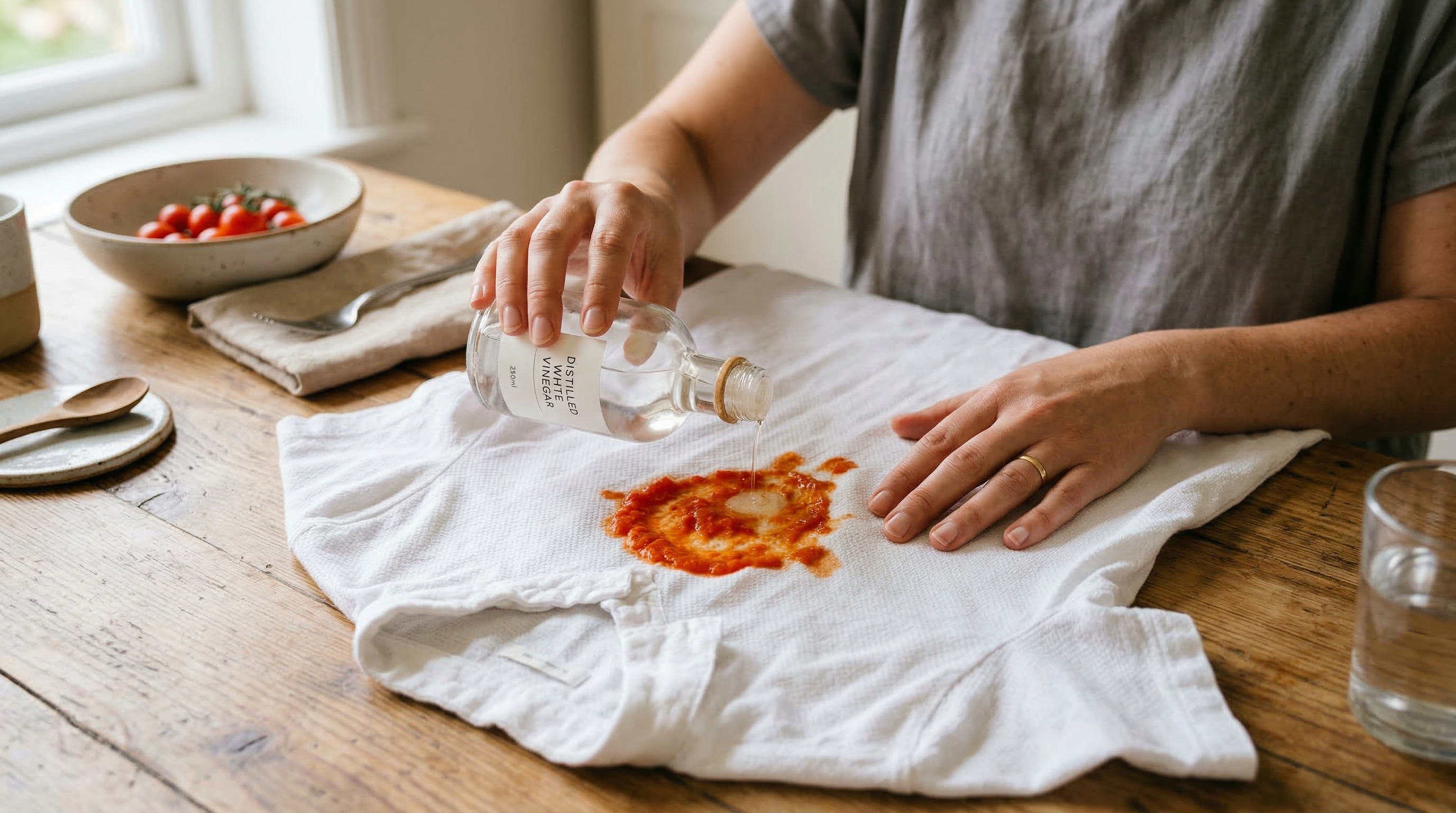
Grandma Knows: How to Remove Tomato Sauce from Clothing
Tomato sauce stains are vivid and quick to set. Learn the right sequence of treatments to remove tomato stains from clothing before they become permanent.
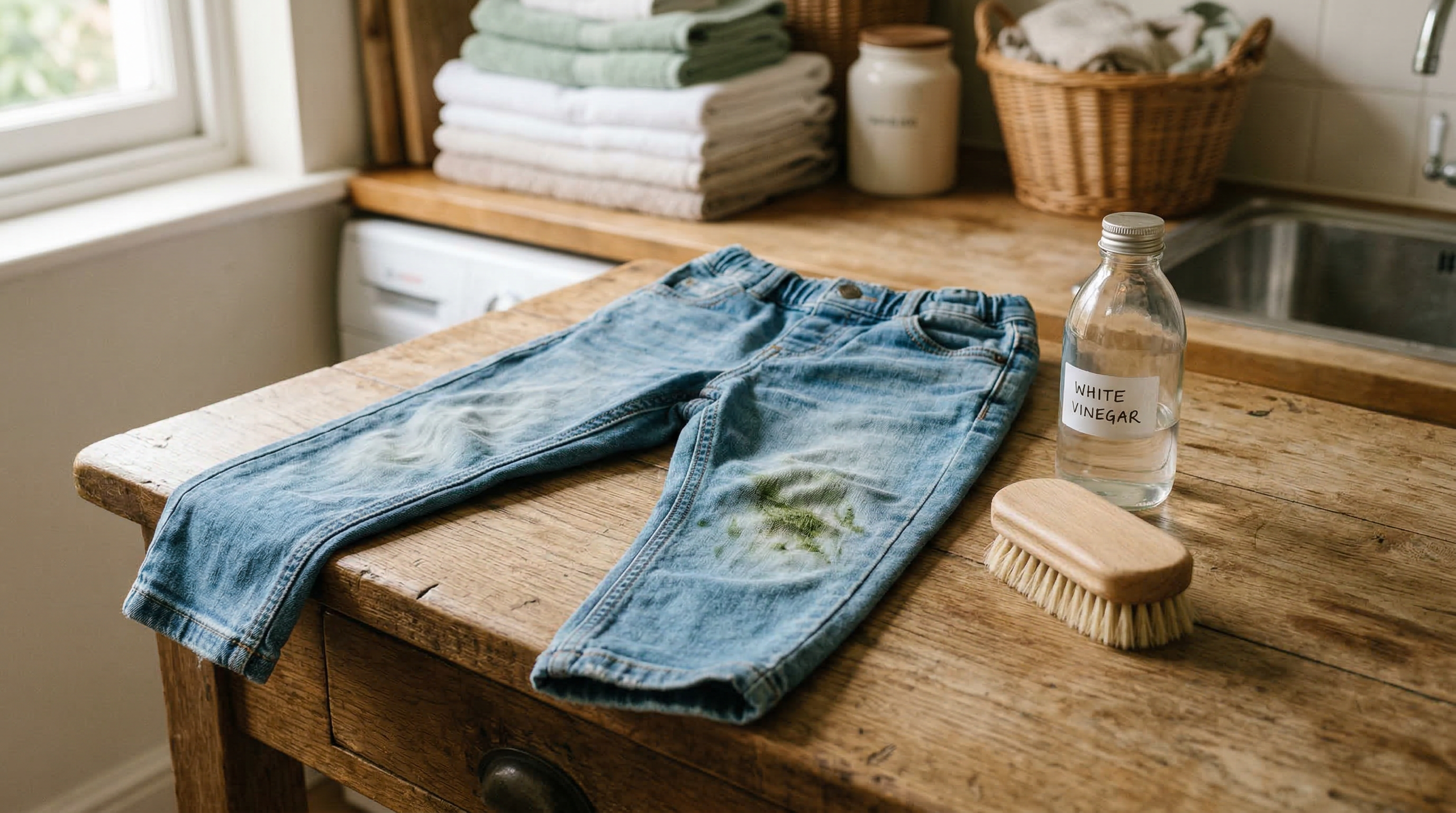
Grandma Knows: How to Remove Grass Stains from Clothes
Grass stains on clothes are stubborn but very treatable. Learn the household methods that break down chlorophyll and get fabric clean again.
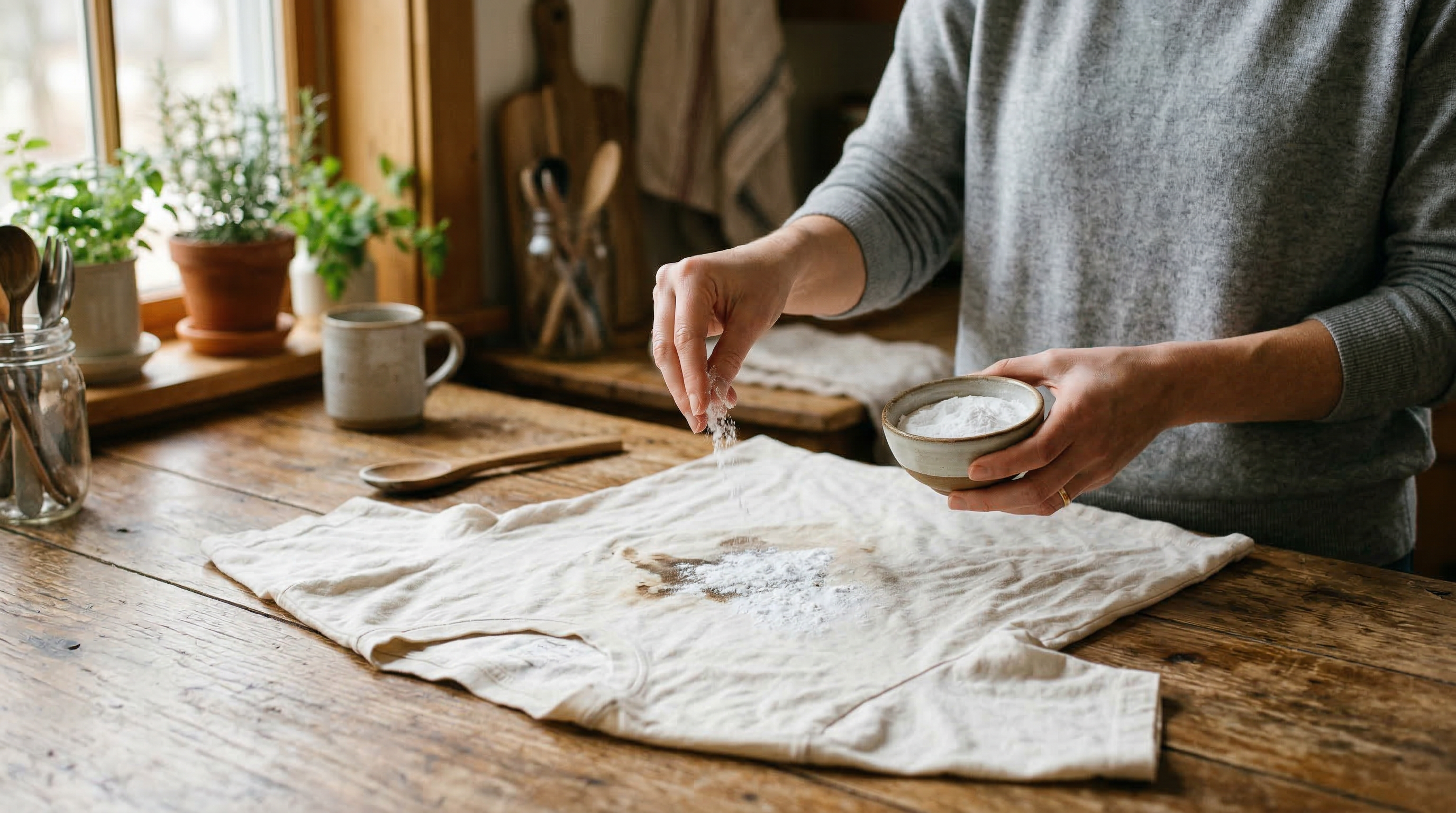
Grandma Knows: How to Remove Grease from Clothes
Grease stains on clothes are tricky but not impossible. Discover proven household methods using baking soda, dish soap, and patience.