
Grandma Knows: How to Remove Oil from Sofa
Oil stains on your sofa don't have to be permanent. Learn practical, proven methods to lift grease and oil from fabric using everyday household items.
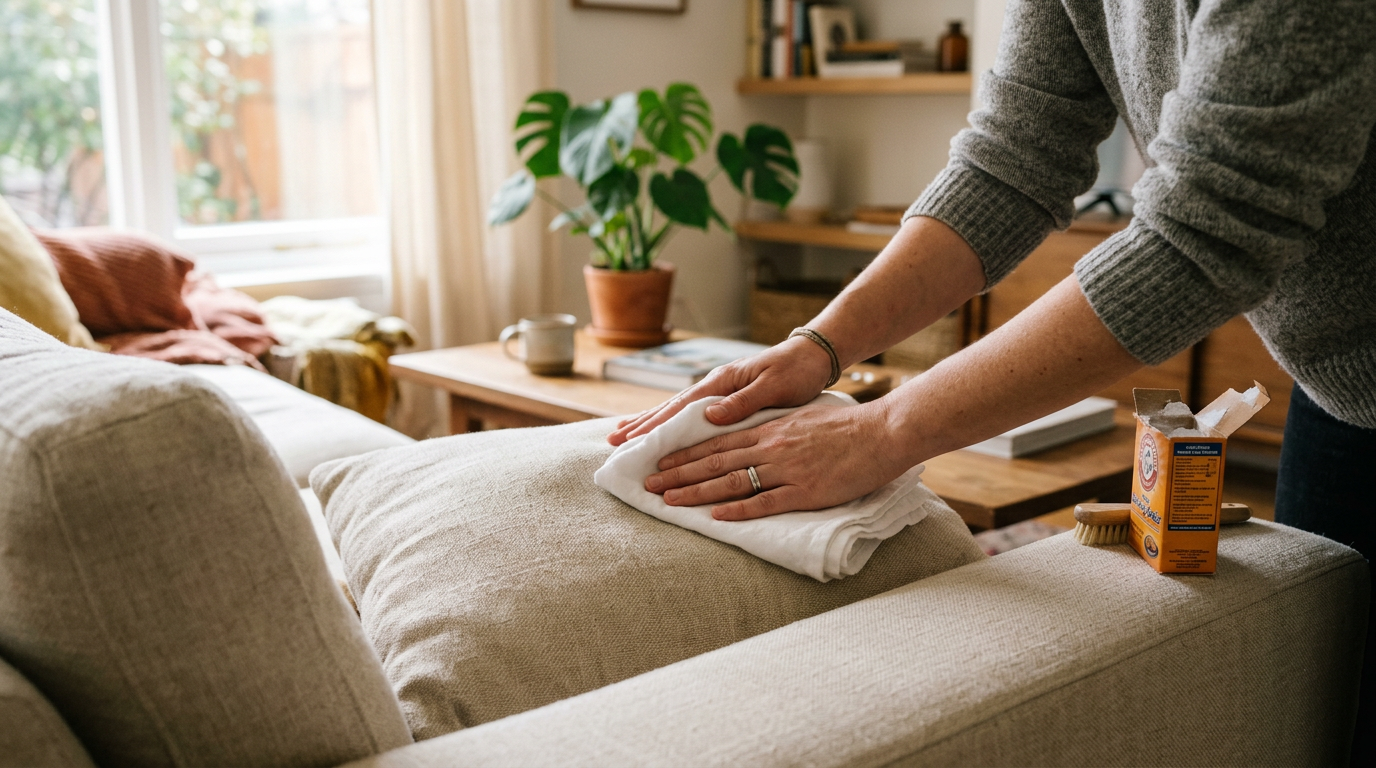
A sofa takes a lot of daily life. Meals get eaten on it. Children settle in for movie nights. Someone sits down without realizing there is a smear of hand lotion or cooking oil on their sleeve. However it happens, an oil stain on a sofa fabric is one of those moments that feels worse than it is — especially in the first few seconds when you are staring at a dark, spreading mark on your favorite cushion.
The good news is that oil stains, even on upholstery, respond well to household methods when handled with a little patience and the right approach. Understanding why oil behaves the way it does in fabric helps explain why certain methods work and others do not.
Why Oil Stains Are Different from Other Spills
Most spills — coffee, juice, tea — are water-based. They soak into fabric fibers but can often be diluted and blotted away. Oil is different. It does not mix with water, which is why your first instinct to dab at it with a damp cloth usually makes things worse. The water pushes the oil further into the fabric instead of pulling it out.
Oil also bonds to fabric fibers at a molecular level. As time passes, it oxidizes — reacting with air and heat — and that bond gets stronger. A fresh oil stain that has been sitting for an hour is harder to remove than one you catch in the first few minutes. A stain that has been through a warm room over several days may have begun to set in a way that requires more effort to address.
This is why the two most important factors in treating an oil stain on a sofa are speed and absorption. You want to pull the oil out of the fabric rather than push it around. That guiding principle shapes every method that actually works.
Before You Start: Read the Fabric Label
Sofas come with care labels, usually tucked under a cushion or attached to the frame beneath the seat. These labels use letter codes that tell you what cleaning methods are safe for that particular fabric.
- W means water-based cleaning solutions are safe to use.
- S means solvent-based cleaners only — water may cause shrinking, watermarks, or fiber damage.
- W-S means either is fine.
- X means vacuum or brush only — no liquid of any kind.
Most cotton, linen, and synthetic blend sofas are labeled W or W-S, which means the methods described here will be appropriate. If your sofa is labeled S or X, it is worth calling a professional upholstery cleaner rather than risking damage to the fabric. Leather and faux leather sofas are a separate case covered later in this article.
The First Step: Absorb Before You Clean
Whether the stain is from olive oil dripped during dinner, a greasy snack, baby oil, or even a lotion smear, the first thing to do is absorb as much of the oil as possible before applying anything at all.
Do not rub. Rubbing pushes the oil sideways and deeper. Instead, use a clean cloth or paper towel to blot — press gently and lift straight up, then move to a fresh part of the cloth and press again. Work from the outside edge of the stain inward to avoid spreading it.
Once you have blotted away what you can, the next step is to apply an absorbent powder. This is where an old household staple earns its reputation.
Baking Soda or Cornstarch
Both baking soda and cornstarch work on oil stains through the same basic mechanism: they are fine, dry powders that draw oil out of fabric fibers through absorption. Cornstarch is slightly more effective on heavy grease because its starch particles have a strong affinity for fats. Baking soda has the same absorbing ability and also has a mild deodorizing effect, which is useful if the oil has a strong smell — cooking oil left to sit can develop a stale odor in fabric.
Sprinkle a generous layer over the entire stain. You want enough to cover it completely and sit slightly mounded on top. Leave it in place for at least 15 to 20 minutes. For a stain that has been sitting for a few hours, leave it for 30 minutes or longer — even overnight if the stain is old and well set.
As the powder sits, it pulls oil out of the fibers and into itself. You may notice the powder beginning to clump slightly, which is a sign it is working. Brush or vacuum it away gently when time is up, and you will often find the stain has already lightened noticeably.
Repeat this step a second time if the stain is heavy. Two rounds of powder absorption before moving to a liquid cleaner will produce better results than rushing to the washing-up liquid too quickly.
Dish Soap: The Traditional Degreaser
Dish soap is designed specifically to cut through cooking grease and fat. It contains surfactants — compounds that have one end attracted to water and another end attracted to oil. When dish soap is applied to an oil stain and worked in gently, those surfactant molecules surround the oil particles, lift them away from the fabric fibers, and hold them in suspension so they can be rinsed away.
This is why dish soap outperforms regular hand soap or laundry detergent on oil stains. Regular soaps are designed for skin or general fabrics, not for cutting through fats specifically. A plain dish soap — nothing with added moisturizers or bleach — is ideal.
How to Apply It
After the powder absorption step, apply a small amount of dish soap directly to the stain. Use about a quarter-teaspoon for a stain the size of a large coin. More is not better here — excess soap is harder to rinse out of upholstery and can leave a residue that attracts dirt over time.
Work the soap into the stain gently using your fingertip or a soft-bristled brush — an old toothbrush works well. Use small circular motions, working from the edges inward. You will see a light lather begin to form, which means the surfactants are activating and lifting the oil.
Leave the soap on the stain for five minutes before blotting. Use a clean damp cloth to blot — pressing down, lifting, moving to a clean section of the cloth, pressing again. Rinse the cloth frequently so you are always lifting oil residue away rather than spreading it.
Once the soap is mostly removed, blot the area with a dry cloth to absorb as much moisture as possible. Let the fabric air dry completely. Direct sunlight or a fan can speed drying but avoid using a hair dryer on a high heat setting, as heat can set any remaining oil traces deeper into the fibers.
For Stubborn or Set-In Stains
An oil stain that has had time to dry and set will not lift easily with a single round of powder and dish soap. The oil has begun to oxidize and bond more firmly to the fibers. In this case, a slightly more active approach is needed.
Dish Soap and Baking Soda Paste
Mixing dish soap and baking soda into a paste gives you the degreasing power of the soap combined with the mild abrasive and absorbing action of the baking soda. Mix roughly two parts baking soda with one part dish soap to form a thick paste. Apply it directly to the stain and work it in gently with a soft brush. Leave it on for 15 to 20 minutes, then blot and rinse as described above.
This method is particularly useful for stains that have already dried or for fabric with a tighter weave where oil has penetrated deeper into the fibers.
Rubbing Alcohol for Certain Fabric Types
For synthetic fabrics such as polyester or microfiber, rubbing alcohol (isopropyl alcohol at 70% or higher) can be effective on oil stains that have not responded to dish soap alone. Alcohol does not mix with water but it does dissolve certain oils and can help break the bond between oil and synthetic fibers.
Apply a small amount to a clean white cloth — never directly to the fabric — and blot gently. Test on an inconspicuous area first, as some dyes may be affected. This is not recommended for natural fibers like cotton or linen, where alcohol can dry out and weaken the fabric over time.
Treating Oil Stains on Microfiber Sofas
Microfiber is one of the more common sofa materials today, and it has its own particular behavior. Because the fibers are extremely fine and densely packed, oil can penetrate quickly and sit deeply in the fabric. The same powder-first approach applies, but microfiber often responds poorly to water — it can leave watermarks or change the texture of the surface if too much moisture is used.
For microfiber sofas labeled S, use rubbing alcohol instead of water-based solutions. Apply it to a cloth, blot the stain, and then fluff the fibers gently with a soft brush once the area is dry. This restores the texture and prevents that flat, stiffened look that water can leave on microfiber.
For microfiber labeled W or W-S, the dish soap method works well, but use as little water as possible and blot thoroughly to avoid over-saturating the fabric.
Oil Stains on Leather and Faux Leather
Leather and faux leather behave differently from fabric upholstery. Oil on leather does not soak into fibers the same way, but it can still leave a dark mark and, over time, break down the surface coating of the leather if left untreated.
For fresh oil on leather, blot first, then apply a thin layer of cornstarch or talcum powder and leave it for several hours or overnight. The powder will absorb the surface oil. Brush it away gently and wipe the area with a dry cloth.
Do not use dish soap on leather — it strips the natural oils and conditioners from the leather surface and can cause cracking over time. A dedicated leather cleaner is the appropriate follow-up. After cleaning, apply a leather conditioner to keep the surface from drying out.
Faux leather can tolerate mild dish soap diluted in water, but avoid scrubbing, which can damage the surface coating. Blot gently and dry thoroughly.
A Few Practical Notes from Daily Life
Oil stains on sofas are almost never from one dramatic spill. More often it is a gradual buildup — the spot where someone always sits and rests their head against the backrest, building up hair oil over months. Or the armrest that gets touched with kitchen hands without anyone noticing. These types of stains are low-concentration but spread over a larger area.
For these diffuse oil patches, the baking soda powder method applied over the whole area and left overnight is the most practical approach. Follow it with a light treatment of diluted dish soap solution — about one teaspoon of soap in a cup of warm water — applied with a damp cloth and blotted away.
It is also worth knowing that some commercial fabric sprays and dry-cleaning sprays contain solvents that work similarly to the methods described here. They can be useful for quick maintenance, but they do not always penetrate as effectively as a proper baking soda and dish soap treatment for a true oil stain.
Finally, once a stain has been fully treated and the fabric is dry, a light vacuuming helps restore the texture of the fabric and removes any last powder residue. Run the upholstery attachment over the area in one direction, then the other. The sofa should look and feel like itself again.
Related articles
Grandma Knows: How to Remove Tomato Sauce from Clothing
Tomato sauce stains are vivid and quick to set. Learn the right sequence of treatments to remove tomato stains from clothing before they become permanent.
Grandma Knows: How to Remove Grass Stains from Clothes
Grass stains on clothes are stubborn but very treatable. Learn the household methods that break down chlorophyll and get fabric clean again.
Grandma Knows: How to Remove Grease from Clothes
Grease stains on clothes are tricky but not impossible. Discover proven household methods using baking soda, dish soap, and patience.