
Grandma Knows: How to Remove Grease from Sofa
Grease on your sofa? Learn practical, time-tested methods to lift oil stains from fabric using simple household ingredients.
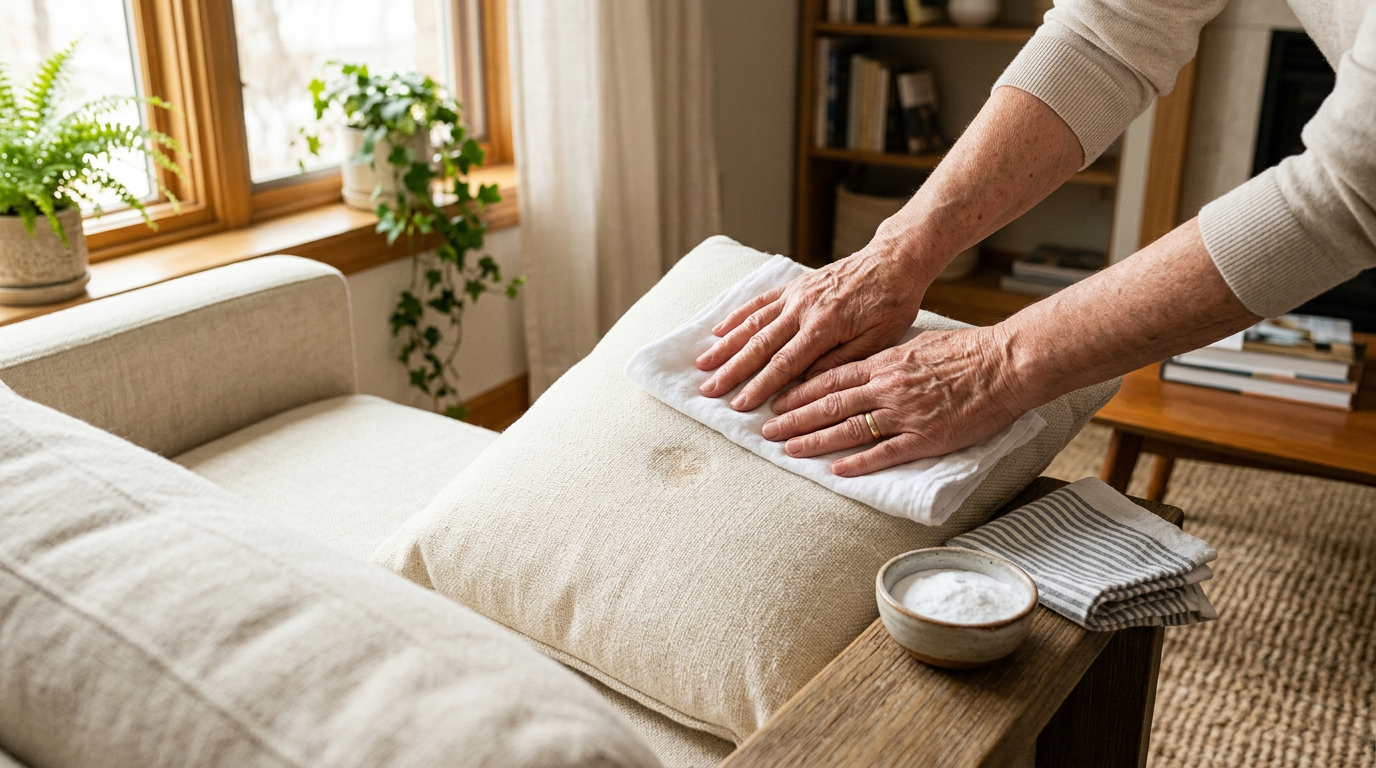
A grease stain on the sofa has a way of appearing at the worst possible moment. Maybe someone sat down with a plate of food, a child pressed a buttery hand into the cushion, or a bottle of lotion tipped over during a quiet evening. Whatever the cause, the result is the same: a dark, slightly shiny patch spreading into the fabric, and that sinking feeling that it might be there forever.
It does not have to be. Grease stains on upholstered furniture respond well to the right approach, especially when you act reasonably quickly. The key is understanding what you are actually dealing with and choosing a method that fits your specific situation.
Why Grease Is Particularly Stubborn on Fabric
Grease and oil are hydrophobic, meaning they actively repel water. This is why simply dabbing a wet cloth at a grease stain rarely does anything useful — the water beads away from the oil rather than pulling it out of the fibers.
Upholstery fabric makes this problem worse. Unlike a hard surface where you can wipe residue away cleanly, fabric has texture and depth. Oil seeps between individual fibers and clings to them. The longer it sits, the more it bonds with the material. Heat speeds this process along, which is why a stain that was treated casually and then sat near a sunny window or a warm radiator can become significantly harder to remove over time.
The other challenge with sofas specifically is that you cannot simply submerge the fabric in water and wash it like a shirt. You are working with a fixed piece of furniture, which means your method has to be controlled, careful, and dry-leaning whenever possible.
The First and Most Important Step: Do Not Rub
Before reaching for any cleaning product at all, stop and resist the urge to rub. Rubbing pushes the grease deeper into the fabric weave and spreads it sideways into a larger area. A stain that might have been the size of a coin can become the size of a palm within a few seconds of vigorous scrubbing.
Instead, if the grease is fresh, blot gently with a clean dry cloth or paper towel. Press down and lift straight up. You are trying to pull excess grease off the surface before it has a chance to soak further in. Do not drag the cloth across the fabric.
If something solid caused the stain — a piece of food, for example — lift it away carefully with a spoon or dull knife before you do anything else. Dragging it across the fabric as you remove it will smear oil further into the weave.
Baking Soda: The Absorbing Method
Baking soda is one of the most reliable first-response tools for a grease stain on upholstery. It works not through any chemical reaction but through physical absorption. Baking soda is a fine, porous powder that draws moisture and oil out of surfaces it sits on. When it is left on a grease stain for a period of time, it pulls the oil upward and holds onto it.
This method works best on fresh or relatively recent stains where the oil has not yet fully bonded with the fibers.
- Sprinkle a generous layer of baking soda directly over the entire stained area. Do not be shy — you want good coverage.
- Press it gently into the fabric with your fingertips or the back of a spoon. This helps the powder make contact with the oil beneath the surface.
- Leave it for at least 15 to 20 minutes. For older or heavier stains, leave it for an hour or even overnight.
- Vacuum the baking soda away using an upholstery attachment. Work slowly and carefully so you are lifting the powder — and the oil it has absorbed — rather than pushing it back in.
- Check the stain. In many cases, especially with fresh grease, a single application will noticeably lighten it. Repeat the process if needed before moving on to a liquid method.
Cornstarch works in exactly the same way and can be used as a direct substitute. Some people prefer it because it tends to clump slightly when it absorbs oil, which makes it easier to see that the method is working.
Dish Soap: The Cutting Method
Dish soap is specifically formulated to break down grease. This is its core function — it is designed to lift cooking oil and food fat off dishes, and it does the same thing to fabric. Dish soap contains surfactants, which are molecules with one end that attracts water and one end that attracts oil. The surfactant surrounds the oil, breaks it into smaller particles, and allows water to carry it away.
This is the most effective follow-up after the baking soda absorption step, or it can be used on its own if the stain is moderate and the fabric is not extremely delicate.
- Apply a small amount of plain dish soap — a few drops — directly to the stain. Avoid formulas with added moisturizers, as these can leave their own residue behind.
- Work it gently into the fabric with your fingertip or a soft-bristled brush. Use small circular motions and work from the outside edge of the stain inward. This prevents the stain from spreading.
- Let it sit for five to ten minutes. You are giving the surfactants time to surround and loosen the grease molecules.
- Dampen a clean white cloth with cold water and blot the area to lift the soap and loosened grease. Rinse the cloth frequently and continue blotting until the soap residue is gone.
- Blot the area dry with a clean dry cloth and allow it to air dry fully before assessing the result.
A small point worth noting: use cold water, not warm. Warm water can set certain stains and may also encourage some fabrics to absorb liquid more deeply, which works against you here.
Combining Both Methods for Stubborn Stains
For stains that have been sitting for a day or longer, the most practical approach is to run both methods in sequence. Start with the baking soda absorption to pull out as much grease as possible. Then follow with the dish soap treatment to address what remains.
The reason this two-step approach is more effective than either method alone is that they work on different parts of the problem. Baking soda lifts grease physically through absorption. Dish soap breaks grease down chemically through surfactant action. Together, they address both the bulk of the oil and the residue left behind.
After the dish soap step, some people add a very light mist of white vinegar diluted in water as a final rinse. Vinegar helps neutralize any remaining soap residue in the fabric, which can otherwise attract fresh dirt once the sofa dries. Use it sparingly — a light mist, not a soak — and blot it away promptly.
Rubbing Alcohol for Synthetic Fabrics
On synthetic upholstery fabrics such as polyester or microfiber, rubbing alcohol can be particularly effective for grease. Alcohol acts as a solvent, dissolving the oil so it can be blotted away. It also evaporates quickly, which reduces the risk of watermarks or over-wetting the fabric.
Dampen a clean white cloth with rubbing alcohol and blot the stained area. Do not rub. The oil will begin transferring onto the cloth. Rotate the cloth to a clean section frequently so you are not re-depositing oil back onto the fabric.
This method is not ideal for natural fibers like cotton or linen, where alcohol can sometimes cause discoloration or affect the texture of the material. Always test on a hidden area of the sofa first.
Reading Your Sofa's Care Label
Sofas come with care labels, usually tucked under the cushions or along the bottom of the frame. These labels use a simple code that tells you exactly what type of cleaning the manufacturer recommends.
- W — Water-based cleaners are safe to use.
- S — Solvent-based cleaners only. Avoid water, which can cause shrinkage, watermarks, or distortion in the fabric.
- W/S — Both water-based and solvent-based cleaners are acceptable.
- X — Vacuum only. No liquid cleaning of any kind.
If your sofa is labeled S or X, the baking soda method is still safe because it involves no liquid. For the dish soap or vinegar steps, which do use water, you would need to use a dry-cleaning solvent product instead on an S-labeled fabric. An X-labeled sofa with a grease stain may need professional attention.
What to Do When the Stain Has Dried
A dried grease stain is more difficult to remove than a fresh one, but it is not hopeless. The main difference is that you will need to work in multiple passes rather than expecting a single treatment to resolve it.
Start with the baking soda method and leave it for as long as possible — overnight is ideal. Even with a dry stain, baking soda will absorb some of the residual oil. After vacuuming, move to the dish soap method. You may need to repeat the dish soap step two or three times, allowing the fabric to dry between applications so you can properly assess progress.
Patience is genuinely part of the method here. Rushing between steps while the fabric is still damp makes it harder to judge whether the stain is lifting and increases the risk of over-wetting the upholstery.
Practical Habits That Prevent the Problem from Getting Worse
Beyond the cleaning methods themselves, a few practical habits make a real difference in outcomes.
Keep a small container of baking soda or cornstarch somewhere accessible in the living area — not buried in a kitchen cabinet. The faster you can get an absorbent powder onto a fresh grease stain, the better the result will be. Time is genuinely the most important factor with oil stains on fabric.
Avoid using colored cloths when cleaning upholstery. The dyes in colored fabric can transfer to your sofa, especially when the cloth is damp. White cloths or plain paper towels are always the safer choice.
After any cleaning treatment, let the fabric dry naturally and fully before sitting on it. Sitting on damp upholstery compresses the fibers while they are still vulnerable, which can affect both the appearance and the texture of the fabric.
If you are treating a removable cushion cover that is machine washable, check the stain thoroughly before putting it through the dryer. Heat from a dryer will permanently set any grease that has not been fully removed. Air dry instead, and inspect the fabric in good natural light before deciding whether a second treatment is needed.
When to Consider Professional Cleaning
Some situations fall outside the range of home treatment. A very large stain, a stain on delicate or expensive fabric, or a stain that has been through a heat source and set hard may not respond adequately to home methods. Similarly, if you have attempted treatment and the stain has lightened but not cleared, a professional upholstery cleaner has access to stronger solvents and steam equipment that can address what household methods cannot.
It is worth calling a professional before attempting too many repeated treatments on the same spot. Over-working an area of upholstery can weaken the fibers, change the texture, or cause fading — particularly on older or more delicate fabrics. Knowing when to stop is part of good judgment.
Related articles
Grandma Knows: How to Remove Tomato Sauce from Clothing
Tomato sauce stains are vivid and quick to set. Learn the right sequence of treatments to remove tomato stains from clothing before they become permanent.
Grandma Knows: How to Remove Grass Stains from Clothes
Grass stains on clothes are stubborn but very treatable. Learn the household methods that break down chlorophyll and get fabric clean again.
Grandma Knows: How to Remove Grease from Clothes
Grease stains on clothes are tricky but not impossible. Discover proven household methods using baking soda, dish soap, and patience.