
Grandma Knows: How to Remove Grease from Carpet
Grease on the carpet? Learn practical, proven methods to lift oil and grease stains using simple household supplies.
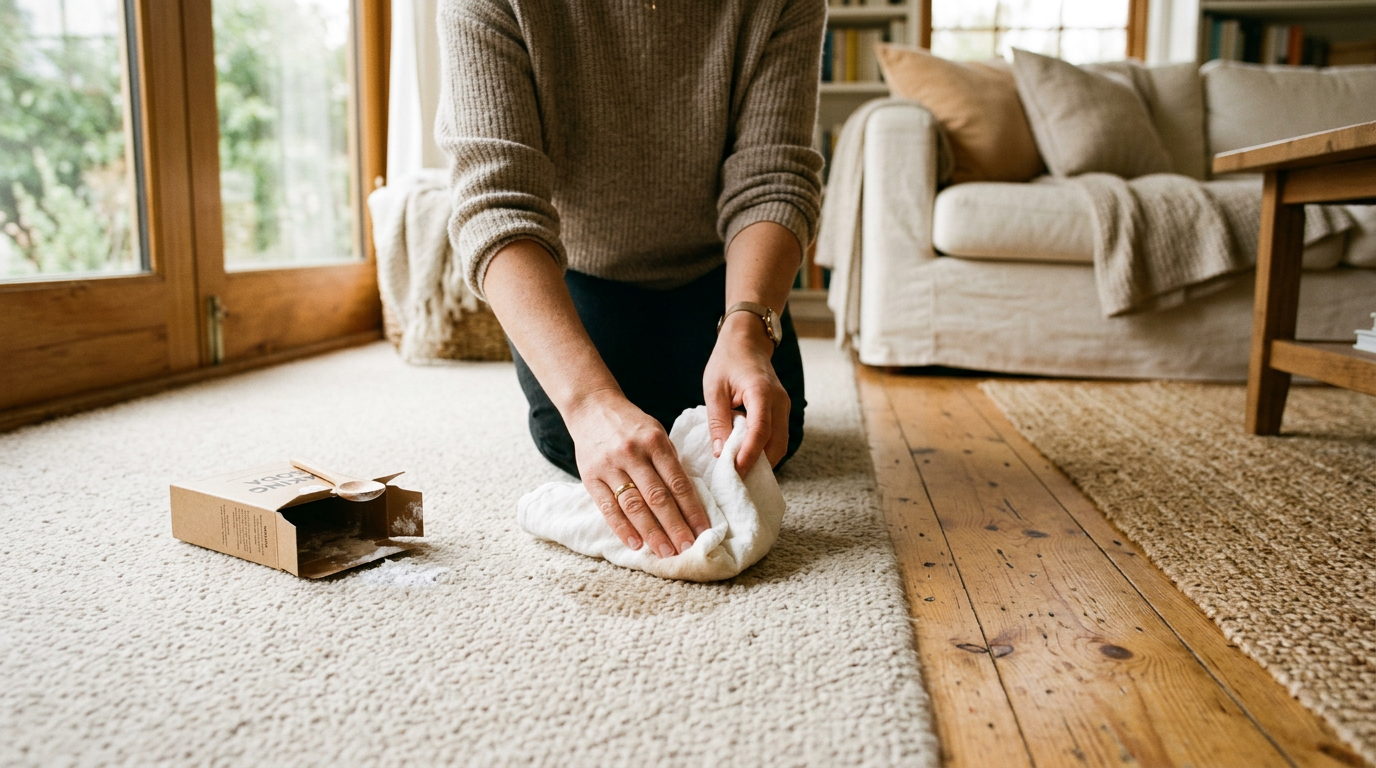
A greasy stain on the carpet has a way of appearing at the worst possible moment. Maybe a slice of pizza landed face-down during dinner. Maybe a bottle of salad dressing tipped over in the kitchen, or someone tracked in a smear of bicycle grease from the garage. Whatever the source, grease on carpet feels like a serious problem — and if you handle it the wrong way, it can turn into a permanent one.
The good news is that grease stains on carpet respond very well to simple household methods, as long as you understand what you are dealing with and act in the right order. This is not about scrubbing harder or reaching for a strong chemical spray. It is about using the right materials at the right time, and letting them do the work.
Why Grease Behaves Differently from Other Stains
Most stains — coffee, juice, mud — are water-based. They soak into carpet fibers, but they can also be drawn back out with water and a little detergent. Grease is fundamentally different. It is an oil-based substance, which means water alone cannot break it up or lift it away. If you pour water on a grease stain and start blotting, you are not removing the grease. You are just spreading it wider and pushing it deeper into the fibers.
Grease also bonds with the individual fibers of the carpet. Over time, especially if heat is applied — from a steam cleaner used too early, or even direct sunlight — it sets into the fiber structure and becomes significantly harder to remove. This is why timing matters so much with a grease stain. The sooner you act, the more options you have.
The approach that works best treats the stain in two stages: first, absorbing as much of the grease as possible before it spreads; second, breaking down what remains using something that can actually cut through oil. Understanding those two stages is the foundation of every method below.
The First Thing to Do: Absorb Before You Clean
Before reaching for any cleaning solution, your first job is absorption. This step is often skipped, and that is a mistake. If there is any visible grease sitting on the surface of the carpet — a puddle, a smear, a thick deposit — you want to lift as much of it as possible before it works its way down into the fibers.
For solid or semi-solid grease, use a spoon or a dull butter knife to gently scoop up the excess. Work from the outside edge of the stain inward, so you do not drag it across clean carpet. Do not press down — you are scooping, not spreading.
For liquid grease or oil, lay a clean, dry cloth over the stain and press gently. Do not rub. The goal is to let the cloth absorb what it can from the surface. Repeat with a fresh section of cloth if needed.
Once you have removed the visible excess, it is time for the absorbent powder step. This is where many traditional household methods begin, and there is solid reasoning behind it.
Using an Absorbent Powder
Baking soda is the most commonly available option, and it works very well. Cornstarch and plain talcum powder also work. The purpose of the powder is to draw the remaining grease up out of the fibers through absorption. The fine particles have a large surface area, which allows them to make contact with the grease molecules and pull them in.
Sprinkle a generous layer of baking soda over the stained area. You want to cover the stain fully and extend slightly beyond its edges. Then leave it alone. At minimum, let it sit for fifteen to twenty minutes. For a heavier stain — cooking oil, automotive grease, or anything that has had a chance to soak in — leave it for an hour or longer. Some people leave it overnight on a fresh stain and report excellent results.
When you come back, the powder may have clumped slightly or changed color as it absorbs the grease. Vacuum it up thoroughly. At this point, you will likely notice the stain looks lighter or smaller. Some light stains, caught quickly, may already be nearly gone. More often, a residue remains, and that is what the next stage addresses.
Breaking Down the Remaining Grease
Once the absorbent powder has done its job, the remaining grease needs something that can actively break it down. This is where dish soap becomes the most reliable tool in the process.
Dish soap is specifically formulated to cut through oil and grease. It works by surrounding grease molecules with surfactant compounds that allow them to mix with water and be rinsed away — which is exactly what it needs to do in a carpet fiber as well. Plain dish soap, the kind used for hand-washing dishes, is what you want. Avoid anything with added moisturizers, bleach, or strong dyes. A clear or lightly colored soap is safest.
The Dish Soap Method, Step by Step
- Mix one teaspoon of plain dish soap into two cups of warm water. Do not use hot water — heat can set the stain.
- Dip a clean white cloth into the solution and wring it out so it is damp but not dripping.
- Blot the stained area, working from the outside of the stain toward the center. This prevents the stain from spreading outward as you work.
- Use a fresh section of clean cloth each time you blot. If you use the same area of cloth repeatedly, you are just transferring grease back onto the carpet.
- After several rounds of blotting with the soapy solution, switch to a clean cloth dampened with plain cold water to rinse the area.
- Blot dry with a clean dry cloth or several layers of paper towels. Press down firmly and hold for a few seconds to draw moisture up out of the fibers.
You may need to repeat the soap-and-rinse cycle two or three times on a stubborn stain. This is normal. Be patient and keep using clean cloths. Rushing or scrubbing will only push the grease deeper and damage the carpet fibers.
When the Stain Has Already Dried
A dried grease stain is harder to remove than a fresh one, but it is not hopeless. The grease has bonded more firmly with the fibers, so you need to loosen it before the absorbent or cleaning steps will have much effect.
One approach is to apply a small amount of dry-cleaning solvent or a commercial degreaser product designed for fabric. These products are sold in most hardware and grocery stores. Apply a small amount to a clean cloth and blot the stain — do not pour directly onto the carpet. Follow the product directions carefully.
A household alternative that many people find effective on dried grease is a small amount of rubbing alcohol applied to the stain before the dish soap step. Alcohol helps to loosen and dissolve certain oils, making them easier to lift. Apply it with a cloth, blot gently, and then proceed with the baking soda and dish soap method as described above.
Another option for dried grease is to apply a small amount of WD-40 to the stain, leave it for five minutes, then proceed with the dish soap method. This sounds counterintuitive — using an oil product to remove an oil stain — but the lighter, more fluid oil in WD-40 can help loosen older, thickened grease so it becomes easier to lift. If you use this method, the dish soap step afterward is essential to fully remove both the original stain and the WD-40 itself.
Dealing with Grease Stains in Different Carpet Types
Most household carpet — synthetic fibers like nylon, polyester, or olefin — handles the methods above well. These fibers are fairly resilient and respond to gentle cleaning without much risk of damage.
Wool carpet requires more care. Wool fibers are more sensitive to water, agitation, and certain cleaning products. With wool, avoid soaking the area, scrubbing, or using alkaline products in high concentrations. The baking soda method is generally safe, but limit how much moisture you introduce during the soap step. Blot lightly and dry as quickly as possible.
For delicate or antique rugs, or any carpet where you are unsure of the fiber content, always test any cleaning solution on a hidden corner or edge of the rug before applying it to the stain. Let it sit for a few minutes and check that the color has not shifted and the texture has not changed before proceeding.
Lighter-colored carpets show grease residue more visibly, which can make the cleaning process feel more frustrating. The methods here work the same way regardless of carpet color, but with pale carpets you may want to do an extra rinse cycle to make sure all soap residue is removed — soap left behind in carpet fibers attracts dirt, which can lead to a dark spot forming over time in the same area.
A Note on Things That Make Grease Stains Worse
It is worth knowing what not to do, because some instinctive responses to a grease stain will make the situation harder to fix.
- Do not pour water directly on fresh grease. Water alone cannot remove oil, and it spreads the stain.
- Do not rub or scrub the stain. Rubbing drives grease deeper into the carpet pile and can mat the fibers.
- Do not use hot water. Heat causes grease to set into fibers more firmly.
- Do not use a steam cleaner on a grease stain before it has been treated and removed. The heat will lock the stain in.
- Do not apply large amounts of any cleaning product at once, thinking more will work faster. Excess product is harder to rinse out and can leave its own residue.
Keeping the Area Clean After Treatment
Once you have finished cleaning, proper drying is important. A damp carpet that stays wet for too long can develop a musty odor or, in some cases, mold in the backing layer. After blotting as much moisture as possible with dry cloths, place a small fan nearby to encourage airflow, or open a window if the weather allows. Avoid walking on the area until it is completely dry.
If the stain was in a high-traffic area, consider laying a clean towel over it while it dries to protect the fibers from foot traffic and additional soiling.
After the carpet is dry, run a vacuum over the treated area. This helps restore the texture of the pile, which can look slightly flattened after blotting. It also removes any remaining traces of baking soda that may not have been fully vacuumed earlier.
When the Stain Keeps Coming Back
Sometimes a grease stain seems to disappear when the carpet is wet but reappears as it dries. This is called wicking, and it happens when grease or cleaning solution has soaked down into the carpet backing or padding and migrates back up to the surface as moisture evaporates.
If this happens, repeat the dish soap and rinse steps, this time using a slightly larger amount of solution to reach deeper into the fibers. After rinsing, stack several layers of dry paper towels over the area and place something heavy and flat on top — a book wrapped in a clean cloth works well. Leave it for several hours. The weight helps draw the moisture and any dissolved grease upward into the paper towels rather than letting it settle back down into the carpet.
In cases where wicking persists after two or three treatments, the grease may have reached the carpet pad itself. At that point, professional cleaning is worth considering, not because home methods have failed, but because the pad may need to be treated or replaced to fully resolve the problem.
Related articles
Grandma Knows: How to Remove Tomato Sauce from Clothing
Tomato sauce stains are vivid and quick to set. Learn the right sequence of treatments to remove tomato stains from clothing before they become permanent.
Grandma Knows: How to Remove Grass Stains from Clothes
Grass stains on clothes are stubborn but very treatable. Learn the household methods that break down chlorophyll and get fabric clean again.
Grandma Knows: How to Remove Grease from Clothes
Grease stains on clothes are tricky but not impossible. Discover proven household methods using baking soda, dish soap, and patience.