
Grandma Knows: How to Remove Food Stains from Carpet
Learn how to remove food stains from carpet using simple household methods. Practical step-by-step guidance that actually works.
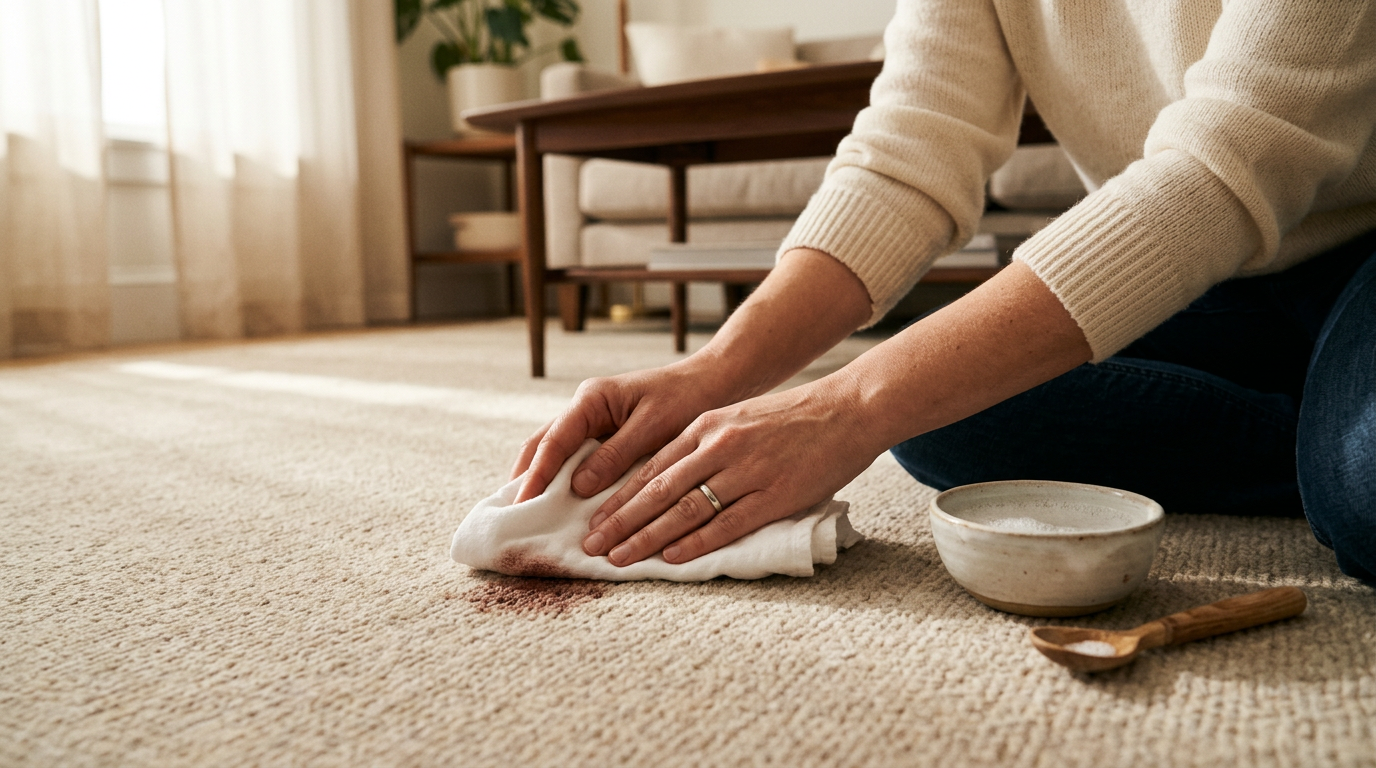
A dropped bowl of pasta. A knocked-over plate of something saucy. A toddler with a handful of chocolate who found the living room rug before you found them. It happens in every household, and it usually happens at the worst possible moment.
Food stains on carpet are one of those everyday problems that can feel more serious than they are. The good news is that most food stains — even the stubborn, colorful, or greasy ones — respond very well to simple household treatments, as long as you approach them with a little patience and the right technique.
What makes carpet different from other surfaces is that it holds onto things. The fibers grip liquid, trap particles, and allow stains to settle deeper the longer they sit. Understanding that is the first step to treating it correctly.
Why Food Stains Set Into Carpet
When food or liquid lands on carpet, several things happen at once. The moisture is immediately absorbed by the fibers and pulled downward toward the backing. Pigments from the food — the red in tomato sauce, the brown in coffee, the yellow in mustard — begin bonding with the fibers. Proteins and fats can start to solidify as they cool. Sugars can become sticky and then tacky.
Heat makes all of this worse. Scrubbing does too, because it pushes the stain deeper and spreads it wider. This is why the instinct to grab a cloth and rub vigorously is exactly the wrong move. The fibers act like a sponge, and pressure forces the stain to travel further into the pile.
Time is the other factor. A fresh stain that has been sitting for two minutes is far easier to deal with than the same stain that has been sitting for two hours. This isn't just common sense — it's chemistry. The longer pigments and proteins are in contact with fibers, the more opportunity they have to form stronger bonds.
The First Step That Most People Skip
Before reaching for any cleaning solution, you need to remove as much of the physical food as possible. This sounds obvious, but it's the step that gets rushed most often.
Use a spoon or the flat edge of a butter knife to gently lift any solid or semi-solid material. Work from the outside of the stain toward the center, not the other way around. If you start in the middle and push outward, you spread the stain. If you work inward from the edges, you contain it.
For liquid spills like broth, juice, or sauce, press a clean dry cloth firmly onto the stain and hold it there. Don't rub. Just press, lift, press again on a clean section of cloth, and repeat. The goal is to absorb as much liquid as possible before it travels further down into the carpet.
Cold water can help at this stage, but only a small amount. A little water loosens the material so it can be blotted up more effectively. Too much water and you're just moving the problem deeper into the backing and potentially creating a mold or odor issue later.
Salt: A Surprisingly Useful First Response
Table salt is one of the most underused tools for fresh liquid stains. Salt is hygroscopic, which means it draws moisture toward itself. When you pour a generous amount of salt onto a fresh wet stain, it pulls the liquid up and out of the fibers and into itself.
The method is simple: pour a thick layer of salt over the wet stain, let it sit for three to five minutes, then scoop it up carefully with a spoon or dry cloth. You'll often be surprised how much color comes up with it.
This works best in the first few minutes after a spill — red wine, berry juice, broth, or anything liquid. It's less useful on stains that have already dried, or on greasy stains where moisture isn't the main issue.
Baking Soda for Grease and Odor
For stains with a fat or grease component — think pizza, butter, fried foods, or anything oily — baking soda is a better first step than water. Water and grease don't mix, and adding water to a greasy stain can lock the fat further into the fibers.
Instead, cover the area generously with baking soda and press it down lightly into the stain with your fingers or a dry cloth. Let it sit for at least fifteen minutes, though thirty is better. The baking soda absorbs the fat from the fibers rather than pushing it around.
After the sitting time, vacuum the powder away thoroughly. In many cases, this alone lifts most of the grease. What remains is usually a faint shadow that can be treated with a mild dish soap solution.
Baking soda also neutralizes odors at the same time. Food stains — especially protein-based ones like eggs, meat juices, or dairy — can leave a smell behind even after the visible stain is gone. Baking soda addresses both problems in one step.
Dish Soap and Cold Water: The Everyday Workhorse
For most food stains, a simple solution of liquid dish soap and cold water does a reliable job. Dish soap is designed to cut through food residue — that's its entire purpose — and it works on carpet fibers the same way it works on dishes.
Mix one teaspoon of clear or white dish soap into one cup of cold water. Avoid dish soaps with bleach, strong dyes, or heavy fragrances. A plain, mild dish soap is best. Use a clean white cloth — not colored, because the dye can transfer — and apply a small amount of the solution to the stain. Blot from the outside in.
The key word throughout all of this is blot. Never scrub. Use a pressing, dabbing motion and turn the cloth to a clean section frequently. Scrubbing tangles the fibers, spreads the stain, and can damage the texture of the carpet permanently.
Once the stain has lifted, rinse the area with a small amount of plain cold water and blot again to remove any soap residue. Leaving soap in the carpet is a common mistake — it attracts new dirt because soap is sticky, and the area can end up looking worse over time than the original stain.
White Vinegar for Tougher Stains
White vinegar is one of the most reliable tools for food stains that have had time to set, or for stains with strong pigment like tomato-based sauces, fruit juices, or mustard.
Vinegar works because its acidity breaks down many of the compounds responsible for staining. It also acts as a mild disinfectant, which is useful for food stains that might attract bacteria. The smell dissipates quickly once the area dries.
For a basic vinegar solution, mix equal parts white vinegar and cold water. Apply it to the stain using a cloth, let it sit for a few minutes, then blot it up. Follow with a plain water rinse and blot dry.
For a more effective approach on dried or set stains, try layering the methods. Start with baking soda on the stain. Then apply the vinegar solution on top. You'll get a fizzing reaction — this is the acid and base reacting with each other, and it helps to lift material out of the fibers. Let the fizzing settle, then blot up everything and rinse with cold water.
This combination works particularly well on coffee stains, tomato stains, and any stain where the food has started to dry before you got to it.
Dealing with Specific Foods
Chocolate and Candy
Let chocolate harden first. It sounds counterintuitive, but trying to clean warm, soft chocolate off carpet just smears it further. Once it has cooled and hardened, gently scrape off what you can, then treat the remaining stain with cold water and dish soap. Warm water is a mistake here — heat melts the cocoa butter and drives it back into the fibers.
Tomato Sauce and Ketchup
Remove as much solid material as possible first with a spoon. These stains are highly pigmented and become harder to remove once dry. A dish soap and cold water solution handles fresh stains well. For stains that have dried, the vinegar-and-baking-soda method is more effective. Work patiently — multiple light treatments are better than one heavy-handed attempt.
Greasy Foods
Start with baking soda and let it sit before applying any liquid. If a faint grease mark remains after vacuuming the baking soda, a small amount of dish soap solution applied and blotted carefully should finish the job. Avoid rubbing at any stage with greasy stains — the fat spreads very easily.
Egg and Dairy
Cold water only for these stains. Egg and dairy contain proteins that cook in heat — literally — and hot water causes them to solidify inside the fibers and bond there permanently. Use cold water and dish soap, blot slowly, and be patient. These stains often look worse before they look better.
Red Wine and Dark Juices
Act fast. Salt immediately, then the dish soap and cold water solution, followed by a vinegar rinse if needed. The pigments in red wine are tannins, and they bond with fibers quickly. Dry red wine stains are among the more difficult to remove completely, though they can often be faded significantly with repeated treatments.
Rinsing and Drying Correctly
After any treatment, the way you dry the area matters more than most people realize. Leftover moisture deep in the carpet can lead to mold growth, which creates a musty smell and can damage the carpet backing over time.
After blotting up as much moisture as possible with a dry cloth, place a thick layer of clean dry towels over the area and press down firmly. Leave them in place for at least thirty minutes. If you have something heavy and flat — like a large book wrapped in a plastic bag — place it on top of the towels to help press out the remaining moisture.
Once the towels have absorbed what they can, allow the area to air dry completely with good ventilation. A fan directed at the area speeds this up significantly. Avoid walking on the wet area until it is fully dry.
If any slight stiffness or residue remains once the carpet is completely dry, a light vacuuming usually restores the texture of the fibers.
When Home Methods Have Limits
These household methods work well for most everyday food stains, especially when treated promptly. But there are situations where they reach their limits.
Very old, fully set stains — particularly on light-colored carpet — may only partially respond. Multiple treatments can fade them considerably, but complete removal is not always possible with home methods alone.
Some carpet materials, especially wool, silk blends, or carpets with special stain-resistant treatments, can react unpredictably to vinegar or dish soap. For these, plain cold water blotting and a very small test area with any product is the safest approach. When in doubt, consult a professional cleaner rather than risk permanent damage.
Large stains, or stains that have soaked through to the carpet pad beneath, may require professional equipment to extract properly. If the carpet smells musty after drying, it's a sign the moisture reached the pad, and professional cleaning is the right next step.
A Few Practical Habits That Help
Keeping a small kit together somewhere accessible — a clean white cloth, a spray bottle with diluted dish soap, and a box of baking soda — means you can respond to a spill in seconds rather than spending valuable time searching for supplies while the stain sets.
Blotting instead of rubbing becomes a reflex once you've practiced it a few times. It feels slower in the moment, but it consistently produces better results. The patience it takes is repaid every time.
After any cleaning, always do a final rinse with plain cold water. It's the step that prevents residue buildup and keeps the cleaned area from becoming a new dirt magnet over time.
These are the kinds of small, careful habits that keep a home looking well-maintained without much effort — tending to problems simply and early, before they become bigger ones.
Related articles
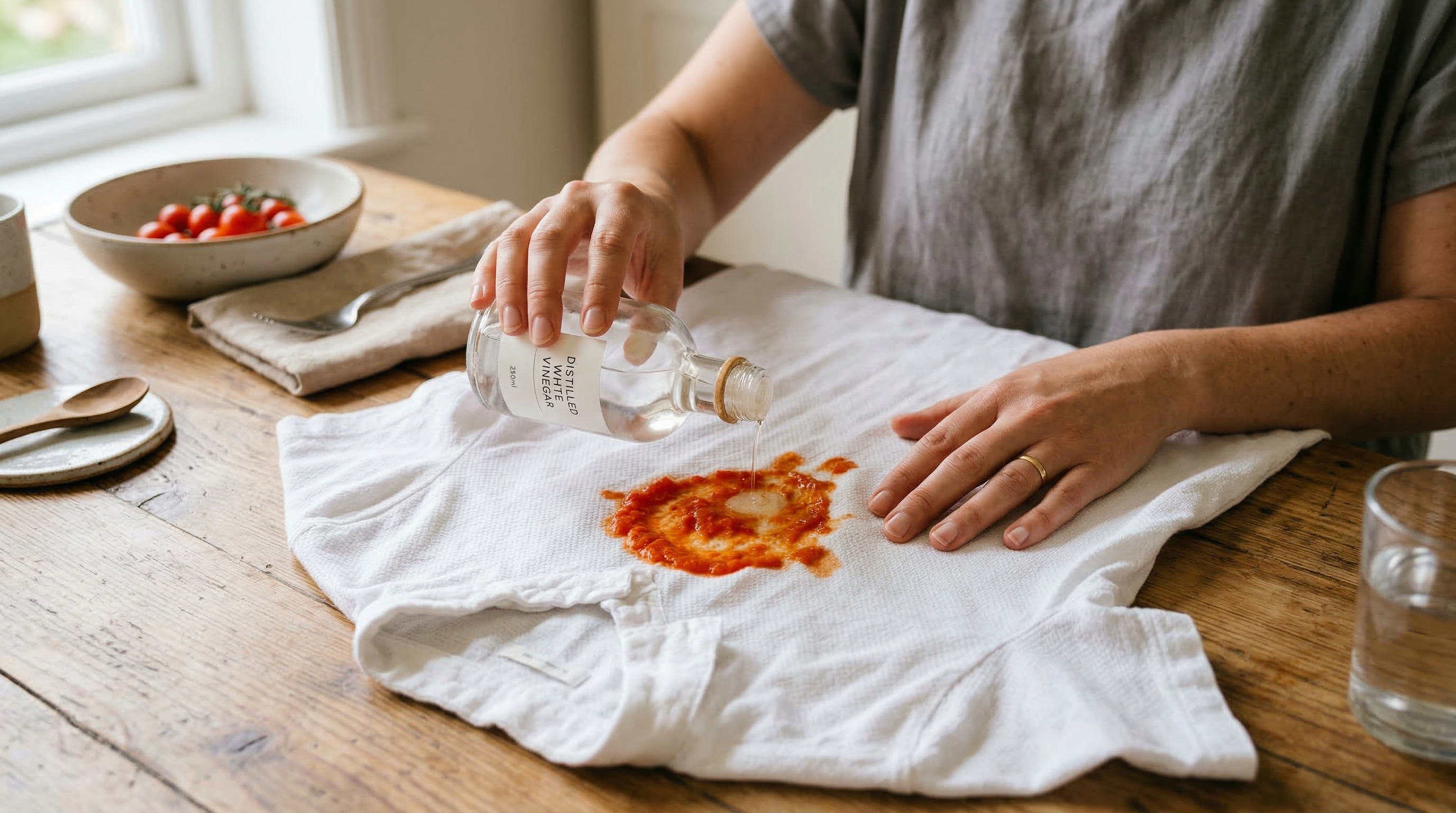
Grandma Knows: How to Remove Tomato Sauce from Clothing
Tomato sauce stains are vivid and quick to set. Learn the right sequence of treatments to remove tomato stains from clothing before they become permanent.
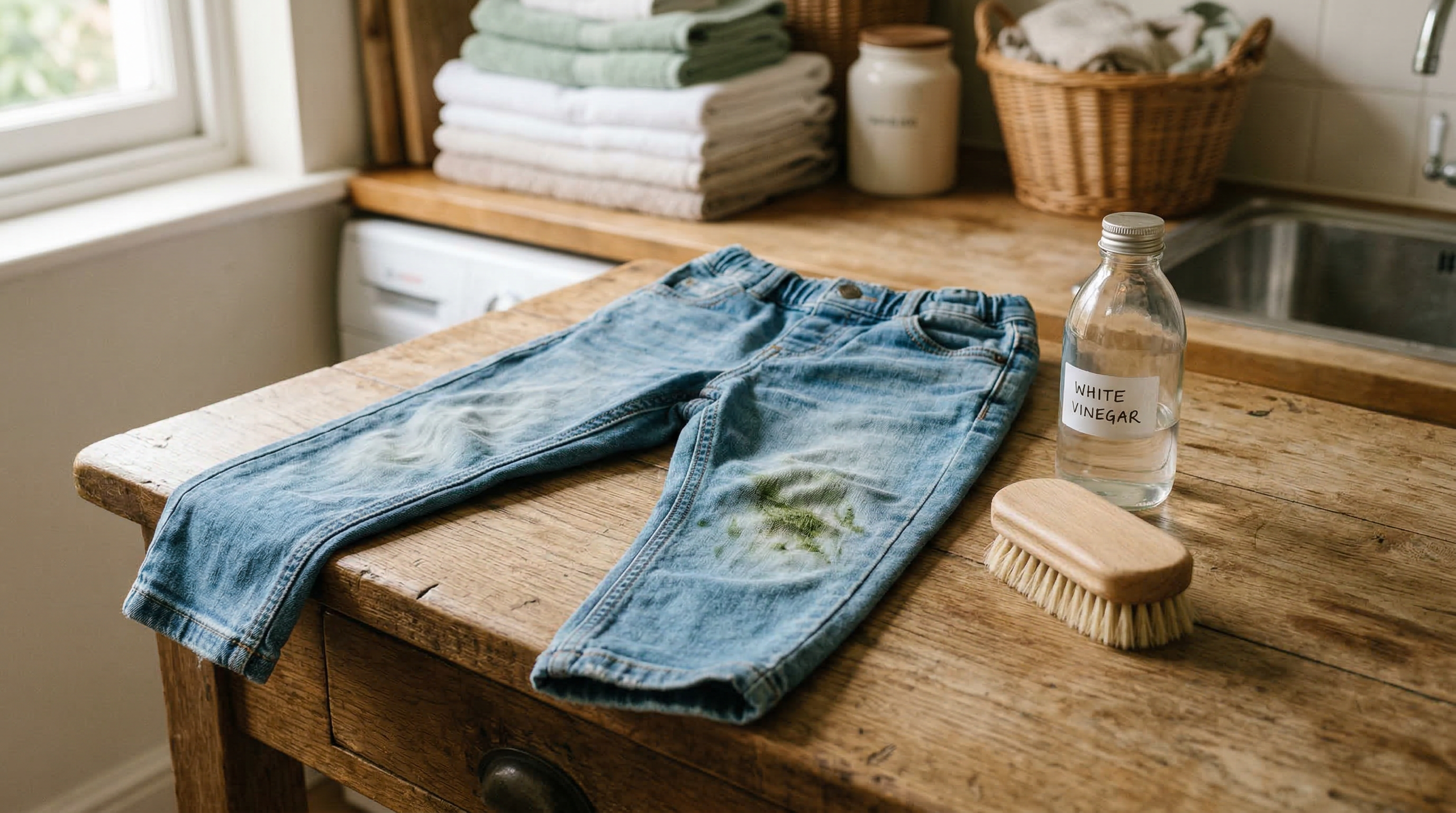
Grandma Knows: How to Remove Grass Stains from Clothes
Grass stains on clothes are stubborn but very treatable. Learn the household methods that break down chlorophyll and get fabric clean again.
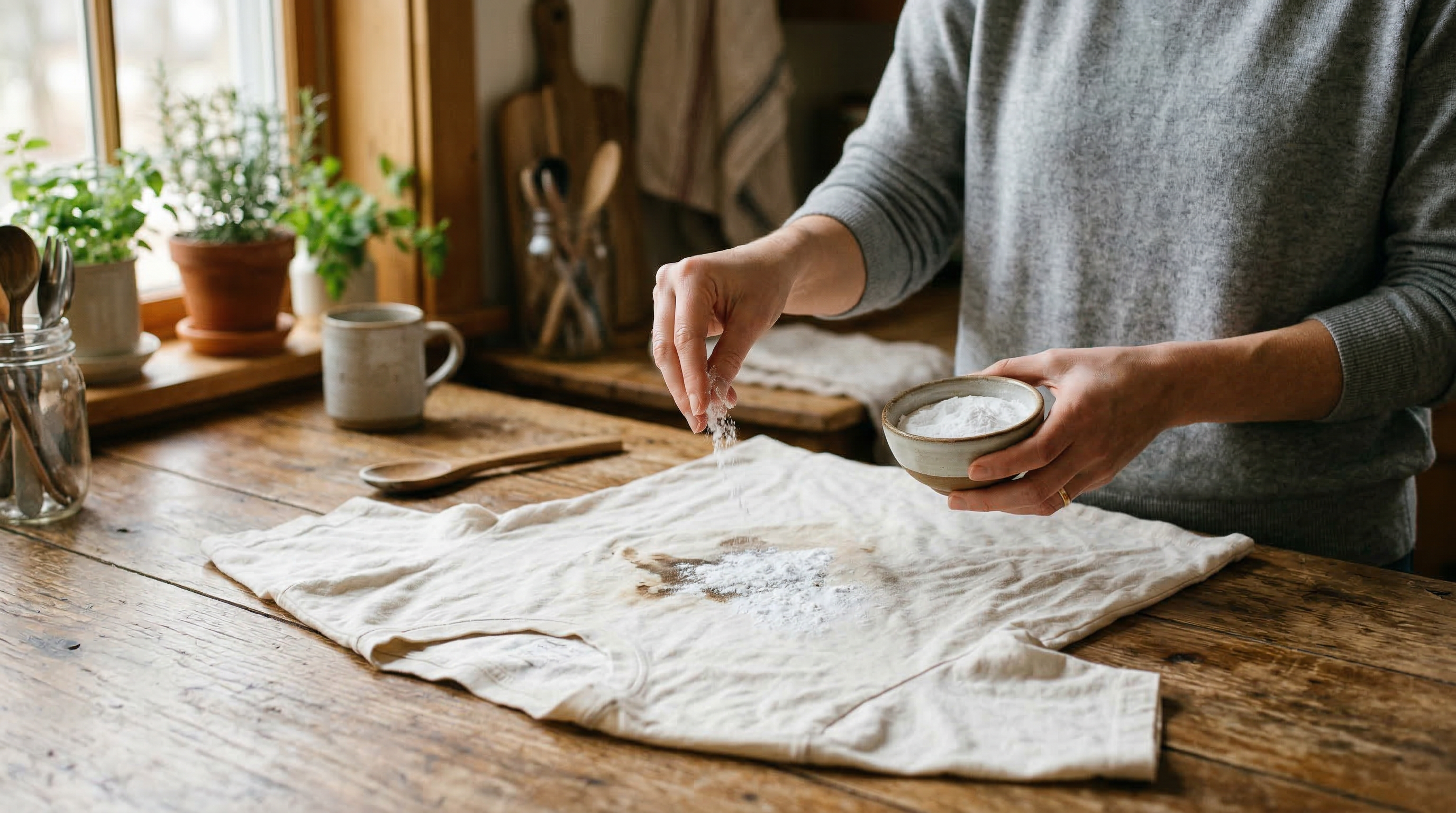
Grandma Knows: How to Remove Grease from Clothes
Grease stains on clothes are tricky but not impossible. Discover proven household methods using baking soda, dish soap, and patience.