
Grandma Knows: How to Remove Coffee from Sofa Fabric
Spilled coffee on your sofa? Learn practical, proven methods to remove coffee stains from fabric upholstery using everyday household ingredients.
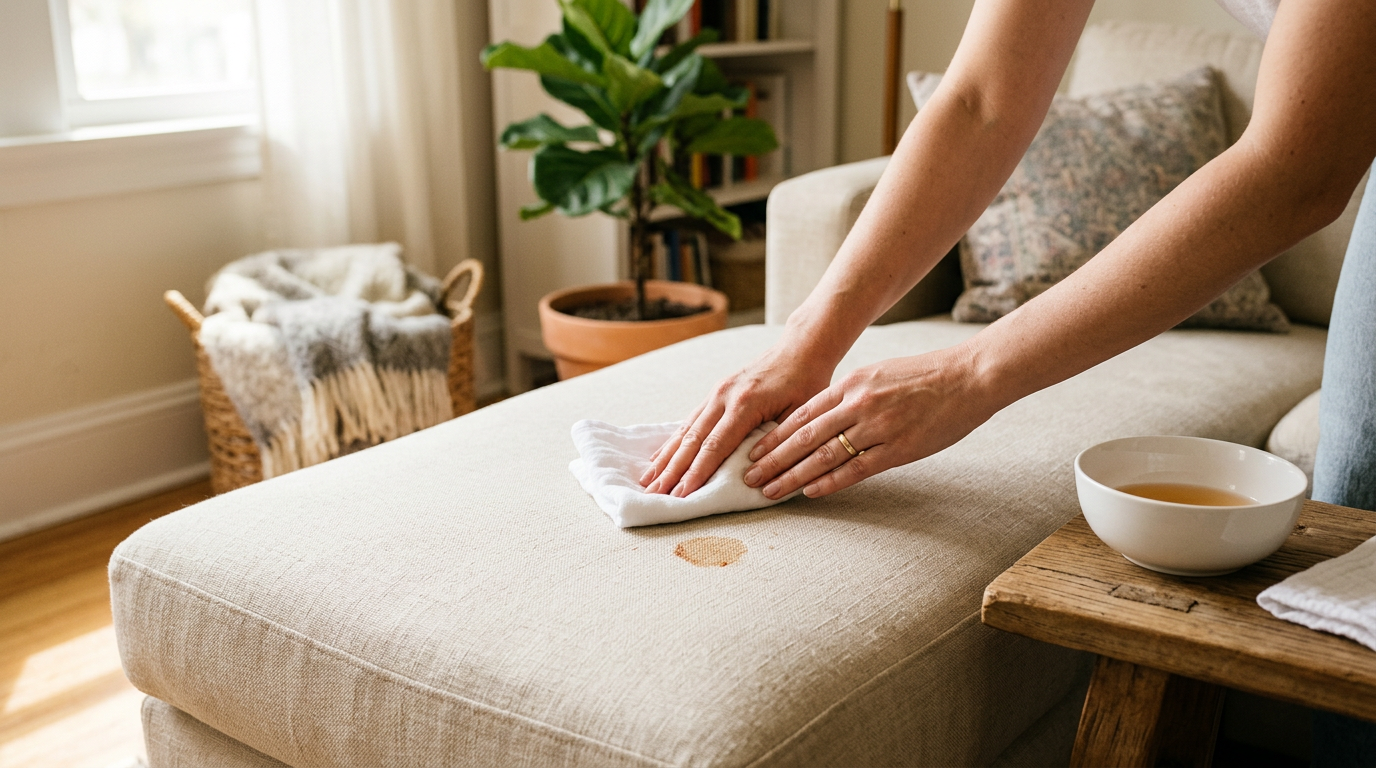
It happens in an ordinary moment. You set your mug down on the cushion for just a second, or you reach across the armrest and clip it with your elbow. The coffee goes over, and that familiar dark liquid spreads into the fabric almost instantly. The first reaction is usually panic, but the truth is that a coffee spill on a sofa is one of the more manageable stains you will ever deal with — as long as you understand what you are working with and move with a clear head.
Fabric sofas are forgiving if you treat them promptly and correctly. The problems come when people either wait too long, use the wrong products, or scrub too hard in a way that pushes the stain deeper into the fibers. This guide walks through the full process: why coffee stains behave the way they do, which household solutions actually work and why, and how to handle the situation step by step without damaging your upholstery.
Why Coffee Stains Are Stubborn
Coffee is mostly water, but it also contains tannins, oils, and pigments. Tannins are naturally occurring compounds found in many plants, and they are the main reason coffee leaves a visible stain. They bond with fabric fibers quickly, especially as the liquid dries and the concentration of those compounds increases on the surface of the textile.
The oils in coffee — particularly in darker roasts or in milky coffee drinks — add another layer of difficulty. Oil does not dissolve in plain water, which is why dabbing at a coffee-with-cream spill with a damp cloth often smears it rather than lifting it. The fat from milk or cream binds to the fabric differently than the tannins do, and the two components sometimes need to be addressed separately.
Heat is the enemy in stain removal. Hot water, a warm iron, or even a warm setting on a hair dryer can set a coffee stain permanently by essentially cooking the tannins into the fibers. Always use cool or lukewarm water when treating coffee stains on upholstery.
Before You Begin: Check the Fabric Code
Most upholstered sofas have a care tag, usually tucked under a cushion or along the bottom edge of the frame. It carries a letter code that tells you what cleaning method is safe for that fabric.
- W — Water-based cleaning solutions are safe to use.
- S — Solvent-based cleaners only. Water can cause shrinking, water rings, or damage.
- W/S — Both water-based and solvent-based methods are acceptable.
- X — Vacuuming or dry brushing only. No liquids at all.
If your sofa is coded S or X, the methods described in this article are not appropriate for it. An S-coded fabric typically needs a dry-cleaning solvent, and an X-coded fabric should be handled by a professional. For W and W/S fabrics — which cover the majority of cotton, linen, polyester, and blended upholstery — the following methods are safe and effective.
The First Five Minutes: What to Do Immediately
Speed matters more than anything else. The longer coffee sits in fabric, the more the tannins bond and the harder the stain becomes to reverse. The goal in the first few minutes is not to remove the stain completely — it is simply to stop it from setting deeper.
Take a clean white cloth or a stack of paper towels and press firmly onto the spill. Do not rub. Pressing straight down pulls liquid up through capillary action, the same physical process that draws water up through a paper towel when you touch its edge to a wet surface. Rubbing spreads the stain sideways and works the liquid further into the weave.
Keep blotting with fresh sections of cloth until no more coffee transfers. You will likely not get everything out this way, but you will remove a significant amount of the liquid before it has a chance to dry. This single step makes every method that follows more effective.
If coffee with milk or cream was spilled, blot gently first, then move quickly to a cleaning solution, because the dairy content will begin to smell if it dries in the fabric.
Cold Water and Dish Soap: The Simplest Starting Point
For a fresh stain on a W-coded fabric, plain dish soap diluted in cool water is often enough on its own. Dish soap is designed to cut through grease and organic matter, and its surfactant molecules work by surrounding oil and residue particles so they can be lifted away with water rather than bonding to the surface.
Mix one teaspoon of clear liquid dish soap with two cups of cool water. Avoid dish soaps with added moisturizers, bleach, or strong colorants, as these can leave their own residue on light-colored fabric.
Dampen a clean white cloth with the solution and press it onto the stain. Work from the outside edge inward — this keeps the stain from spreading outward as you work. Let the solution sit on the fabric for two or three minutes, then blot firmly. Rinse by pressing a cloth dampened with plain cool water onto the area to lift the soap residue, and blot dry.
Repeat the process once or twice if the stain is still visible. Patience with light repeated applications is far more effective than soaking the fabric, which can cause water marks or damage the cushion padding underneath.
Baking Soda: For Drawing Out Moisture and Odor
Baking soda is useful at two different stages of coffee stain removal. In the first few minutes, sprinkling a generous amount of baking soda directly onto the wet spill helps absorb the liquid before it moves deeper into the padding. It works through simple absorption — the fine powder pulls moisture toward itself.
Leave the baking soda on the wet stain for five to ten minutes. You will often see it clump slightly as it pulls in the liquid. Scoop or brush it away gently, then proceed with the dish soap method above.
Baking soda also helps at the end of the cleaning process. Once the stain has been treated and the fabric is slightly damp, a light covering of baking soda left to dry for thirty minutes — and then vacuumed off — neutralizes any lingering coffee odor. This is especially useful with milky coffee spills, which can leave a faint sour smell as they dry.
White Vinegar: For Set or Dried Stains
When a coffee stain has already dried — perhaps because the spill happened on a busy morning and was not noticed right away — plain white vinegar is a more appropriate first treatment than dish soap alone.
White vinegar is a mild acid. Coffee tannins, once dried, have bonded ionically with the fabric fibers. The acetic acid in vinegar disrupts those bonds, loosening the stain so it can be blotted away. This is the same basic chemistry behind using vinegar to dissolve limescale: acid breaks down certain mineral and organic bonds that water cannot.
Mix equal parts white vinegar and cool water. Dampen a cloth with the solution and press it onto the dried stain. Let it sit for five minutes, then blot firmly. Follow with the dish soap and water method to clean up any vinegar residue and address whatever the acid has loosened.
Vinegar has a sharp smell while it is wet, but it dissipates completely as the fabric dries. If the odor bothers you during the process, open a window or work in a ventilated room. Do not add more vinegar trying to eliminate the smell — it will go on its own.
One caution: test vinegar in a hidden corner of the fabric first, especially on darker or vividly colored upholstery. White vinegar is generally safe on most fabrics, but some dyes can be slightly affected by repeated or concentrated acid exposure.
Handling Coffee With Milk, Cream, or Sugar
Black coffee and milky coffee behave differently on fabric, and it helps to treat them differently.
For coffee with milk or cream, the dish soap method is especially important because soap breaks down fats. Start with blotting to remove as much liquid as possible, then apply the dish soap solution before the dairy has a chance to dry. Dried milk proteins in fabric can be stubborn and develop an unpleasant odor. If the milk component has already dried, a small amount of enzyme-based laundry stain remover — the kind sold for protein stains like blood or grass — is very effective because it contains enzymes that break down proteins at a molecular level.
For coffee with sugar, the sugar itself is not a staining concern — it dissolves easily in water and rinses away cleanly. However, dried sugary residue makes fabric feel stiff and slightly tacky, and it can attract dust and dirt over time. Cool water and dish soap handles this well.
Dealing With Light-Colored or Delicate Upholstery
Cream, white, or very light-colored sofas need an extra step of care because any cleaning solution that leaves a residue will be visible. The key is to rinse thoroughly and dry evenly.
After treating the stain with soap or vinegar solution, press a clean cloth dampened with plain cool water onto the area several times, using fresh sections of the cloth each time. This pulls out the cleaning solution and prevents a pale ring from forming as the fabric dries.
Dry light fabric as evenly as possible. If one area dries faster than another, the boundary between the damp and dry sections can leave a faint watermark. Laying a clean dry towel flat over the treated area and pressing firmly helps draw out moisture evenly. If the room is warm and dry, a gentle fan pointed at the area speeds up drying and reduces the chance of water marks forming.
Avoid using hydrogen peroxide on light upholstery unless you have tested it carefully. Some sources recommend it as a bleaching aid, but it can cause uneven color lightening on natural fibers, and the results are unpredictable. Dish soap and thorough rinsing will handle most light-colored fabric situations without that risk.
When the Stain Does Not Come Out Fully
Occasionally, even careful and prompt treatment leaves a faint shadow of the original stain — a slightly darker area that remains after the fabric has dried. This is common with very dark coffee, with older stains, or with naturally porous fabrics like unfinished cotton or linen.
In these cases, repeat the vinegar solution treatment a second time after the fabric has fully dried from the first round. Treating a still-damp area with additional solution tends to dilute rather than concentrate the cleaning action. Let the fabric dry completely between attempts.
A paste made from baking soda and a small amount of water can also help with stubborn residual marks. Apply it to the stain, let it sit for fifteen minutes as it dries, then brush it off and blot the area clean. The mild alkalinity of baking soda works on the remaining tannin residue in a complementary way to vinegar's acidity, and some stains respond better to one than the other.
If multiple careful attempts have not resolved the stain, a professional upholstery cleaner is the right next step. They have access to stronger enzyme-based and solvent-based treatments and equipment that applies controlled moisture and extracts it cleanly — tools that are not practical for home use. There is no shame in calling a professional; it is simply recognizing when a task is beyond what household methods can reliably achieve.
Keeping the Sofa in Good Shape Going Forward
A fabric sofa that gets regular light maintenance is much easier to clean when accidents happen. Vacuuming the surface weekly removes dust and dry particles that, when combined with liquid spills, can turn into muddy residue that is harder to lift than coffee alone.
A fabric protector spray — applied once or twice a year according to the product directions — creates a light barrier that slows the absorption of liquids. It does not make fabric stain-proof, but it buys a few extra seconds when a spill happens, which is often the difference between a stain that wipes away and one that sets.
Keep a small clean cloth within reach in rooms where you regularly drink coffee. Having something to blot with immediately — without needing to run to another room while the liquid soaks in — is the most practical preparation you can make.
Related articles
Grandma Knows: How to Remove Tomato Sauce from Clothing
Tomato sauce stains are vivid and quick to set. Learn the right sequence of treatments to remove tomato stains from clothing before they become permanent.
Grandma Knows: How to Remove Grass Stains from Clothes
Grass stains on clothes are stubborn but very treatable. Learn the household methods that break down chlorophyll and get fabric clean again.
Grandma Knows: How to Remove Grease from Clothes
Grease stains on clothes are tricky but not impossible. Discover proven household methods using baking soda, dish soap, and patience.