
Grandma Knows: How to Remove Chocolate from Sofa
Chocolate on the sofa? Learn simple, effective methods to remove chocolate stains from fabric using everyday household supplies.
It happens in the most ordinary moments. Someone settles into the sofa with a square of chocolate, the conversation gets lively, and before anyone notices, there is a brown smear pressed into the cushion fabric. It could be a melted piece left behind by a child, a forgotten bar softened by a warm afternoon, or a late-night snack that slipped at the wrong moment. However it happened, the result is the same — a stain that looks stubborn and feels urgent.
The good news is that chocolate, while messy, is one of the more manageable stains to deal with at home. It does not behave like red wine or ink, which spread fast and bond deeply with fiber almost immediately. Chocolate has a specific composition that actually works in your favor once you understand it. The key is knowing what you are dealing with and responding in the right order.
Why Chocolate Stains Behave the Way They Do
Chocolate is made up of three main components that each contribute to the stain in a different way: fat, sugar, and cocoa solids. The fat comes from cocoa butter or milk fat. The cocoa solids carry the deep brown pigment. The sugar binds everything together and can make the stain feel stiff or tacky once it dries.
When chocolate melts onto fabric, the fat soaks into the fibers and carries the pigment with it. This is why a chocolate stain that has been sitting for a few hours can look darker and feel greasy around the edges. The sugar component, meanwhile, can cause the fibers to stick together slightly, especially once the chocolate cools and re-hardens.
The fat content is what makes hot water a bad choice at the start. Heat sets fat into fabric, making it harder to lift out. That is why the most important early step is always to work with cold or cool water, not warm.
The cocoa pigment behaves similarly to a light dye. It is not as aggressive as something like beet juice or red wine, but it does need a mild cleaning agent to fully release from the fibers. Plain water alone will rarely be enough.
The First Thing to Do: Stop, Cool, and Lift
Before reaching for any cleaning product, the first task is to remove as much of the physical chocolate as possible. This step is often skipped in the rush to clean, but it matters a great deal. Rubbing or scrubbing at this stage will push the chocolate deeper into the fabric weave and spread the stain outward.
If the chocolate is still soft or melted, place two or three ice cubes in a small plastic bag and hold it gently against the stain for a few minutes. The cold firms the chocolate quickly, making it easier to lift away cleanly. This is the same principle used in kitchens when you need to reset a sauce that has gotten too runny — cold stops the process and gives you back control.
Once the chocolate has firmed up, use a dull knife, a spoon, or even a stiff piece of card to scrape gently from the outside edge of the stain toward the center. Always work inward, never outward. The goal is to get the bulk of the chocolate off the surface of the fabric before it has any chance to settle further into the fibers.
If the chocolate has already dried completely, this step is actually easier. Dried chocolate tends to flake and lift cleanly when scraped carefully. Brush away the loose pieces with a soft dry cloth or the edge of a spoon.
Cold Water and Dish Soap: The Reliable Starting Point
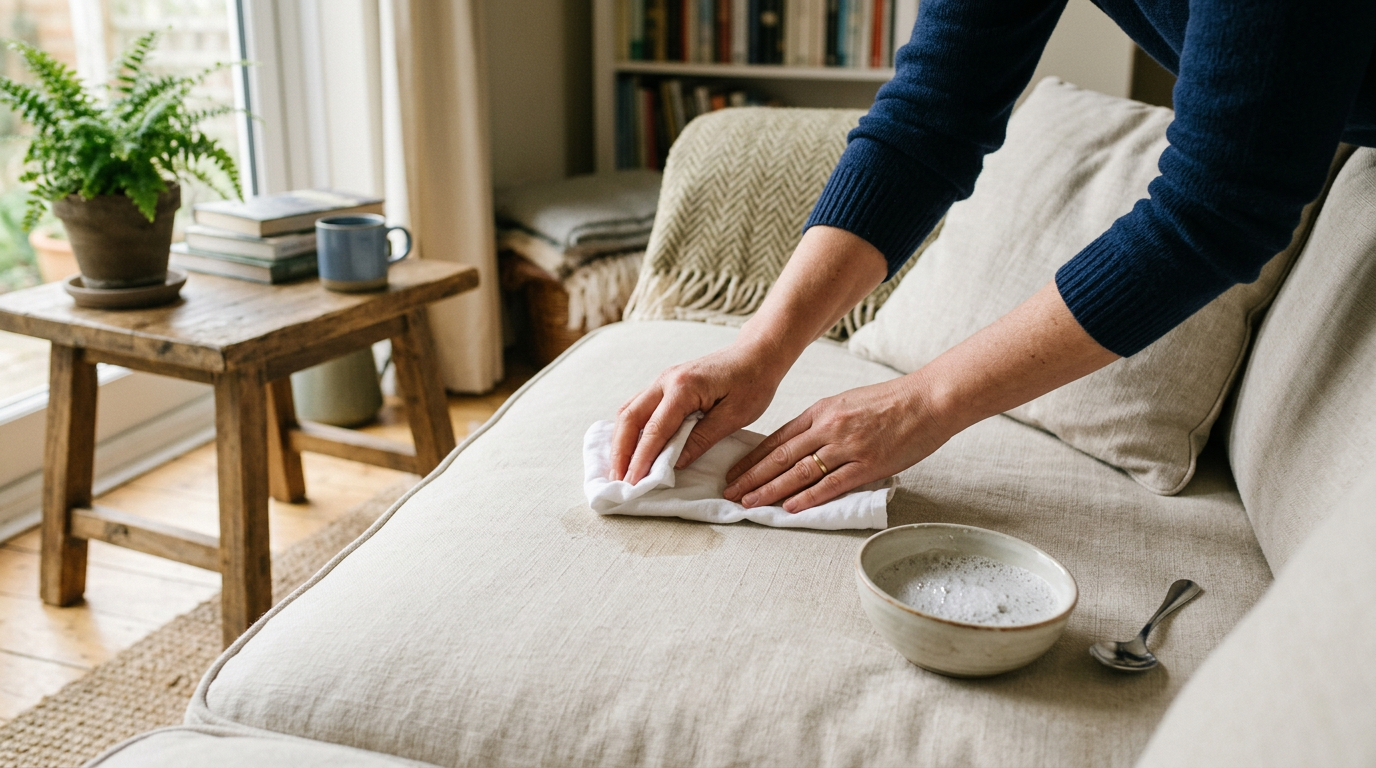
Once the excess chocolate is removed, the next step is to treat the remaining stain with a simple mixture of cold water and a small amount of liquid dish soap. This combination works well because dish soap is specifically designed to cut through fat and grease, which is exactly what the cocoa butter in the chocolate responds to.
Mix about one teaspoon of dish soap into two cups of cold water. Dip a clean white cloth into the solution and apply it to the stain using gentle blotting motions. Do not scrub. Blotting lifts the stain upward and out of the fibers rather than driving it deeper. Use a fresh area of the cloth each time you press down, so you are not re-depositing the chocolate you just lifted.
Work from the outside edge of the stain toward the center. This keeps the stain from spreading into clean fabric as it loosens.
After several rounds of blotting, rinse the area by blotting with a separate cloth dampened with plain cold water. This step removes the soap residue, which is important. Soap left in the fabric can attract dirt over time and leave a dull patch that becomes more noticeable as the sofa ages.
Allow the area to air dry completely. Avoid using a hair dryer or placing the cushion near a heat source. Heat at this stage can still set any remaining fat or pigment that has not been fully lifted.
When Dish Soap Is Not Enough: Baking Soda as a Drawing Agent
For stains that have had more time to settle, or on fabric that seems to hold onto the brown tint even after soap treatment, baking soda is a useful next step. Its value here is not as a scrubbing agent but as a drawing agent — it pulls moisture and residue out of fabric as it dries.
After treating the stain with the soap and water method above, while the fabric is still slightly damp, sprinkle a thin, even layer of baking soda over the affected area. Press it gently with your fingers so it makes contact with the damp fibers. Leave it in place for at least twenty to thirty minutes, or longer if the stain was deep-set. As the baking soda dries, it absorbs what has been loosened by the soap treatment.
Once it is dry, vacuum or brush away the powder carefully. You should see a reduction in the remaining discoloration. If a faint mark is still visible, repeat the dish soap treatment once more before applying baking soda again.
This method works especially well on thicker upholstery fabrics like velvet, chenille, or heavy cotton blends, where liquid can pool inside the weave and be slow to release. The baking soda draws it upward more effectively than continued blotting alone.
Hydrogen Peroxide for Lighter Fabrics
On cream, white, or very light-colored sofa fabric, a small amount of three-percent hydrogen peroxide can help with the remaining cocoa pigment after the fat has been lifted. Hydrogen peroxide is a mild oxidizing agent, which means it breaks down the color compounds in the stain rather than just lifting them physically.
Apply a small amount to a clean cloth and blot the remaining discoloration gently. Leave it on for five to ten minutes, then blot with cold water to remove.
This method carries a caution: hydrogen peroxide can lighten some dyed fabrics if left too long or used in concentration. Always test on an unseen area of the sofa first — underneath a cushion or along the back near the base. Wait a few minutes and check for any change in the fabric color before proceeding.
Do not use this method on dark or richly colored upholstery. The risk of fading or an uneven patch is not worth it when other methods work just as well without the risk.
Dealing with Milk Chocolate Versus Dark Chocolate
Not all chocolate stains are identical. Milk chocolate contains more fat and more sugar than dark chocolate. This makes milk chocolate softer at room temperature and more prone to smearing widely across the fabric. The stain tends to spread more but can also be easier to lift because the pigment is lighter and the fat responds quickly to dish soap.
Dark chocolate has a higher concentration of cocoa solids, which means the pigment is more intense and takes slightly longer to release fully. However, dark chocolate is also firmer at room temperature and less likely to have spread as widely before you noticed it.
White chocolate contains no cocoa solids at all — it is essentially pure fat and sugar. The stain it leaves behind has no dark pigment, just a greasy patch that may look yellowish as it dries. For white chocolate, the dish soap method is highly effective because you are dealing with fat alone, with no pigment component.
Reading the Fabric Care Label
Sofa upholstery varies widely. Some fabrics are washable with water-based cleaners, others require solvent-based products, and some should only be cleaned by a professional. Most sofas sold in the past few decades carry a small fabric care label, usually tucked under the cushion or attached along the frame beneath the seat.
The label typically uses letter codes. A W means water-based cleaning is safe. An S means solvent-based cleaner only — water can cause shrinking, watermarks, or fiber damage on these fabrics. A W/S means either type is safe. An X means the fabric should only be vacuumed or professionally cleaned.
If your sofa is labeled S or X, skip the water and soap methods entirely. For S fabrics, a dry-cleaning solvent available at hardware stores can be applied to lift the chocolate. For X fabrics, the safest course is to remove as much of the solid chocolate as possible and then contact a professional cleaner.
If there is no label and you are unsure about the fabric, treat it cautiously. Test any cleaning solution on a hidden area and use the least amount of moisture possible.
Treating an Old, Dried Stain That Was Not Caught Early
Sometimes a stain goes unnoticed for a day or two — a piece of chocolate melted under a throw blanket, or a cushion was flipped over without anyone realizing what was underneath. Dried, set-in stains require a bit more patience but are still manageable in most cases.
Start by softening the dried chocolate. Dampen a clean cloth with cold water and lay it over the stain for five to ten minutes. This rehydrates the dried cocoa and fat just enough to make them moveable again. Once the stain has softened slightly, scrape away any remaining solid material with a spoon or dull knife.
Then proceed with the dish soap method as described above, but expect to repeat the process two or three times rather than just once. Between rounds, allow the fabric to dry slightly before applying the next treatment. Rushing through multiple wet applications without drying in between can saturate the cushion filling and lead to mildew inside the sofa.
After the final soap treatment, the baking soda step is especially valuable for old stains. Let it sit for a full hour before vacuuming, which gives it more time to pull the deep residue upward.
Keeping the Sofa Protected Going Forward
Once the stain is fully gone and the fabric is dry, it is worth taking a moment to consider protection. Many upholstery fabrics can be treated with a fabric protector spray, which creates a light barrier that slows liquid absorption and makes future stains easier to blot away before they set. These sprays are available at most hardware or home goods stores and are worth applying once or twice a year on sofas that get regular daily use.
Removable cushion covers are another practical option. If the sofa has covers that zip off, washing them in cold water on a gentle cycle at the first sign of a stain is often the simplest solution of all. Reattach them while they are still slightly damp so they fit back smoothly.
Keeping a small supply of clean white cloths and a bottle of dish soap near the living area means you can respond quickly to future spills without having to search for supplies while the stain is spreading. Speed is one of the most reliable advantages in stain removal — not special products, not complicated techniques, just getting to the stain before it has time to settle in.
Related articles
Grandma Knows: How to Remove Tomato Sauce from Clothing
Tomato sauce stains are vivid and quick to set. Learn the right sequence of treatments to remove tomato stains from clothing before they become permanent.
Grandma Knows: How to Remove Grass Stains from Clothes
Grass stains on clothes are stubborn but very treatable. Learn the household methods that break down chlorophyll and get fabric clean again.
Grandma Knows: How to Remove Grease from Clothes
Grease stains on clothes are tricky but not impossible. Discover proven household methods using baking soda, dish soap, and patience.