
Grandma Knows: How to Remove Blood from Carpet
Blood on the carpet? Learn practical, proven methods to lift fresh and dried blood stains using simple household ingredients.
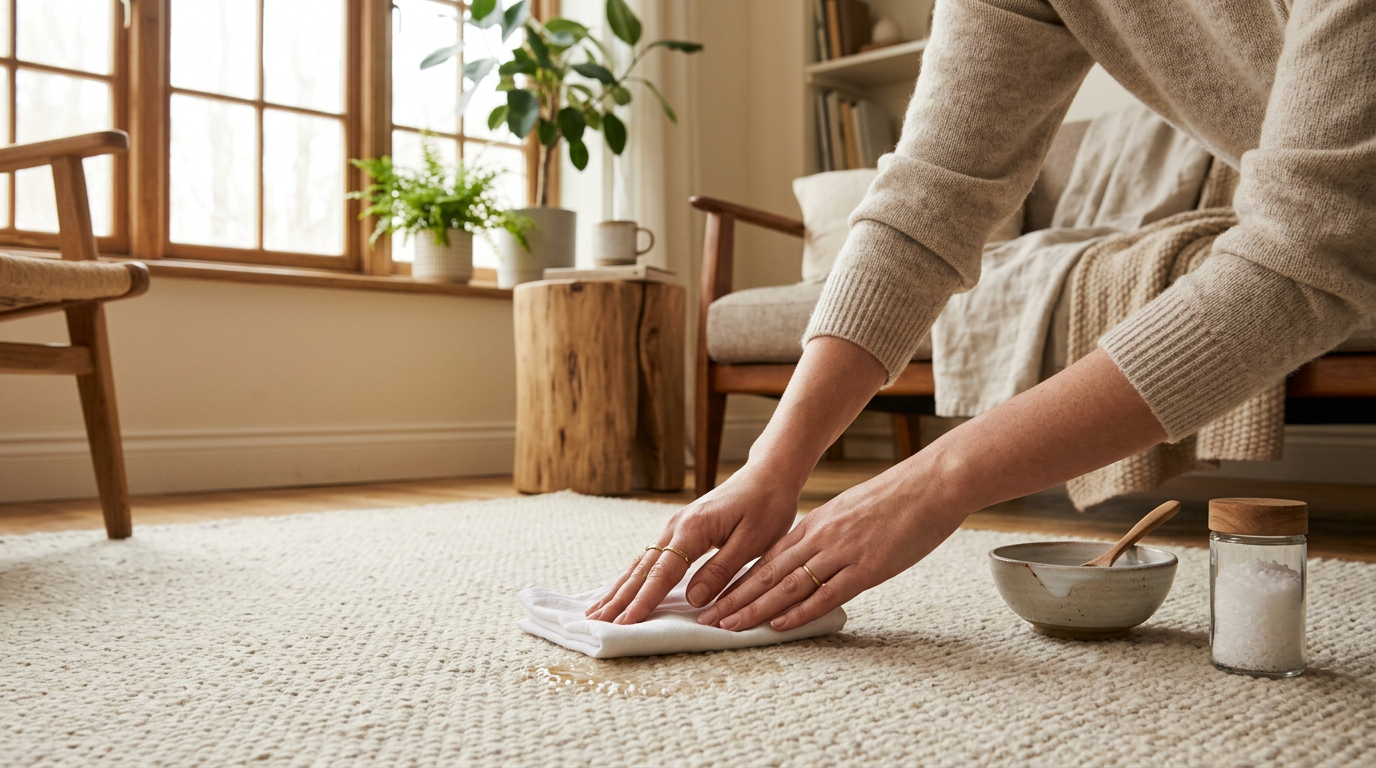
A cut finger, a scraped knee, a sudden nosebleed — these things happen in any home. One moment everything is fine, and the next there's a dark red stain spreading into the carpet fibers. It's one of those situations where most people freeze for a second before grabbing the nearest cloth and hoping for the best.
Blood stains are frustrating, but they are not hopeless. With the right approach and a few things you likely already have at home, most blood stains can be lifted completely — or at least reduced to nearly nothing. The key is understanding what you're dealing with and acting in a way that works with the stain, not against it.
Why Blood Stains Are Different from Other Stains
Blood behaves differently from most household stains. It contains proteins — specifically hemoglobin, the compound that gives blood its red color and carries oxygen through the body. When blood first lands on a surface, it is still in a fluid state, which makes it easier to remove. But as it dries and is exposed to air, those proteins begin to bond with the carpet fibers in a process called coagulation.
This is why heat is one of the worst things you can apply to a blood stain. Hot water, steam cleaners, or even a warm damp cloth will actually cook the protein into the fibers, making the stain much harder — sometimes impossible — to remove. This is the single most important thing to understand before you start any cleaning method.
Cold water is always your starting point with blood. Always.
Acting Quickly on a Fresh Blood Stain
If the blood is still wet, you are in the best possible position. Fresh blood has not yet bonded to the fibers, and cold water alone can often do most of the work if you move quickly.
Start by blotting — not rubbing — the stain with a clean dry cloth or a few layers of paper towel. Press down firmly and lift straight up. Rubbing spreads the stain outward and pushes it deeper into the carpet pile. Blotting lifts it upward and out. Work from the outer edge of the stain toward the center to prevent spreading.
Once you've removed as much of the surface blood as possible, pour a small amount of cold water directly onto the stain and blot again. Repeat this process several times. You'll see the cloth picking up less and less color with each pass. When the cloth comes away nearly clean, let the area dry and assess what's left.
For many small, fresh stains — the kind from a minor cut or a scraped elbow — this simple cold water and blotting method is enough.
Salt: A Simple Household Method That Actually Works
Salt is one of the oldest stain-drawing agents in the kitchen. It works through osmosis — it pulls moisture and dissolved compounds out of a surface rather than pushing a cleaning solution in. For blood stains, particularly fresh ones, this makes it a surprisingly effective first response.
After your initial blotting, pour a generous amount of table salt directly over the damp stain. Let it sit for five to ten minutes. You'll often notice the salt turning pinkish as it draws the blood upward. Then sweep or vacuum up the salt, blot with a cold damp cloth, and repeat if needed.
Salt works best on stains that are still wet or only partially dried. It also works well as a first step before moving on to a more active cleaning solution. It does not work well on fully dried, set-in stains — for those, you'll need something that can break down the dried protein.
Cold Water and Dish Soap
A small amount of liquid dish soap mixed into cold water makes a gentle but effective cleaning solution for blood stains. Dish soap is designed to cut through organic matter — it's the same reason it works on grease and food residue. For blood, it helps loosen the protein from the carpet fibers without damaging them.
Mix one teaspoon of liquid dish soap into one cup of cold water. Stir gently. Apply a small amount to the stain using a clean cloth, working from the outside edge inward. Blot, don't scrub. Let it sit for two or three minutes, then blot with a plain cold damp cloth to rinse. Repeat until the stain fades.
Rinse the area well after using soap. Soap residue left in carpet fibers attracts dirt and can cause the spot to look dingy over time. A few passes with a plain cold damp cloth after cleaning is always worth doing.
Baking Soda Paste for Deeper Stains
When a stain has had a little time to set — maybe you didn't notice it right away, or the initial blotting didn't get everything — a baking soda paste can help draw out what's still in the fibers.
Mix two tablespoons of baking soda with just enough cold water to form a thick paste. Apply it directly to the stain and spread it to cover the affected area. Leave it to dry completely — this can take anywhere from thirty minutes to a couple of hours depending on how much moisture is in the stain and the carpet.
As the paste dries, it draws moisture and dissolved compounds upward through capillary action. Once dry, break it up and vacuum it away. Follow with a cold damp cloth to pick up any remaining residue.
Baking soda is mild enough to use on most carpet types without causing discoloration or damage, which makes it a reliable go-to for stains that need a little extra help.
Hydrogen Peroxide: Effective but Use with Care
Hydrogen peroxide is probably the most powerful household option for blood stains, and it works through a fundamentally different mechanism than the methods above. It releases oxygen when it contacts organic material, which breaks down the structure of the protein in the blood. This is why you sometimes see it bubble or fizz when applied — that's the reaction happening.
The standard household concentration — three percent, which is sold in most pharmacies — is the right strength for carpet cleaning. Higher concentrations can bleach or damage carpet fibers.
Even at three percent, hydrogen peroxide can lighten some carpet colors. Always test it on a hidden area first — inside a closet, under a piece of furniture — and wait a few minutes to see if any color change occurs before applying it to a visible stain.
To use it, apply a small amount directly to the stain. Let it fizz for a minute or two. Blot firmly with a clean cloth. Do not over-saturate the carpet. Rinse with a cold damp cloth and blot dry. For most blood stains, one or two applications is enough.
Hydrogen peroxide works best on stains that have had time to dry and set, where other methods have only partially worked. It's also particularly useful for lighter colored carpets where even faint residual staining is visible.
Dealing with Dried, Set-In Blood Stains
Dried blood stains are harder to remove, but they are not necessarily permanent. The protein has bonded more firmly to the fibers, so you need to soften it before you can lift it.
Start by dampening the stain with cold water. Let it sit for five to ten minutes to begin rehydrating the dried blood. This softening step is important — going straight to scrubbing a dry stain just breaks the surface without loosening what's underneath.
Once the stain is dampened, apply a baking soda paste or a dish soap solution and work through the process described above. For older or more stubborn stains, hydrogen peroxide may be necessary as a follow-up step.
With very old, dried stains, be prepared for partial results rather than complete removal. Depending on how long the stain has been there and what the carpet is made of, you may reduce it significantly but not eliminate it entirely. Multiple treatments over a couple of days, letting the carpet dry between attempts, often produce better results than one aggressive session.
Carpet Material Matters
Most of these methods are safe for standard synthetic carpets — the kind found in the majority of homes. Nylon, polyester, and olefin fibers are durable and relatively stain-resistant, and they respond well to cold water, soap, and baking soda treatments.
Wool carpet requires more caution. Wool is a natural protein fiber, which means it can react poorly to hydrogen peroxide and to strongly alkaline products. For wool carpet, stick to cold water and a small amount of mild dish soap. Test any solution in a hidden area first, and use a very light hand — wool fibers can felt or distort if they're over-wetted or scrubbed too firmly.
Berber carpet, which has a looped pile, can catch on cleaning cloths if you're not careful. Use a dabbing motion rather than any side-to-side movement to avoid pulling or distorting the loops.
Light-colored or white carpet shows every stage of a stain's removal, which can feel discouraging — but it also means you can see exactly how much progress you're making. Hydrogen peroxide is often the most effective final step for white or very light carpet, used carefully after other methods have done the initial work.
What Not to Do
A few habits make blood stains significantly worse, and they're worth naming directly.
- Do not use hot water at any stage. Heat sets protein stains permanently.
- Do not scrub the stain. Scrubbing spreads it and pushes it deeper into the fibers.
- Do not use undiluted bleach on colored carpet. It will remove the stain and the color with it.
- Do not over-wet the carpet. Excess moisture can seep into the padding underneath and cause mildew if it doesn't dry fully.
- Do not skip the rinse step after using soap. Residue left in the fibers will attract dirt and make the spot look soiled again within days.
Drying the Area Properly
Once you've finished cleaning, drying the carpet correctly is the final step that many people skip — and it matters more than it might seem.
Blot up as much moisture as possible with dry towels, pressing down firmly. Then place a dry towel over the area and set something heavy on top of it — a stack of books works well — and leave it for several hours. The towel will wick remaining moisture upward as the carpet dries.
If the weather allows, open a window to increase airflow. A fan positioned near the area helps speed drying significantly. In damp weather or a poorly ventilated room, a dehumidifier nearby will help pull moisture out of the air and the carpet.
Avoid walking on the area until it is fully dry. Wet carpet fibers are more vulnerable to picking up dirt, and foot traffic while damp can also cause the pile to mat down unevenly.
When the Stain Comes Back After Drying
Sometimes a stain appears to be gone when the carpet is wet, only to reappear once it dries. This happens when residual blood from deeper in the carpet fibers or the padding wicks back up to the surface as moisture evaporates — a process sometimes called wicking.
If this happens, don't be disheartened. Dampen the area again with cold water, blot thoroughly, and lay a dry towel with weight on top overnight. This encourages any remaining residue to transfer to the towel rather than back to the carpet surface. A second light treatment with baking soda paste often resolves it.
Persistent wicking usually means there was more blood in the stain than the initial treatment reached. Patience and repeated gentle treatments work better than a single heavy application of any cleaning product.
Related articles
Grandma Knows: How to Remove Tomato Sauce from Clothing
Tomato sauce stains are vivid and quick to set. Learn the right sequence of treatments to remove tomato stains from clothing before they become permanent.
Grandma Knows: How to Remove Grass Stains from Clothes
Grass stains on clothes are stubborn but very treatable. Learn the household methods that break down chlorophyll and get fabric clean again.
Grandma Knows: How to Remove Grease from Clothes
Grease stains on clothes are tricky but not impossible. Discover proven household methods using baking soda, dish soap, and patience.