
Grandma Knows: How to Keep the Kitchen Organized
Learn practical, time-tested methods for keeping a kitchen organized, clean, and functional every single day without constant effort.

A cluttered kitchen has a way of making everything harder. You reach for a spatula and pull out three. You open a cabinet and something falls. You go to start dinner and realize the cutting board is buried under a stack of baking pans. None of it is serious on its own, but the small frustrations pile up, and before long the kitchen feels like something to manage rather than enjoy.
The good news is that kitchen disorganization almost never happens because someone is careless or lazy. It happens because kitchens are busy places used many times a day, and most homes were not designed with enough storage to begin with. Understanding that is the first step toward fixing it in a realistic, lasting way.
Good kitchen organization is not about buying matching containers or installing expensive shelving. It is about understanding how you actually use your kitchen, placing things where they are naturally needed, and building a few simple habits that keep the space functional without requiring constant effort.
Why Kitchens Fall Into Disorder So Quickly
The kitchen collects clutter faster than almost any other room in the house. Part of the reason is practical: it is the most active room in most homes. Food is prepared there, meals are eaten, coffee is made, mail sometimes lands there, bags get dropped, and children do homework at the table. When a space does that much work, things accumulate quickly.
The other reason is that kitchens are often organized around storage convenience rather than use patterns. Pots go in the lowest cabinet because they are large. Spices go in a dedicated rack because that is where racks are sold. But if the spice rack is on the opposite side of the kitchen from the stove, you will stop using it consistently, and spices will drift to the counter near the burners instead.
This mismatch between where things are stored and where they are actually used is the root cause of most kitchen disorder. Fixing it requires a short, honest look at how you cook and move through the space.
Start With What You Actually Use
Before reorganizing a single shelf, it helps to spend a few days paying attention to what you actually reach for. Not what you think you use, but what you genuinely pull out on a regular basis.
Most kitchens contain far more than they need. Duplicate tools accumulate over time. Gadgets get purchased for a single recipe and never used again. Baking equipment sits unused for months. None of this is wasteful in principle, but when it fills your drawers and cabinets, it pushes the everyday items out of reach.
A simple, practical method is to clear one drawer or one shelf at a time, set everything on the counter, and put back only what you have used in the past three months. Everything else can go into a box stored out of the way. If you reach for something in the box over the next few weeks, it earns its place back. If you forget it is in the box at all, you have your answer.
This process works because it removes the guilt and guesswork from decluttering. You are not deciding whether something is worth keeping in the abstract. You are observing your actual habits and letting them guide the decision.
Organizing by Zone
Once you have a clearer sense of what you genuinely use, the next step is arranging those items so they are closest to where you need them. This is sometimes called zone organizing, and it is one of the most practical frameworks for a working kitchen.
The idea is straightforward. Think about the main tasks that happen in your kitchen — cooking at the stove, preparing food on the counter, washing up at the sink, making coffee or breakfast — and group the tools and ingredients needed for each task near the place where the task happens.
The Cooking Zone
Everything used at the stove should live as close to the stove as possible. This means pots, pans, stirring spoons, tongs, and the oils and seasonings you reach for most often while cooking. If your stove is against a wall with a cabinet above it, that cabinet is prime storage for the things you use every single time you cook.
Keeping frequently used spices near the stove rather than in a dedicated rack across the kitchen makes a genuine difference in how smoothly cooking goes. You do not have to cross the kitchen mid-recipe, and spices do not end up scattered on the counter from repeated use.
The Prep Zone
The counter space next to the sink or stove where you chop, mix, and measure is your prep zone. The cutting board belongs here. So do knives, peelers, mixing bowls, and measuring cups. A small bowl or container near the prep area for vegetable scraps saves you from making trips to the trash bin during cooking.
Keeping this counter clear at the end of every meal is one of the most effective kitchen habits possible. When the prep surface is always clear before you start cooking, you are ready to work without a setup step, and the kitchen feels calmer throughout the day.
The Cleaning Zone
Under the sink and in nearby cabinets should hold dish soap, sponges, cleaning cloths, and anything else used to wash up or clean the kitchen itself. Keeping cleaning supplies in one dedicated area means you always know where to look, and you avoid the situation of having three half-empty bottles of dish soap scattered across different locations.
Solving the Problem of Pots and Pans
Pots and pans are the most physically difficult items to organize in most kitchens. They are heavy, awkward-shaped, and take up a large amount of space. Stacking them nests the smaller ones inside the larger ones, but the lids never cooperate.
One of the most practical solutions is to store lids separately from the pots themselves. A simple vertical lid organizer, which can be a small wire rack or even a dish drying rack repurposed for the cabinet, keeps lids upright and accessible without the usual fumbling. The pots stack cleanly without their lids, and retrieving the right lid takes seconds rather than removing everything from the cabinet to find it.
If drawer space is available, a deep drawer near the stove is often more practical for pots and pans than a cabinet. You can see everything at a glance, and the stacking problem largely disappears. In kitchens where drawer space is not available, a lower cabinet with a pull-out shelf does similar work.
The key principle is that the pot and pan you use most often should always be the easiest to reach. If your everyday skillet is buried behind a stockpot you use twice a year, you are adding friction to a task you do every day.
Making Drawers Actually Work
Kitchen drawers become a problem when they are treated as a place to put things that have nowhere else to go. The result is the classic junk drawer — full of take-out menus, twist ties, spare batteries, rubber bands, and tools that belong in other rooms.
The most effective approach is to give every drawer a defined category before anything goes into it. One drawer for cooking tools. One for small utensils like can openers and peelers. One for kitchen linens like dish towels and pot holders. Once a category is assigned, the rule is simple: if it does not belong to that category, it does not go in that drawer.
Drawer dividers make this significantly easier to maintain. They do not need to be expensive or matching. Cut pieces of thin cardboard to fit the drawer and separate sections. The physical barrier helps everyone in the household understand where things belong and makes it quicker to find them.
For the inevitable miscellaneous drawer, keeping it in check requires a brief weekly review. Take out anything that does not belong there, put it where it actually goes, and throw away what is no longer useful. Three minutes once a week prevents the drawer from becoming unusable.
The Counter: Keeping It Clear Without Being Impractical
Counter space is the most valuable real estate in the kitchen, and it is also the most frequently misused. Small appliances, fruit bowls, knife blocks, paper towels, and assorted items gradually fill the counter until there is almost no room left to actually prepare food.
The principle worth adopting is this: the only items that belong on the counter permanently are those used every single day. If the toaster is used daily, it can stay. If the stand mixer is used once a month, it belongs in a cabinet or pantry.
This is not about minimalism for its own sake. It is about function. Every item on the counter takes up space and requires you to move it or work around it. The cleaner the counter, the more room you have to work, and the easier the kitchen is to wipe down after cooking.
For items that are used regularly but not daily — a blender, for example — a low cabinet close to the counter works well. The slight inconvenience of retrieving it is far outweighed by the benefit of having usable counter space every day.
Keeping the Pantry and Food Storage in Order
Food storage is where kitchen organization often quietly breaks down. Cans pushed to the back get forgotten and expire. Dry goods in half-open bags spill. Duplicate items accumulate because it is easier to buy something new than confirm whether you already have it.
Placing new items behind older ones every time you unpack groceries is one of the most reliable habits for managing food storage. It requires only a few extra seconds and ensures that older stock gets used before newer purchases, which reduces waste significantly over time.
Keeping a small selection of clear containers for dry goods like flour, sugar, rice, oats, and dried beans makes both storage and restocking easier. You can see at a glance what is low, the containers stack or nest predictably, and the pantry shelf stays tidy without extra effort. Glass jars work just as well as purpose-made containers and are often available at low cost from secondhand shops.
A brief weekly scan of the fridge and pantry — just looking at what is there and what is getting close to its use-by date — prevents food from being forgotten and makes meal planning more practical. It takes only a few minutes and saves considerably more time during the week.
Cleaning As You Go: The Habit That Holds Everything Together
Even a perfectly organized kitchen will feel cluttered and chaotic if it is not cleaned regularly. The most effective cleaning strategy for a kitchen is not a deep clean once a week. It is small, consistent actions throughout the day that prevent mess from building up in the first place.
Wiping the stove after cooking while it is still slightly warm takes thirty seconds and prevents grease from hardening into something that requires real effort to remove. Rinsing dishes immediately after use rather than letting food dry on them saves time at the sink later. Putting items back where they belong as a natural part of finishing a task — rather than leaving them on the counter to deal with later — keeps surfaces clear without any dedicated tidying session.
Baking soda kept under the sink is useful for scrubbing stubborn residue from pots, cutting boards, and oven surfaces without scratching them. A small spray bottle with diluted white vinegar handles most counter and surface wiping effectively and leaves no residue. Neither requires much effort, and both are inexpensive enough to use freely rather than sparingly.
The underlying principle of all of these habits is the same: small actions done consistently require far less effort than large corrections done occasionally. A kitchen maintained this way never reaches the point of feeling overwhelming because it never gets the chance to fall far from order in the first place.
Related articles
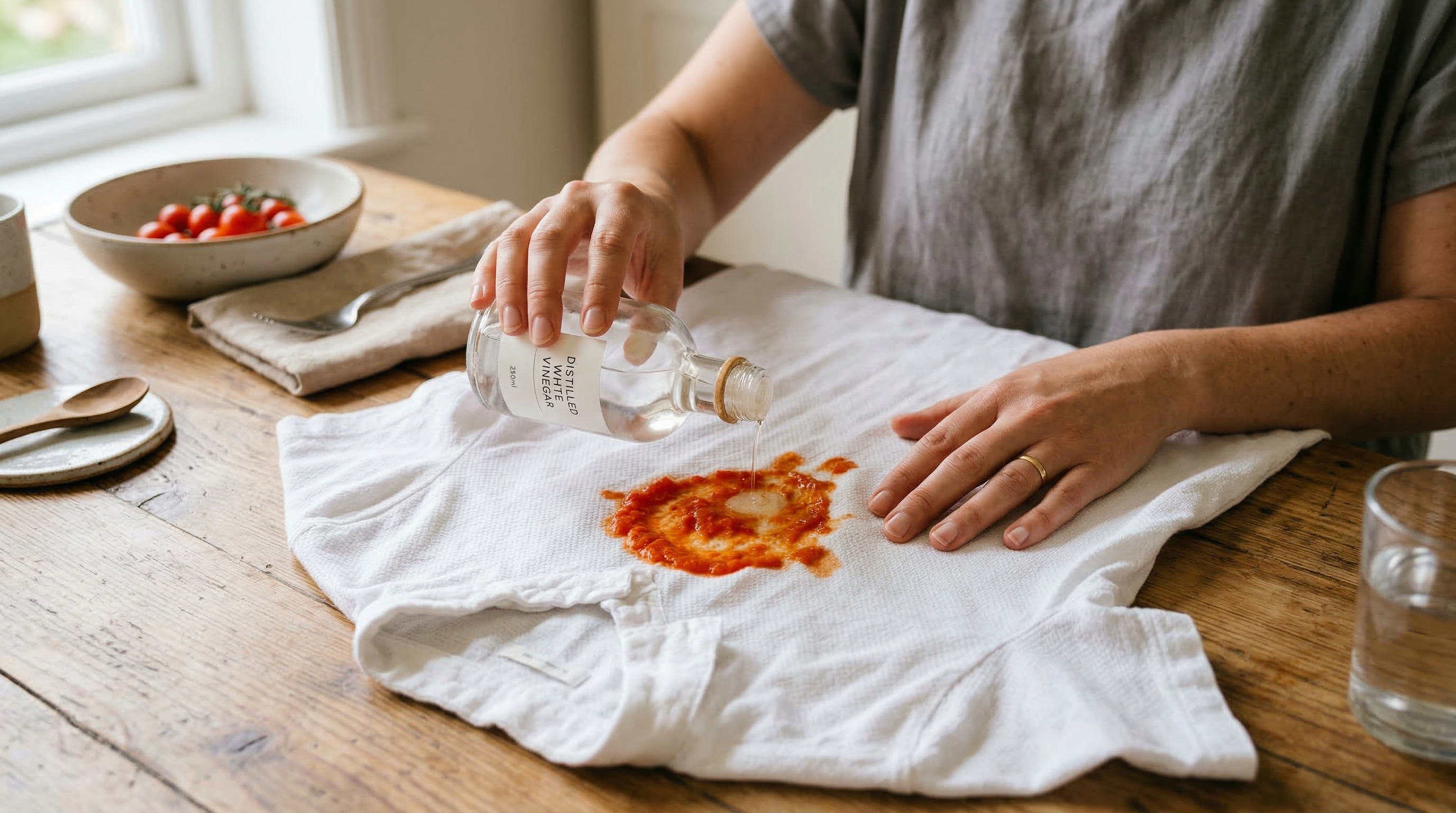
Grandma Knows: How to Remove Tomato Sauce from Clothing
Tomato sauce stains are vivid and quick to set. Learn the right sequence of treatments to remove tomato stains from clothing before they become permanent.
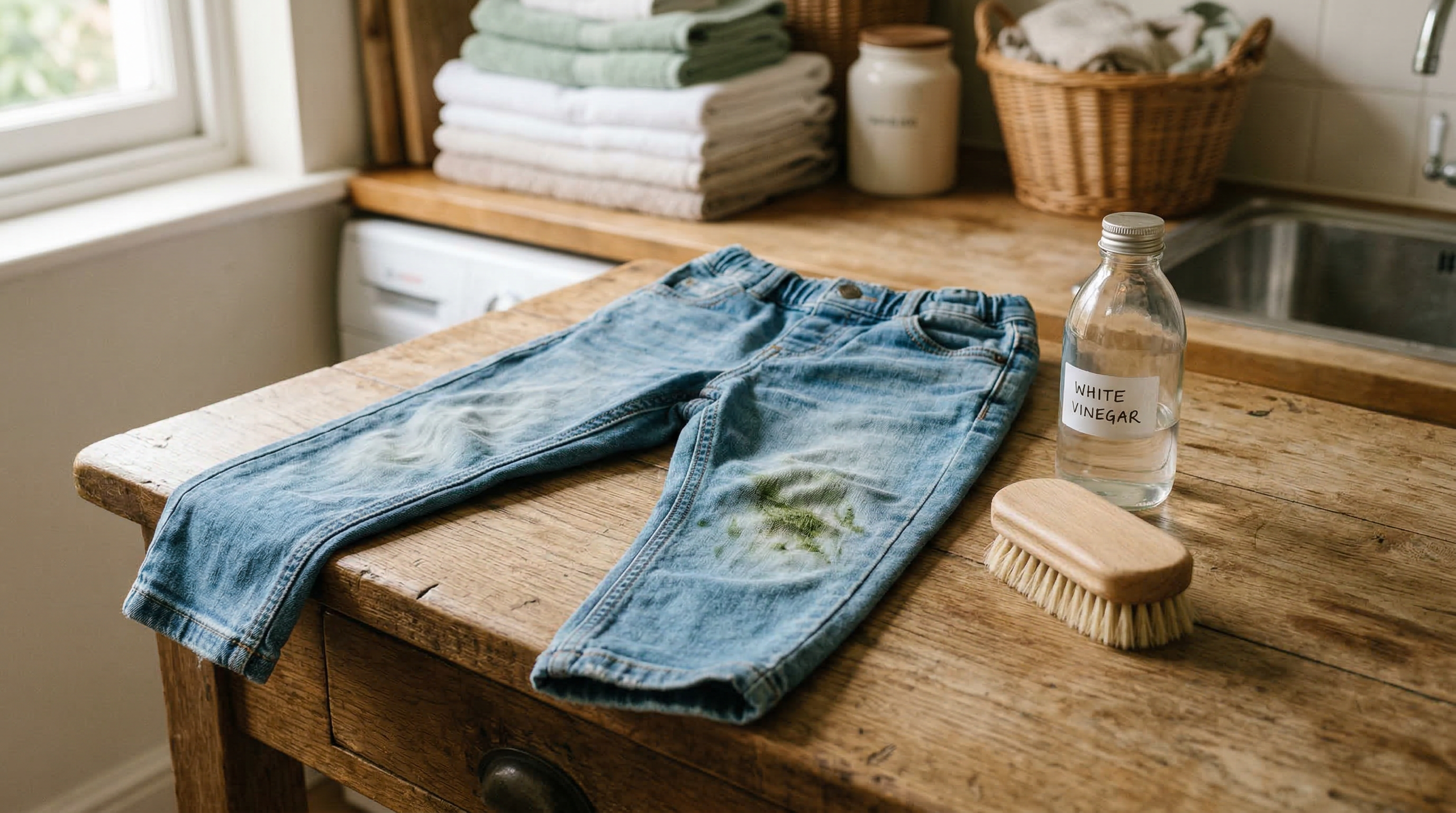
Grandma Knows: How to Remove Grass Stains from Clothes
Grass stains on clothes are stubborn but very treatable. Learn the household methods that break down chlorophyll and get fabric clean again.
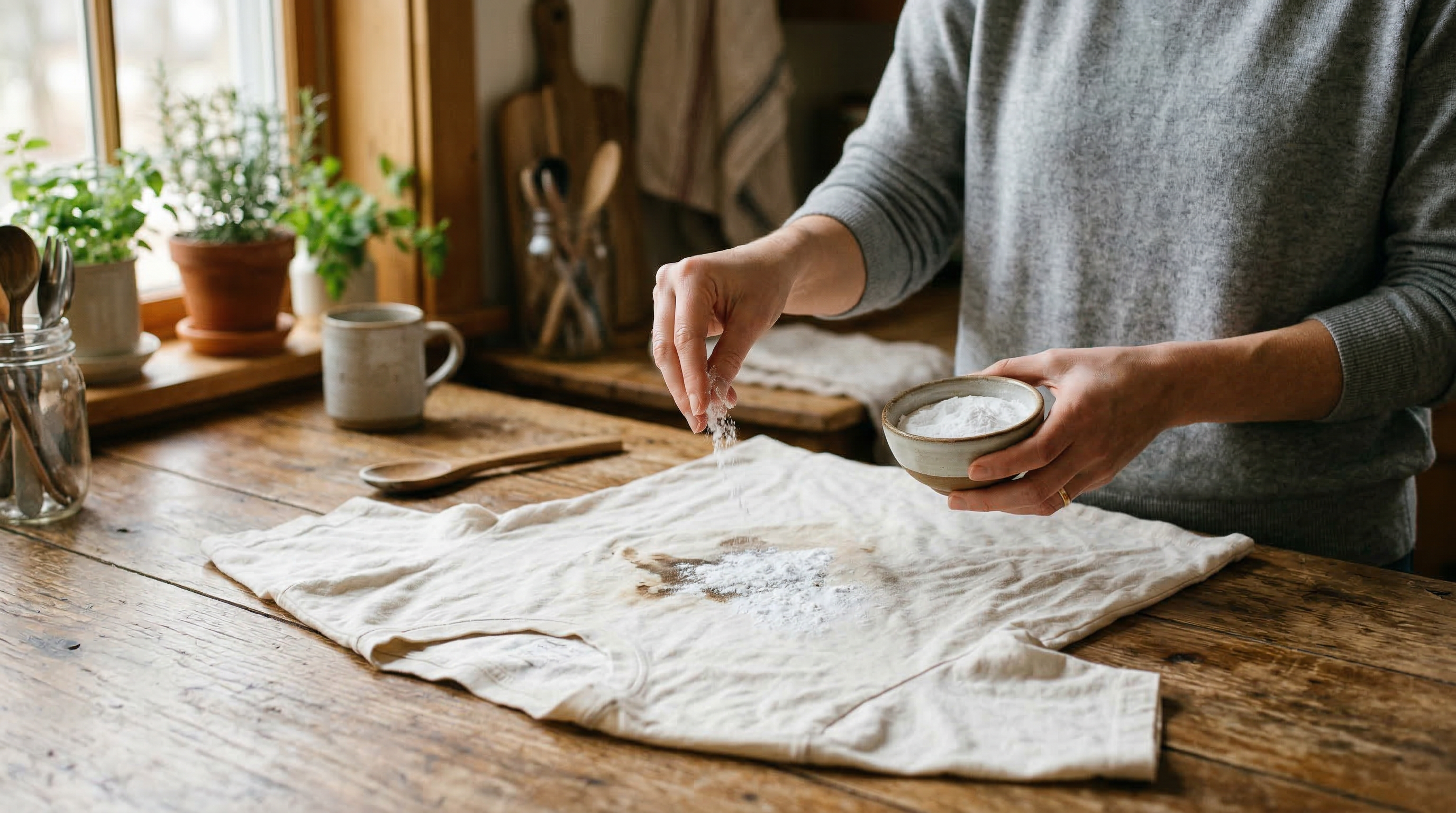
Grandma Knows: How to Remove Grease from Clothes
Grease stains on clothes are tricky but not impossible. Discover proven household methods using baking soda, dish soap, and patience.