
Grandma Knows: How to Keep the Laundry Room Organized
Simple, practical ways to organize your laundry room so it actually stays that way — tips rooted in everyday home routines that really work.

The laundry room is one of those spaces that never quite stays tidy on its own. Bottles pile up on the shelf. Lone socks collect on top of the dryer. A basket that was meant to hold clean clothes slowly turns into a holding station for everything that doesn't have a clear home elsewhere. If this sounds familiar, the problem usually isn't lack of effort. It's that the room was never set up to support a consistent routine in the first place.
Organization in the laundry room isn't about making it look like a catalog photo. It's about setting things up so that each step of the laundry process — sorting, washing, drying, folding, putting away — flows naturally from one to the next without friction. When the space works against you, small tasks pile up. When it works with you, even a full week of laundry feels manageable.
Why Laundry Rooms Fall Into Disorder
Most laundry rooms are small. That's the first challenge. A tight space gives every item fewer places to land, so things get stacked, crowded, or left on whatever flat surface is available. Over time, that flat surface — usually the top of the dryer or a narrow shelf — becomes a catch-all for things that belong somewhere else entirely.
The second challenge is that laundry involves multiple steps spread across time. You might start a load in the morning, switch it in the afternoon, and fold it in the evening — or the next day, or the day after that. Every gap in the process creates an opportunity for things to pile up. A basket of clean clothes sitting unfolded for two days starts to collect items from other rooms. A forgotten wet load leads to re-washing. Small disruptions add up.
The third challenge is product creep. Detergent, fabric softener, dryer sheets, stain remover spray, color-safe bleach, delicate wash — the number of products most households accumulate in the laundry room grows slowly, until one day there's no clear counter space left. Many of those products are duplicates, nearly empty, or rarely used. But because laundry products don't expire quickly, they tend to stay put indefinitely.
Start With a Clear-Out, Not a Shopping Trip
Before buying any bins, baskets, or organizers, take everything out of the laundry room and set it on a nearby table or floor. This step matters more than it might seem. When you can see every single item that lives in the space at once, patterns become obvious. You'll likely find three or four partially empty bottles of the same product. You'll find things that don't belong in the laundry room at all. You'll find supplies for tasks you no longer do.
Consolidate what you can. If two bottles of detergent are both open, pour one into the other. If a product has been sitting untouched for six months, consider whether it's earning its shelf space. Throw away anything that's empty, expired, or no longer used. Return items that wandered in from other rooms.
The goal of this step isn't minimalism for its own sake. It's to understand the actual inventory of the space before deciding how to store it. Buying organizers before doing this step almost always leads to buying the wrong size or the wrong number.
Think in Zones, Not Just Storage
A well-organized laundry room is really a series of small zones, each dedicated to one part of the process. The concept of zones comes from the same logic used in a well-arranged kitchen: tools and supplies should live closest to where they're used.
The Sorting Zone
Sorting is the step most often skipped or rushed, and when it's skipped, it causes problems later — colors bleeding into whites, delicates tangled with heavy denim, items that needed to be hand-washed going through a full cycle. A sorting zone doesn't need to be elaborate. It just needs a designated place where clothes can be separated before washing.
A simple two- or three-section hamper works well for this. One section for whites and lights, one for darks, and optionally one for delicates or items that need special handling. The key is placing this hamper where family members can actually use it — ideally near the entrance of the laundry room, or even in a nearby bedroom or hallway if the laundry room itself is too small.
If space is very limited, separate laundry bags hung on hooks take up almost no floor space and can be labeled by category. When a bag is full, it goes directly into the wash — the sorting is already done.
The Washing and Drying Zone
This zone is the machines themselves, plus whatever supplies are used during each cycle. Detergent, stain remover, and fabric softener should be stored within arm's reach of the washer — not on the other side of the room, not on a high shelf that requires a step stool. The reason is simple: when supplies are inconvenient to access, people skip steps. They forget the fabric softener because reaching for it means moving something else first. They don't treat a stain because the spray is buried behind other bottles.
A small shelf mounted just above or beside the washer, or a caddy that sits on top of the machine, keeps daily-use supplies visible and accessible. Limit this area to what's used every single wash cycle. Specialty products — the delicate wash, the color-booster used occasionally — can be stored elsewhere and retrieved when needed.
The Folding and Sorting Zone
Having a dedicated flat surface for folding changes the entire laundry routine. Without one, clothes get folded on a bed, on the couch, or not folded at all. A surface inside the laundry room — even a narrow counter installed above a front-loading washer and dryer — keeps the process contained to one room from start to finish.
If there's no built-in counter space, a wall-mounted fold-down shelf is a practical solution for small rooms. It stays flat against the wall when not in use and folds down to provide a folding surface when needed. The investment is modest and the difference in daily routine is significant.
Keep a few empty baskets near this surface — one per household member, ideally. As clothes are folded, they go directly into the correct basket. The basket then goes to that person's room. This system separates the folding step from the putting-away step, which matters because those two steps often happen at different times.
Managing the Small Things That Create Big Clutter
The laundry room accumulates small items at a surprising rate. Loose change from pockets. Hair ties. A button that came off a shirt weeks ago. Receipts that went through the wash. These items are too small to put away immediately and too potentially useful to throw away, so they end up on whatever flat surface is nearby.
A small dish or tray placed deliberately near the machines gives these items a designated landing spot. When the dish fills up, that's the signal to sort through it. Coins go back to wallets. Buttons get stored in a small jar for future repairs. Everything else gets discarded. This simple habit prevents the slow creep of small clutter that makes the whole room feel untidy.
Lone socks deserve their own small container — a basket, a box, a cloth bag hung on a hook. Rather than leaving single socks scattered on top of the dryer hoping their match will appear, put them in one place. Check the container at the end of each week. Most matches will turn up in the next few washes. After two or three weeks, a sock with no match can safely be repurposed as a cleaning cloth or discarded.
The Shelf Above the Machines
If the laundry room has a shelf above the machines, it's one of the most useful spaces in the room — and one of the most easily misused. Because it's at eye level or just above, it tends to collect things that were set down temporarily and never moved.
Keep this shelf intentional. Assign each area of the shelf a category: daily-use products on the left, specialty products in the middle, and clean supply backups — extra detergent, a spare box of dryer sheets — on the right. When something is placed on the shelf, it goes in its category. This sounds simple, but the deliberate habit of returning things to a specific spot prevents the gradual slide back into clutter.
Baskets or bins on this shelf work well for items that don't stack neatly on their own. A bin for dryer sheets, a bin for stain-treatment supplies. Labeling the bins isn't strictly necessary if each person using the room already knows the system, but labels help when multiple people share the space — particularly when one person does most of the laundry and others occasionally help.
Keeping the System Working Over Time
The real challenge with laundry room organization isn't setting it up — it's maintaining it through the normal rhythm of busy weeks. A system that requires perfect discipline every single day will eventually break down. A system that's easy to follow even when you're tired or rushed will hold up much better.
The most reliable maintenance habit is a quick reset at the end of each laundry day. Before leaving the room for the last time, spend two or three minutes returning anything that's out of place. An empty bottle goes in the recycling. A stray sock goes in the sock container. Products that were moved during the wash get returned to their shelf positions. This small effort prevents the slow accumulation that leads to a full reorganization project every few months.
Once a month, do a slightly more thorough check. Look at the products on the shelf and consolidate anything that's partially empty. Clear out the small dish of pocket items. Check whether anything has migrated into the room that doesn't belong there. This monthly pass takes ten minutes and keeps the system honest.
When the Space Itself Is the Problem
Not every laundry room has enough space for all of this to work neatly. Some are genuinely small — a closet-style setup with barely enough room to stand while loading the machines. In those cases, the principles still apply, but the solutions need to be more compact.
Over-door organizers are useful in small laundry rooms because they use space that would otherwise be wasted. A simple organizer hung on the back of the laundry room door can hold spray bottles, small supplies, and even a few folded cleaning cloths without taking any floor or shelf space.
Vertical space matters too. A tension rod installed inside a cabinet or between two walls can hold spray bottles by their triggers, freeing up shelf space. Hooks on the walls — just a few, placed deliberately — can hold mesh laundry bags, a small broom, or a lint roller. In tight spaces, every inch of wall and door space that can be used thoughtfully reduces the pressure on limited surfaces.
In the smallest setups, it may help to keep non-daily supplies in a nearby closet or cabinet rather than in the laundry room itself. Store one backup container of detergent elsewhere and only bring it into the laundry room when the current one runs out. This reduces the number of items competing for space at any given time.
The Connection Between Routine and Order
An organized laundry room stays that way most reliably when it's paired with a consistent laundry routine. When laundry happens at unpredictable times — a load here, a load there, without any pattern — the room tends to stay in a state of partial completion. There's always a basket that needs folding, always a load waiting to be switched.
A simple weekly routine — even a loose one — reduces this. Doing laundry on the same one or two days each week means the room has clear working periods and clear resting periods. When laundry is done for the week, the room resets. Baskets are empty, surfaces are clear, and the space can stay tidy until the next wash day.
This doesn't mean the routine has to be rigid. Life doesn't always cooperate with fixed schedules. But having a general pattern — Tuesday and Saturday, for example — gives the room's organization a natural rhythm to support rather than working against constant, unpredictable use.
Related articles

Grandma Knows: How to Remove Tomato Sauce from Clothing
Tomato sauce stains are vivid and quick to set. Learn the right sequence of treatments to remove tomato stains from clothing before they become permanent.
Grandma Knows: How to Remove Grass Stains from Clothes
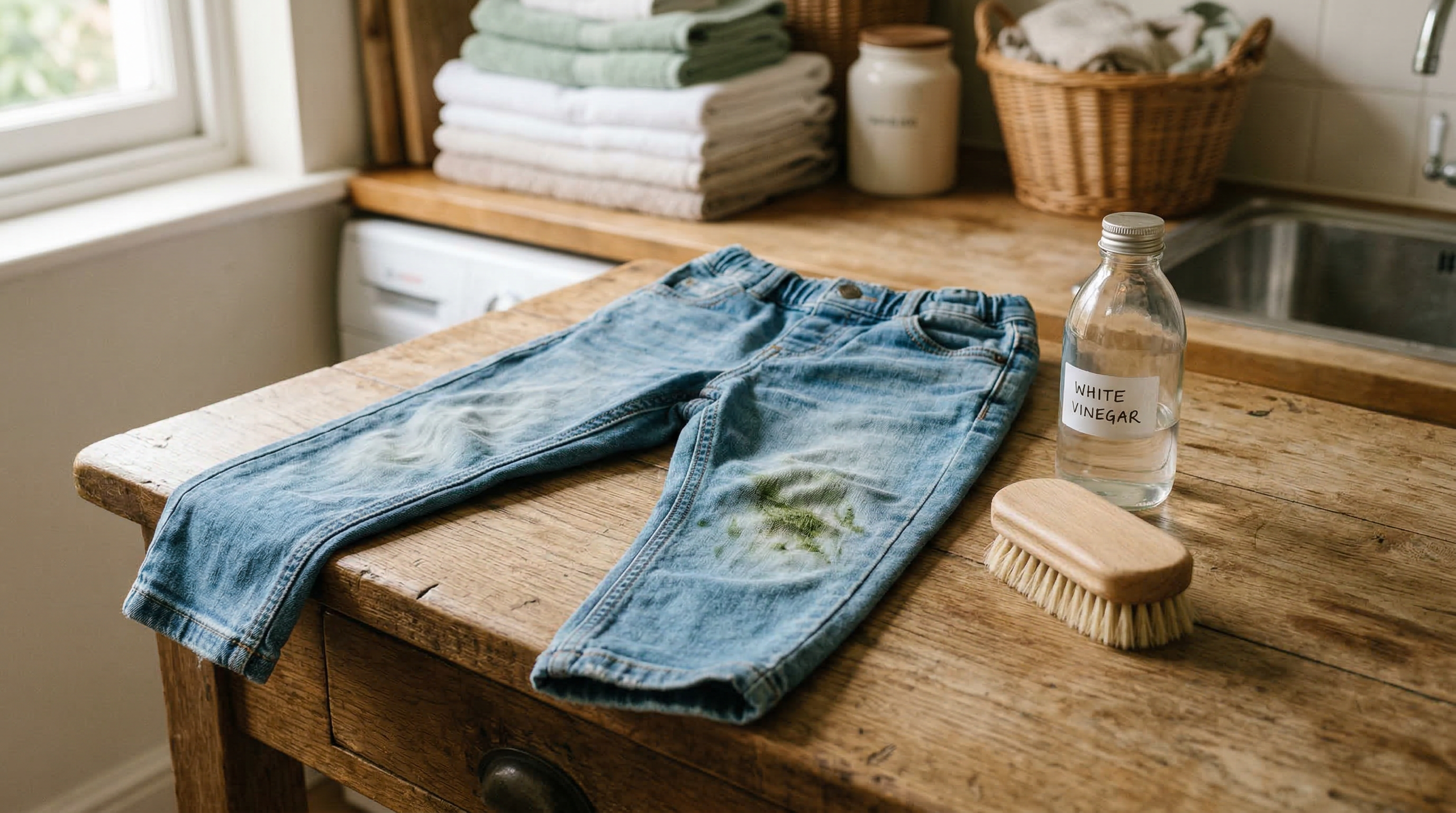
Grass stains on clothes are stubborn but very treatable. Learn the household methods that break down chlorophyll and get fabric clean again.

Grandma Knows: How to Remove Grease from Clothes
Grease stains on clothes are tricky but not impossible. Discover proven household methods using baking soda, dish soap, and patience.