
Grandma Knows: How to Keep the Closet Organized
A cluttered closet is a daily frustration. Learn practical, time-tested methods to organize your closet and keep it that way for good.

A closet that works well is one of the quiet comforts of daily life. You open the door in the morning, you find what you need, and you move on with your day. But when the closet is in disorder — clothes piled on shelves, hangers tangled together, shoes tumbling out from the floor — even a simple task like getting dressed can feel like a chore before the day has even started.
The good news is that a disorganized closet is almost never a storage problem. In most homes, there is enough space. The real issue is how that space is being used. Understanding why closets fall into disorder in the first place is the most useful place to begin.
Why Closets Lose Their Order Over Time
Closets tend to absorb clutter because they are private spaces. Unlike a kitchen counter or a living room shelf, the inside of a closet is hidden behind a door. That makes it easy to push things in quickly without thinking, especially when you are in a hurry or when the rest of the room needs to look tidy for company.
Over weeks and months, small habits add up. A jacket dropped over a chair gets moved to the closet. A pair of shoes worn once is pushed to the back instead of being put away properly. A sweater that came back from the laundry gets folded loosely on top of a pile. None of these moments feel significant on their own, but together they create a closet that no longer functions well.
There is also a category problem that most people overlook. When everything in a closet belongs to too many different categories — work clothes, weekend clothes, off-season items, spare linens, old documents, shoes, bags, and miscellaneous objects that have no other home — the space loses its logic. When a space has no logic, it is very hard to maintain.
Before You Organize, You Have to Edit
The most important step in organizing a closet comes before any bin, hanger, or shelf divider is introduced. That step is deciding what actually belongs in the closet and what does not.
Take everything out. This is not just a practical step — it is a revealing one. When you see the full contents of your closet spread out on a bed or floor, you get an honest picture of what you have been storing. Most people are surprised. There are usually items that have not been touched in years, clothes in sizes that no longer fit, duplicate items, and things that genuinely belong somewhere else in the home.
Sort what you find into clear groups:
- Items you use regularly and want to keep in the closet
- Items you use seasonally and need to store somewhere
- Items that belong in a different room entirely
- Items that can be donated or discarded
Be honest with yourself during this step. A piece of clothing you have not worn in two years is not being saved — it is taking up space. A useful item that belongs in the garage or the linen closet should go there, not stay in your bedroom closet because it is convenient.
This editing process is what makes the actual organization work. When you put back only what genuinely belongs in the closet, you often discover that you have more space than you thought.
The Logic of Zones
Once you know what is going back into the closet, the next step is to think in zones. A zone is a section of the closet dedicated to a specific category of items. This sounds simple, but it is the principle behind every well-functioning closet, whether it is a small wardrobe or a large walk-in.
Think about how you actually use your closet during a typical week. Which clothes do you reach for most often? Where do your eyes go first when you open the door? The items you use every day should be at eye level and within easy reach. Items you use less frequently — formal wear, seasonal pieces, spare blankets — can live on higher shelves or in less accessible corners.
A basic zone system for a standard bedroom closet might look like this:
- Eye-level hanging space for clothes worn most often during the current season
- A shelf above the hanging rod for folded items like sweaters or jeans
- The floor for shoes, arranged in a consistent way
- A high shelf or back corner for seasonal or rarely used items
The value of zones is that they create a home for every category. When something has a clear home, putting it away takes no thought. That ease of return is what keeps a closet organized over time — not the initial setup, but the daily habit of returning things to where they belong.
Hanging Clothes the Right Way
The hanging rod is the heart of most closets, and how you use it matters more than most people realize. Two practical changes make a significant difference.
The first is hanger consistency. When all your hangers are the same type, clothes hang at an even height and the rod looks orderly at a glance. Thin velvet hangers are particularly useful because they prevent clothes from slipping and take up far less space than wire or thick plastic hangers. You can fit noticeably more clothing on a rod when the hangers are slim and uniform.
The second change is grouping by category, then by color within each category. Keep all shirts together, all pants together, all dresses together. Within each group, arrange by color from light to dark. This makes it genuinely faster to find what you are looking for because your eye can navigate the space quickly. It also makes it easy to spot when something has been returned to the wrong place.
One old practice that still holds up well is turning hangers backward when you put seasonal clothes away. When you hang a garment back after wearing it, you hang it normally. At the end of the season, whatever is still hanging backward was never worn. That tells you something useful about what you actually need.
Folded Clothes and Shelf Management
Shelves present a different challenge. Folded clothes are easy to put away but easy to disturb. One person pulling a shirt from the middle of a neat pile can leave the whole shelf in disarray.
The most practical solution is vertical folding, sometimes called file folding. Instead of stacking clothes on top of each other in a horizontal pile, you fold each item into a compact rectangle and stand them upright side by side, the way files sit in a drawer. This works especially well for t-shirts, jeans, and casual pants.
The advantage is twofold. First, you can see every item at once without disturbing anything. Second, removing one item does not collapse the arrangement. This method requires a little practice to get the folds consistent, but once it becomes a habit, it takes no more time than folding any other way.
For shelves with bulkier items like sweaters, shelf dividers are worth using. They are simple L-shaped or U-shaped pieces that attach to the shelf and keep piles from leaning and spreading into each other. Without dividers, piles tend to migrate across the shelf over time, especially on shelves that hold multiple stacks.
The Floor: Shoes and What Else Belongs There
The floor of a closet is often the most neglected area. Shoes pile up in no particular order, bags get dropped there, and odd items accumulate because the floor feels like overflow space.
Shoes benefit most from a consistent arrangement. A simple shoe rack — even a basic two-tier wire rack — keeps shoes off the floor, visible, and easy to retrieve. Arrange them so that the pairs you wear most often are at the front. Off-season shoes or rarely worn formal pairs can go in the back or on a higher shelf in their original boxes, labeled on the outside so you can identify them without opening each one.
If your closet floor tends to gather random items, it is worth asking whether those items have a proper home elsewhere. A bag of gym gear, a stack of books, a spare umbrella — these are not closet items. Creating a clear rule that the closet floor is for shoes only (and perhaps one or two bags) removes the temptation to use it as a catch-all.
Small Additions That Make a Real Difference
There are a few simple additions to a closet that cost very little but noticeably improve how well the space functions.
A hook on the inside of the closet door is one of the most useful. It gives you a place to hang tomorrow's outfit the night before, or to hold a bag, a belt, or a robe without using any shelf or rod space. This one addition reduces the habit of draping clothes over chairs because there is a more convenient alternative.
A small cedar block or a sachet of dried lavender tucked onto a shelf does two quiet jobs: it deters moths from setting into wool and natural-fiber clothing, and it keeps the closet smelling clean and fresh. This is a practice that has been used in homes for generations, long before commercial closet fresheners existed. Cedar works by releasing a natural oil that moths dislike. It needs to be lightly sanded every few months to stay effective, but it lasts for years.
Good lighting matters more than it tends to get credit for. Many closets have poor lighting, which makes it harder to see colors accurately and contributes to things getting lost in darker corners. A battery-operated motion-sensor light installed on a shelf or the wall takes only a few minutes to put up and makes the closet significantly easier to use.
Maintaining Order as a Daily Habit
The hardest part of closet organization is not the initial setup. It is the maintenance. A well-organized closet can return to disorder within a few weeks if the habits that built it are not carried forward.
The key habit is the immediate return. When you take something off and do not plan to wear it again before washing, it goes directly into the hamper or back onto its hanger — not over a chair, not on the floor, not in a temporary pile. This takes about ten seconds. The chair or floor pile, on the other hand, grows a little each day and eventually becomes a problem that requires dedicated time to fix.
A quick five-minute tidy at the end of the week catches small disorder before it becomes large. Straighten folded piles, push shoes back into line, return anything that has drifted to the wrong section. Five minutes of weekly attention prevents the need for a full reorganization every few months.
Seasonal transitions are also a natural moment to reassess. When you swap out summer clothes for winter clothes, take a few extra minutes to evaluate what is coming out of storage. If you did not wear something last season, think honestly about whether it needs to come back into the main closet or whether it is time to pass it along.
When a Closet Has Genuinely Limited Space
Some closets are simply small. A narrow single rod with one shelf above it does not offer much room to work with. In these situations, the editing step becomes even more important, because you cannot compensate for a small space with organization alone — you can only reduce what needs to fit into it.
A few strategies help in tight closets. Double hanging rods — adding a second rod below the first — effectively double hanging space for shorter items like shirts, folded jackets, and pants hung by the cuffs. This works well in sections of the closet where nothing needs to hang full length.
Under-bed storage is a natural companion to a small closet. Flat storage containers that slide under the bed are ideal for off-season clothing, spare bedding, or shoes. Keeping these items out of the closet frees up space for what needs to be accessed regularly.
Over-door organizers — the kind with fabric or clear pockets — can hold a surprising number of small items: socks, scarves, folded t-shirts, accessories. They use space that would otherwise go completely unused and keep small items visible and easy to find.
A small closet that holds only what it should — with every item in a consistent place — functions better than a large closet that holds everything without order. The size of the space matters less than the clarity of how it is used.
Related articles

Grandma Knows: How to Remove Tomato Sauce from Clothing
Tomato sauce stains are vivid and quick to set. Learn the right sequence of treatments to remove tomato stains from clothing before they become permanent.
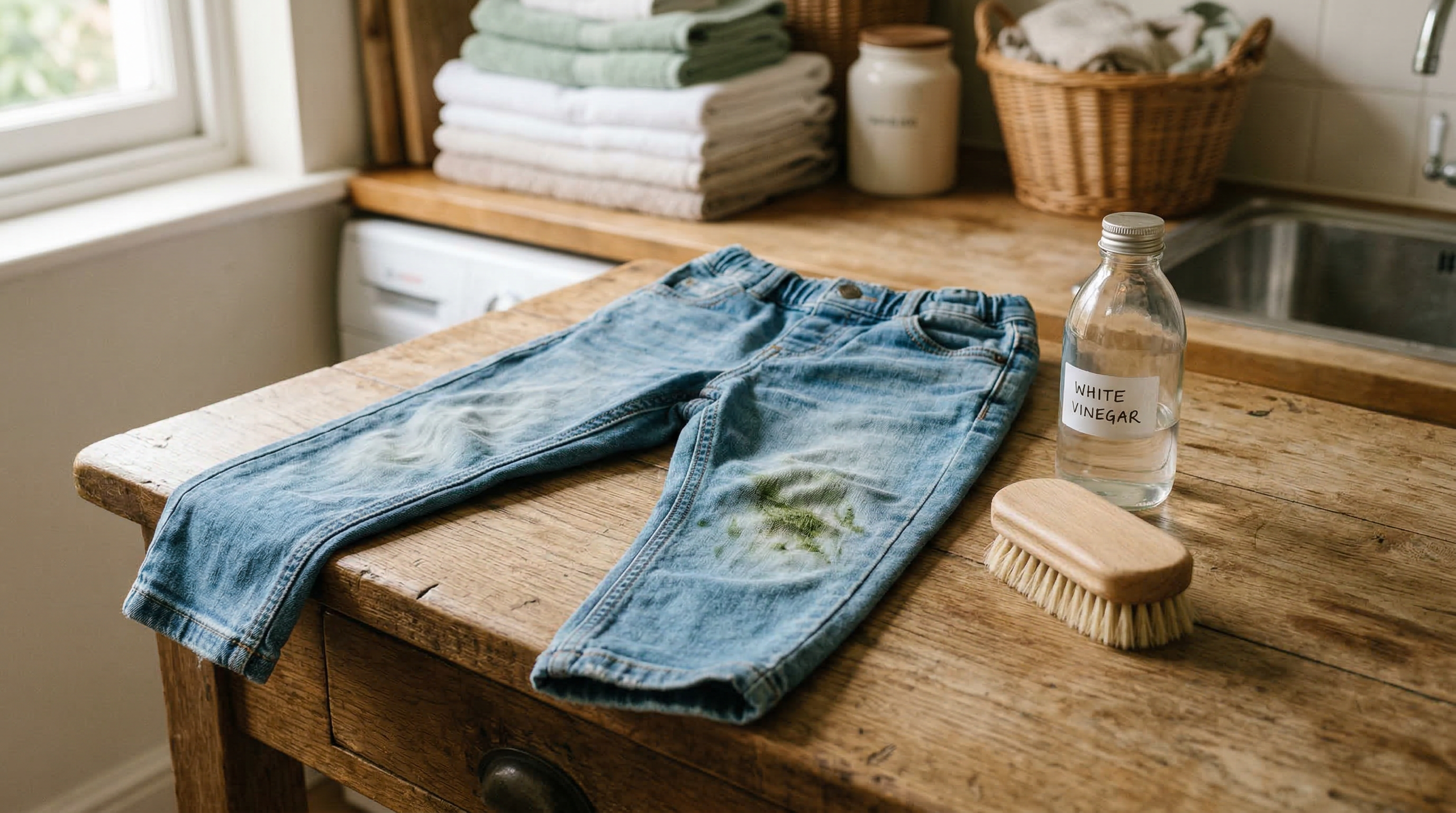
Grandma Knows: How to Remove Grass Stains from Clothes
Grass stains on clothes are stubborn but very treatable. Learn the household methods that break down chlorophyll and get fabric clean again.
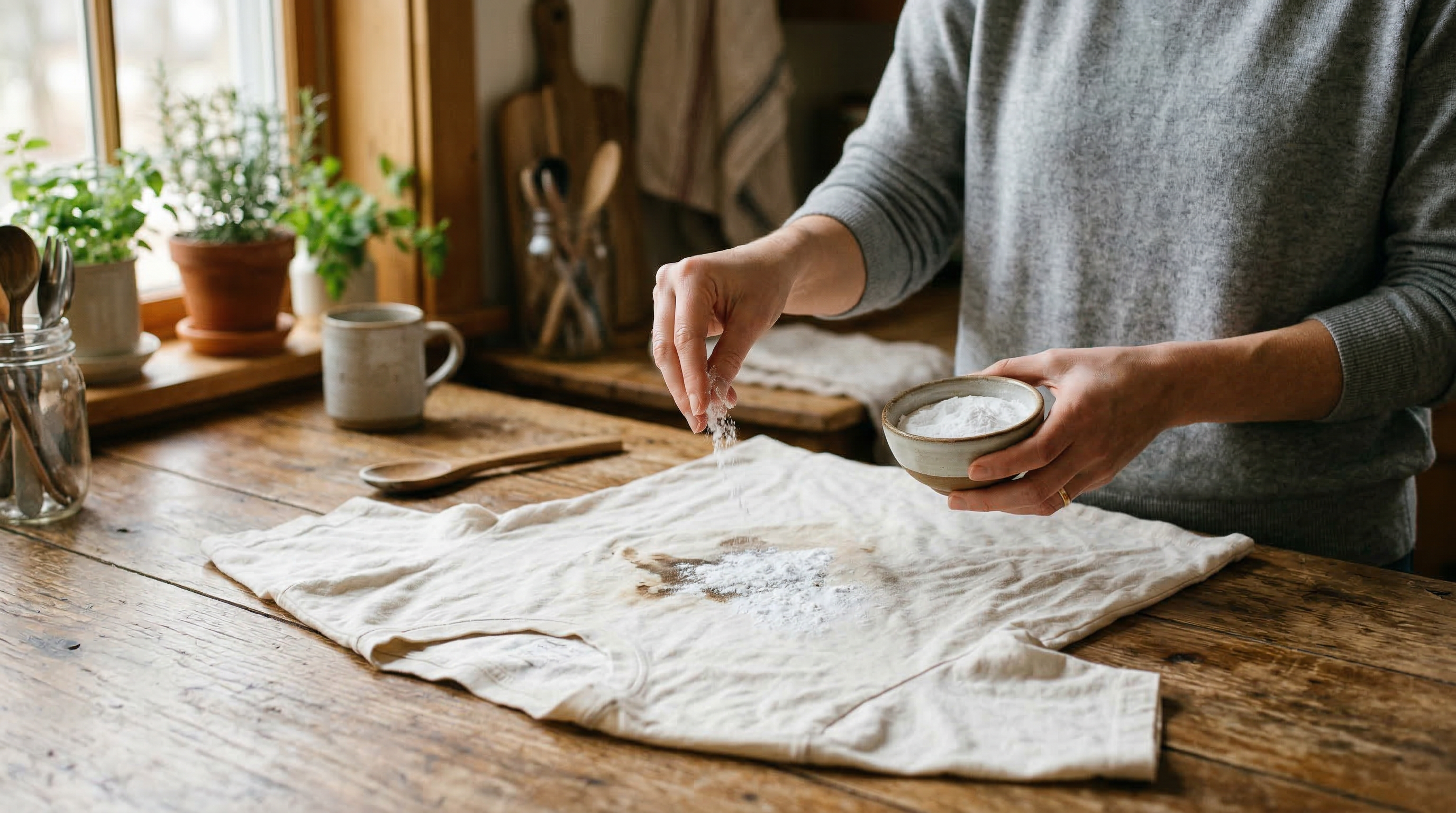
Grandma Knows: How to Remove Grease from Clothes
Grease stains on clothes are tricky but not impossible. Discover proven household methods using baking soda, dish soap, and patience.