
Grandma Knows: How to Get Ink Out of Fabric
Ink stained your shirt or sofa? Learn practical, proven methods to remove ink from fabric using everyday household supplies.
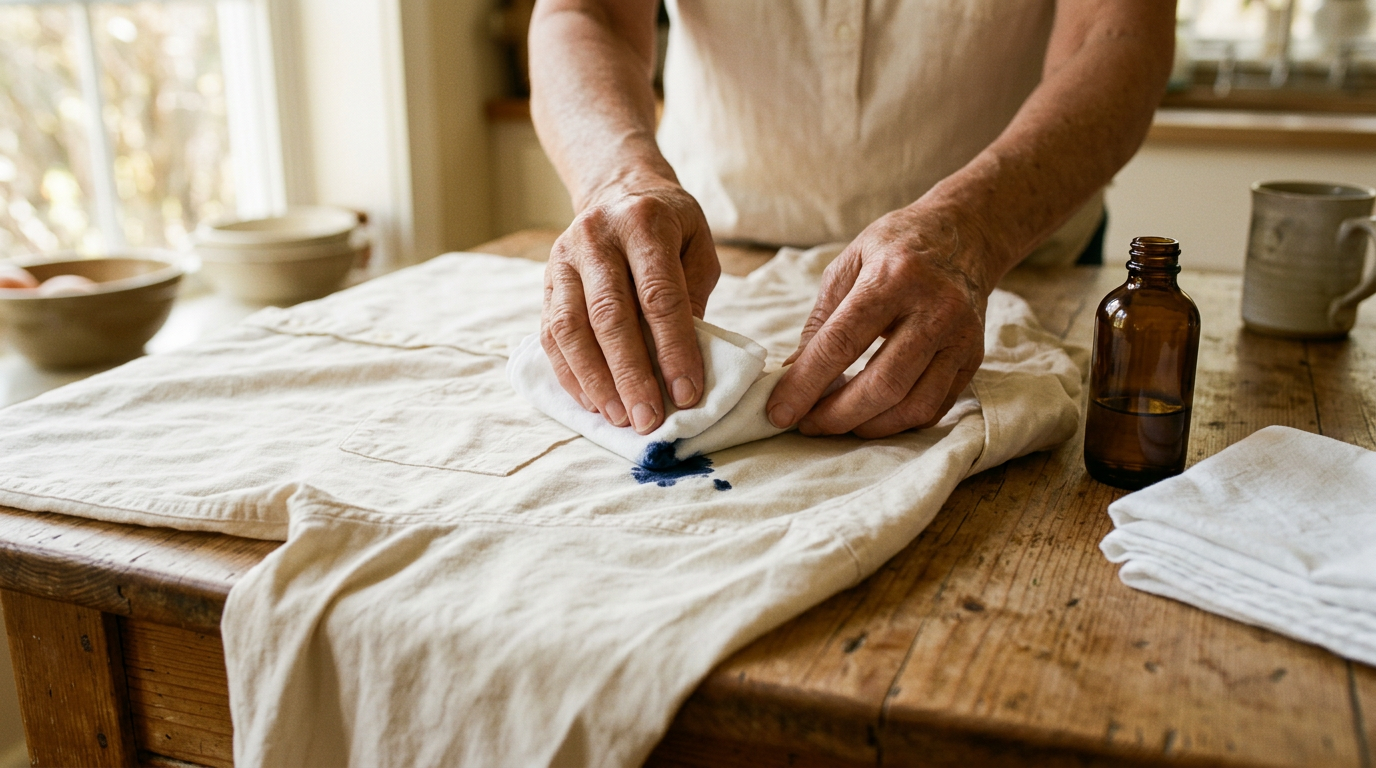
An ink stain has a way of appearing at the worst possible moment. A pen leaks in a shirt pocket. A marker gets into the wrong hands on a slow afternoon. A ballpoint pen rolls under a cushion and leaves a long dark streak across the upholstery. In each case, the reaction tends to be the same — a quiet sense of dread, followed by the question of whether the fabric will ever look right again.
The good news is that ink stains, even stubborn ones, respond well to the right approach. The key is understanding what kind of ink you are dealing with, acting before the stain has time to settle deep into the fibers, and choosing a method that matches the fabric in front of you. There is no single trick that works in every situation, but there are several reliable methods that have held up across decades of practical household use.
Why Ink Is So Difficult to Remove
Ink is not a single substance. The word covers a wide range of formulas — ballpoint ink, fountain pen ink, printer ink, permanent marker, washable marker, and felt-tip ink all behave differently when they come into contact with fabric. Understanding that difference matters because it affects which approach will actually work.
Ballpoint ink is oil-based. It contains dyes suspended in a thick, viscous paste that clings to fabric fibers and resists water on its own. That is why rinsing a ballpoint ink stain under cold water does almost nothing. You need a solvent — something that can break down the oily base before you can lift the dye out of the fiber.
Fountain pen and washable marker inks are water-based. These are generally easier to remove because water itself can begin to break them down. Acting quickly is especially important with water-based inks, because once they dry they can set into the fabric and behave more like a dye than a removable stain.
Permanent marker and printer ink are in a category of their own. They are designed specifically to resist fading and removal, which is exactly what makes them such a problem on fabric. These respond to stronger solvents, and results are not always complete — but with patience, significant improvement is nearly always possible.
Fabric type adds another layer of complexity. Natural fibers like cotton and linen tend to absorb ink quickly and deeply. Synthetic fabrics like polyester can hold ink near the surface, which sometimes makes removal easier, but they can also react badly to certain solvents. Delicate fabrics like silk, wool, or anything labeled dry-clean only require a gentler hand.
The First Rule: Do Not Rub
Before anything else, there is one habit to break immediately. When people see a fresh stain, the instinct is to rub it. Rubbing an ink stain spreads the ink outward, pushes it deeper into the fabric weave, and makes the overall stain larger and harder to remove. It feels like you are doing something useful, but it is working against you.
Instead, blot. Use a clean white cloth, a folded paper towel, or even a clean tissue. Press it gently onto the stain and lift straight up. You are trying to absorb as much wet ink as possible before it travels further into the fibers. Repeat this with a fresh section of cloth each time so that you are not transferring ink back onto the fabric.
If the stain is already dry, skip the blotting step and move directly to a method below. There is nothing to absorb at that point, and blotting a dry stain accomplishes nothing useful.
Rubbing Alcohol: The Most Reliable Starting Point
For ballpoint ink, rubbing alcohol — also sold as isopropyl alcohol — is the most consistently effective household remedy. It works because it is a solvent that dissolves the oil-based binders in ballpoint ink, releasing the dye from the fabric fiber so it can be blotted away.
The process is straightforward. Place the stained fabric face-down on a clean folded cloth or several layers of paper towel. This is important: you want the ink to be pushed downward and away from the fabric, not further into it. Apply rubbing alcohol to the back of the stain using a cotton ball or clean cloth, working from the outer edge inward. The ink should begin to transfer onto the cloth beneath the fabric.
Work slowly and change your blotting surface frequently. Once a section of the cloth beneath has absorbed ink, fold it or replace it with a clean piece — otherwise you will be pressing ink back into the fabric from below.
After the stain has lifted as much as possible, rinse the area with cool water, then wash the garment as you normally would according to its care label. Check the stain before placing the item in the dryer. Heat from a dryer can permanently set any remaining ink, so if a faint mark remains, repeat the alcohol treatment before drying.
Rubbing alcohol works best on cotton and polyester blends with ballpoint stains. It is less effective on permanent marker, and it should be tested carefully on delicate or colored fabrics because it can affect some dyes.
Hairspray: A Practical Stand-In
There was a time when hairspray was the go-to household remedy for ink stains, and it worked reasonably well — not because of anything magical about hairspray, but because older aerosol hairsprays contained a high percentage of alcohol. The alcohol in the formula was doing the real work.
Modern hairsprays have changed. Many of today's formulas contain less alcohol and more conditioning agents, which can actually leave a residue on fabric. If you reach for hairspray and it happens to be an older alcohol-based formula, it may help. But if you have rubbing alcohol available, that is the more reliable and predictable choice.
If hairspray is truly all you have on hand, spray a small amount directly onto the stain, let it sit for thirty seconds, and then blot — do not rub. Follow with a dab of dish soap and rinse with cool water. This combination may remove a light ballpoint stain, but do not expect it to outperform straight rubbing alcohol.
Dish Soap and Warm Water: The Right Tool for Water-Based Inks
For washable markers, fountain pen ink, and other water-based inks, a simple solution of dish soap and warm water is often all you need — provided you act before the stain dries completely.
Apply a small drop of liquid dish soap directly to the stain and work it gently into the fabric using your fingertip or a soft-bristled toothbrush. The soap acts as a surfactant, which means it helps water penetrate the fabric and surround the ink particles so they can be rinsed away. After working the soap in for a minute or two, rinse under cool running water and check whether the stain has lifted. Repeat as needed before washing.
This method is gentle enough for most fabrics and is a good first step any time you are unsure what kind of ink caused the stain. If the stain does not respond to dish soap and water, that is a sign you are dealing with an oil-based or permanent ink that requires a solvent.
Milk: An Old-Fashioned Approach That Has Real Logic Behind It
Soaking an ink-stained fabric in milk overnight is an old household practice that sounds improbable but does have some basis in chemistry. The proteins and fats in milk can help loosen certain types of ink, particularly fresh water-based stains, by binding to the ink particles and allowing them to be rinsed away.
This method works best as a gentle overnight soak for delicate fabrics that cannot tolerate alcohol or harsher treatments. Submerge the stained area in whole milk in a bowl, let it soak for several hours or overnight, then rinse thoroughly and wash normally. The results are modest compared to alcohol-based methods, but for a lightly stained piece of fine fabric, it is a safe option that causes no damage.
Do not expect milk to remove a heavy ballpoint stain or anything involving permanent ink. It is a gentle remedy suited to gentle stains.
Salt and Lemon on Fresh Ink
For a fresh ink stain that is still wet — particularly on cotton or linen — a combination of salt and lemon juice can help draw the ink out before it sets. Pour a generous amount of fine salt onto the wet stain immediately. The salt acts as an absorbent, pulling the wet ink upward and out of the fiber. Let it sit for a few minutes, then brush the salt away and squeeze fresh lemon juice onto the remaining mark.
The mild acidity in lemon juice can help break down certain dyes and lighten the remaining stain. After applying the lemon juice, place the fabric in direct sunlight for an hour if possible — sunlight acts as a natural bleaching agent and can enhance the effect of the lemon. Rinse and wash the fabric as usual afterward.
This method works best as an immediate first response for water-based inks on white or light-colored natural fabrics. It is not suitable for dark fabrics because the lemon and sunlight combination can cause uneven fading.
Dealing with Ink on Upholstery and Carpet
Ink on a sofa cushion or carpet requires a slightly different approach because you cannot put the fabric in a washing machine. The goal is to lift the stain without saturating the material underneath, which can cause other problems like mold or water damage to the padding.
For upholstery, apply a small amount of rubbing alcohol to a clean white cloth — not directly to the sofa — and blot the stain gently from the outside edge toward the center. Work in small sections and change to a clean part of the cloth frequently. Once the stain has lifted as much as possible, blot with a cloth dampened with plain cool water to remove any alcohol residue, then blot dry with a clean towel. Allow the area to air dry fully before sitting on it.
For carpet, the same approach applies. Blot with alcohol, work from the edges inward, and avoid scrubbing. If a faint shadow remains after drying, a small amount of dish soap solution applied and blotted away can help. Avoid soaking the carpet — use only enough moisture to treat the stain.
Always test any method on a hidden section of upholstery or carpet before treating a visible area. Some fabrics react to alcohol by fading or leaving a ring, and it is better to discover that on an area under a cushion than in the center of a visible surface.
Permanent Marker: Managing Expectations
Permanent marker on fabric is genuinely difficult to remove completely, and it helps to approach it with realistic expectations. Full removal is not always possible, but significant fading usually is.
The most effective approach is to use rubbing alcohol or acetone-based nail polish remover on fabrics that can tolerate it. Apply the solvent to a cotton ball and blot the stain repeatedly, replacing the cotton ball as it picks up ink. This is slow work, but persistent blotting will usually reduce a dark permanent marker stain to a faint shadow that may be barely visible after washing.
Acetone is a stronger solvent than isopropyl alcohol and is more effective on permanent inks, but it can dissolve certain synthetic fibers and should never be used on acetate, triacetate, or modacrylic fabrics. Always check a care label and test a hidden area first.
For children's clothing or items that have been through a wash-and-dry cycle with a permanent marker stain already set in, expectations should be modest. A stain that has been heat-set by a dryer is significantly harder to address, and while some fading is still achievable with solvents, full removal is unlikely.
A Few Practical Habits That Help
Keeping a small bottle of rubbing alcohol in the laundry area means you always have the right tool available when a stain appears. It is inexpensive, lasts indefinitely on the shelf, and handles a wider range of stains than most people realize.
Treating a stain the same day it happens makes a meaningful difference in how well it comes out. Even a few hours of delay can allow ink to bond more firmly to fabric fibers. If you notice a stain but cannot deal with it immediately, at minimum blot up any wet ink and keep the fabric from going into the dryer until you have had a chance to treat it properly.
Reading care labels is not just bureaucratic caution — it genuinely matters. A label that says "dry clean only" or lists a fabric like silk, wool, or rayon is telling you something important. For those fabrics, a professional cleaner will often achieve better results than anything you can do at home, and attempting aggressive treatments can cause damage that no amount of cleaning will fix.
Related articles
Grandma Knows: How to Remove Tomato Sauce from Clothing
Tomato sauce stains are vivid and quick to set. Learn the right sequence of treatments to remove tomato stains from clothing before they become permanent.
Grandma Knows: How to Remove Grass Stains from Clothes
Grass stains on clothes are stubborn but very treatable. Learn the household methods that break down chlorophyll and get fabric clean again.
Grandma Knows: How to Remove Grease from Clothes
Grease stains on clothes are tricky but not impossible. Discover proven household methods using baking soda, dish soap, and patience.