
Grandma Knows: How to Get Ink Off Table
Ink on your table? Learn practical, proven methods to remove ink stains from wood, laminate, and glass surfaces using everyday household items.
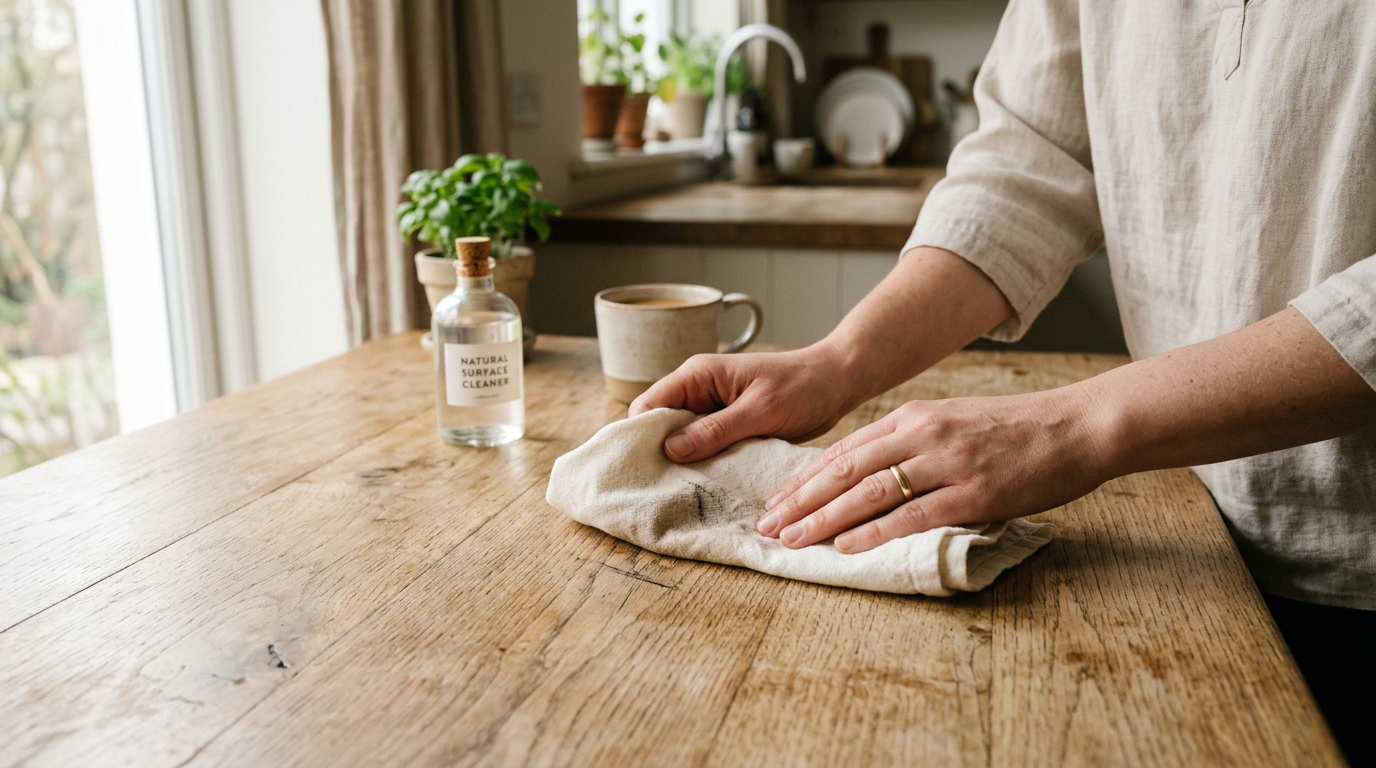
An ink stain on a table has a way of appearing at the worst possible moment. A pen rolls across the surface and leaves a streak. A marker cap comes loose in a bag and transfers onto the tabletop. A child finishes a drawing project and the ink has somehow spread beyond the paper. Whatever caused it, the stain is there now, and the question is what to do about it before it sets any further.
The good news is that ink responds well to several common household substances, and most tables — whether wood, laminate, glass, or painted — can be treated without harsh chemicals or professional help. The key is understanding what you are dealing with before you reach for anything.
Why Ink Stains Are Tricky
Ink is designed to be permanent. That is its entire purpose — to mark a surface and stay there. Most modern inks contain dyes or pigments suspended in a carrier liquid, often alcohol or water. When the carrier evaporates, the dye binds to the surface it landed on.
Ballpoint pen ink is oil-based, which means it clings to porous surfaces and resists plain water entirely. Rollerball and fountain pen inks are water-based, which makes them somewhat easier to dissolve early on but harder to remove once fully dried. Permanent markers use alcohol-based ink with strong binding agents, which is why they earn the name they have.
The surface underneath matters just as much as the type of ink. A sealed hardwood table behaves very differently from an unfinished or lightly waxed one. Laminate is non-porous, so ink tends to sit on top rather than soak in. Glass is even easier because it has no grain or texture for the dye to grip.
Acting quickly always helps, but even dried ink from days ago can often be lifted with the right approach.
Before You Begin
Before applying anything to a stained table, take a moment to identify the surface type and finish. Run your fingernail lightly across an inconspicuous area — a finished or lacquered surface will feel smooth and hard, while a raw or oiled wood surface will feel slightly softer or have more grain texture.
Whatever method you use, always test it on a small hidden area first. The underside of a table leaf, or a corner near the wall, works well. Apply a small amount of the cleaning agent, wait a minute, and wipe it off. Check whether the finish has dulled, lifted, or changed color. If it looks fine, you can proceed with confidence.
Avoid scrubbing aggressively from the start. Scrubbing can spread the stain outward or push ink deeper into grain lines on wood. Work from the outside edge of the stain inward, using a dabbing or gentle wiping motion.
Rubbing Alcohol for Most Ink Types
Rubbing alcohol — the standard 70% isopropyl variety found in most medicine cabinets — is one of the most reliable tools for ink removal on table surfaces. It works because most inks, including ballpoint and permanent marker, use alcohol-soluble compounds. The alcohol breaks down the binding agents in the ink and allows the dye to be lifted away.
Dampen a cotton ball or the corner of a clean white cloth with rubbing alcohol. Press it gently onto the stain and let it sit for about thirty seconds. Then, using light dabbing motions, work from the outer edge of the stain toward the center. You will likely see the ink transferring onto the cloth, which is exactly what should happen.
Change to a clean section of the cloth frequently. Reusing the same section risks spreading the dissolved ink back across the surface. Continue until the stain is gone or no more ink is transferring.
Once the stain is removed, wipe the area with a damp cloth to remove any alcohol residue, then dry it immediately. Leaving alcohol sitting on a finished wood surface for too long can dull the finish, so work efficiently and dry the surface promptly.
This method works well on sealed wood, laminate, glass, and most painted surfaces. It is less suitable for unfinished or raw wood, where the alcohol can raise the grain or bleach the surface slightly.
Hairspray — Why It Works and When to Use It
Hairspray has long been recommended for ink stains, and the reason it works is not the hairspray itself but the alcohol content in older aerosol formulas. Traditional aerosol hairsprays contained high concentrations of alcohol, which made them effective at dissolving ink.
Many modern hairsprays, however, have reduced alcohol content and added conditioning ingredients that can leave a residue on surfaces. If you have an older can or a simple alcohol-based formula, it can work. But if your hairspray is a moisturizing or conditioning type, it may leave a sticky film without doing much for the stain.
If you do use it, spray a small amount onto a cloth rather than directly onto the table. Then apply it to the stain the same way you would use rubbing alcohol. The direct approach gives you more control and prevents the surrounding finish from being exposed unnecessarily.
When rubbing alcohol is available, it is generally a cleaner and more predictable option than hairspray for table surfaces.
Dish Soap and Warm Water for Fresh Stains
If you catch an ink stain immediately — within the first few minutes — plain dish soap and warm water can sometimes be enough, particularly for water-based inks from rollerball pens or fountain pens.
Mix a small amount of dish soap into warm water and apply it to the stain with a cloth. Work it gently into the ink before it has a chance to bond fully with the surface. The soap acts as a surfactant, breaking the surface tension between the ink and the table and allowing the dye to be rinsed away.
This method is mild and safe for nearly all finished surfaces, including lacquered or varnished wood. It will not damage the finish if used briefly and rinsed off cleanly.
For oil-based ballpoint ink, however, dish soap and water alone are rarely sufficient. You will likely need to follow up with alcohol if the stain does not lift fully.
White Toothpaste for Surface-Level Stains
Plain white toothpaste — not gel, not whitening formula, just simple white paste — contains mild abrasives that can help lift ink that has not fully penetrated a surface. On laminate tables in particular, where ink tends to sit more on top than soak in, toothpaste can be surprisingly effective.
Apply a small amount directly to the stain and rub gently in small circular motions with a soft cloth or your fingertip. The fine abrasive particles work against the dried ink without scratching most finishes. After a minute of light rubbing, wipe the paste away with a damp cloth and check the result.
This method is not suitable for unfinished wood or any surface where you cannot risk even minor abrasion. On glass or non-porous laminate, it works cleanly and leaves no residue once rinsed.
Baking Soda Paste for Stubborn Spots
Baking soda mixed with a small amount of water to form a paste can serve a similar function to toothpaste — gentle abrasion combined with a mild alkaline reaction that helps break down some ink compounds.
Mix just enough water into a teaspoon of baking soda to form a thick paste. Apply it to the stain and leave it for two to three minutes. Then rub lightly with a damp cloth and rinse the area clean.
This works best on sealed, non-porous surfaces where the paste stays on top of the surface rather than being absorbed. On raw or unfinished wood, avoid this method, as moisture from the paste can raise the grain and the baking soda may leave a white residue in the pores of the wood.
White Vinegar for Specific Situations
White vinegar is mildly acidic, and that acidity can help break down certain water-based inks. It is not as universally effective as alcohol for ink removal, but it has its place — particularly for light ink marks on laminate surfaces or glass.
Dampen a cloth with undiluted white vinegar and apply it to the stain. Let it sit for a minute or two before wiping away. For glass tabletops, vinegar also leaves the surface streak-free, which makes it a practical option when the stain is a light ink smudge rather than a heavy mark.
On wood, use vinegar cautiously. It can strip wax finishes over time and may dull a lacquered surface with repeated use. For occasional spot treatment, it is generally fine if wiped off promptly and the area is dried thoroughly. But it should not be a first choice on a well-finished wooden table when alcohol is available.
Handling Ink on Different Table Surfaces
Sealed or Lacquered Wood
Most dining tables and kitchen tables with a factory finish fall into this category. The ink sits on top of the sealant layer rather than in the wood itself, which makes removal somewhat easier. Rubbing alcohol applied carefully and removed quickly is the most reliable option. Dry the surface immediately after treatment and consider applying a small amount of furniture polish to the area afterward to restore the sheen.
Unfinished or Lightly Oiled Wood
This is the most challenging surface for ink removal. Because there is no hard sealant, the ink can travel into the wood grain. Work quickly and try rubbing alcohol first, but accept that some lightening of the wood around the stain may occur. In persistent cases, very fine sandpaper (220 grit or higher) lightly applied to the stained area, followed by re-oiling the surface, is a practical last resort. This removes the stained layer of wood rather than dissolving the ink.
Laminate Tables
Laminate is forgiving. The non-porous surface means ink rarely penetrates deeply. Rubbing alcohol, toothpaste, baking soda paste, or even a magic eraser-style melamine foam sponge will all work well. Avoid heavy scrubbing with abrasive pads, which can leave visible scratch marks on the laminate surface.
Glass Tabletops
Glass is the easiest surface to treat. Rubbing alcohol removes virtually any ink quickly. Acetone-based nail polish remover also works on glass without any risk of damage. After cleaning, wipe the glass with a vinegar-dampened cloth for a clean, streak-free finish.
What Not to Do
A few approaches can make the situation worse rather than better, and they are worth naming clearly.
- Do not use bleach on wood or laminate tables. Bleach can permanently lighten or discolor the surface and will not necessarily remove ink more effectively than alcohol.
- Do not scrub vigorously with a rough sponge or scouring pad on finished surfaces. This removes the finish itself along with the stain, leaving a dull patch that is harder to repair than the original ink mark.
- Do not apply multiple cleaning agents at the same time without rinsing between them. Mixing chemicals unpredictably can create reactions that damage the finish or leave residue that is difficult to remove.
- Do not soak the surface with liquid of any kind. Apply cleaning agents sparingly and wipe away residue promptly, especially on wood.
A Practical Routine for Ink Stain Moments
When ink lands on a table, the most useful habit is to pause before reacting. Pick up the pen or marker first so it does not continue marking the surface. Blot away any wet ink gently with a dry cloth — do not rub at this stage.
Then assess: what kind of table is it, what kind of ink is it, and how long has it been sitting? If you have rubbing alcohol in the house and the table has a sealed finish, that is where to start. If the stain is fresh and water-based, try soap and warm water first before using anything stronger.
Work calmly and methodically. Most ink stains on table surfaces come out fully with one or two passes using the right substance. Patience and the correct approach will almost always outperform aggressive scrubbing with the wrong one.
Related articles
Grandma Knows: How to Remove Tomato Sauce from Clothing
Tomato sauce stains are vivid and quick to set. Learn the right sequence of treatments to remove tomato stains from clothing before they become permanent.
Grandma Knows: How to Remove Grass Stains from Clothes
Grass stains on clothes are stubborn but very treatable. Learn the household methods that break down chlorophyll and get fabric clean again.
Grandma Knows: How to Remove Grease from Clothes
Grease stains on clothes are tricky but not impossible. Discover proven household methods using baking soda, dish soap, and patience.