
Grandma Knows: How to Get Ink Off Sofa
Ink on your sofa doesn't have to be permanent. Learn practical, proven methods to remove ink stains from fabric and leather sofas at home.
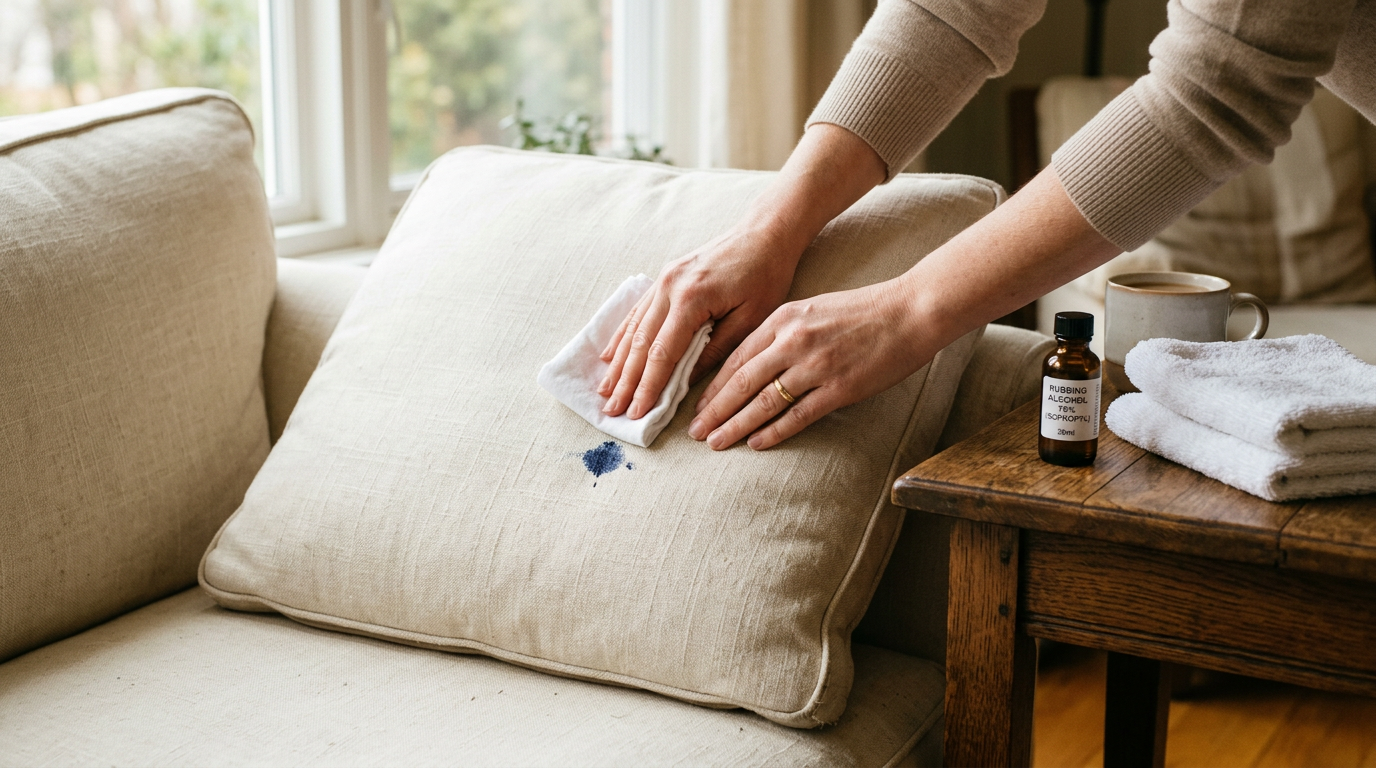
A pen rolls off the cushion. A child presses a marker into the armrest without thinking. Someone leans back with a leaky ballpoint in their shirt pocket. Ink on a sofa happens quickly, and it always seems to happen at the worst moment.
The first instinct for most people is to scrub at it immediately with whatever is closest — a damp cloth, a paper towel, maybe a little dish soap. That instinct is understandable, but it often makes things worse. Ink behaves differently from most household stains, and understanding that difference is what makes removal actually work.
This guide covers why ink is difficult to remove, which household supplies genuinely help, and how to work through the process step by step — whether your sofa is upholstered fabric or leather.
Why Ink Sticks the Way It Does
Ink is not a single substance. The word covers a wide range of formulas — ballpoint ink, gel ink, rollerball ink, permanent marker, felt-tip ink — and each one behaves a little differently on fabric. What they share is a combination of dye or pigment suspended in a carrier fluid, often oil-based or alcohol-based, along with binding agents designed to make the ink adhere to surfaces.
That last part is the problem. Ink is engineered to bond. It is made to stay put on paper, which means it also tries to stay put on upholstery fibers. Once ink penetrates the surface of a fabric and begins to dry, those binding agents start to lock it into place. The longer it sits, the harder it becomes to break that bond.
Water alone does very little for ink. Water can move the stain around, spread it further into the fabric, and dilute it slightly, but it cannot break down the oily or resin-based components. That is why a wet cloth applied immediately often just enlarges the stained area rather than removing it.
To lift ink, you need something that can dissolve the carrier fluid and loosen the dye from the fibers without damaging the fabric itself. That is where specific household solvents and cleaning agents come in.
The Golden Rule: Act Fast, But Work Slowly
Speed matters with ink stains. The less time ink has to dry and cure into the fabric, the easier it is to remove. If you catch the stain within the first few minutes, you have a real advantage. If it has been sitting for hours or days, removal becomes harder — not impossible, but harder.
That said, acting fast does not mean acting frantically. One of the most common mistakes people make is scrubbing hard right away, thinking that more pressure and more rubbing will lift more ink. It does the opposite. Scrubbing pushes ink deeper into the upholstery fibers and spreads it outward into a larger area.
The correct approach is to blot, not scrub. Press firmly onto the stain with a clean cloth, lift, and repeat. You are drawing the ink up and out of the fabric, not grinding it further in.
Before you apply any cleaning solution, blot up as much of the fresh ink as possible. The less ink remaining in the fabric before you introduce a solvent, the better the outcome.
Isopropyl Alcohol: The Most Reliable Household Solution
Rubbing alcohol — specifically isopropyl alcohol at 70% concentration or higher — is the most consistently effective household treatment for ink stains on upholstery. It works because alcohol is a solvent that dissolves the carriers and binding agents in most ink formulas. It breaks the ink's grip on the fabric fibers, allowing you to blot it away.
Most households already have a bottle in the medicine cabinet. Standard 70% isopropyl alcohol, sold in every drugstore, works well. Higher concentrations work faster but require more careful handling to avoid over-saturating the fabric.
How to Use Isopropyl Alcohol on a Fabric Sofa
- Blot the stain first with a dry white cloth to remove any wet or excess ink.
- Dampen a clean white cloth or cotton ball with rubbing alcohol. Do not pour alcohol directly onto the sofa.
- Press the damp cloth onto the stain and hold it for a few seconds. This gives the alcohol time to begin dissolving the ink.
- Blot gently, lifting the cloth straight up rather than dragging it sideways.
- Move to a fresh section of your cloth as it picks up ink. Using a soiled section will redeposit the ink back onto the fabric.
- Repeat in small, patient steps. Each round should lift a little more of the stain.
- Once the ink is gone or no longer lifting, blot the area with a clean cloth dampened with cold water to rinse away the alcohol residue.
- Press a dry towel firmly against the spot and allow it to air dry completely.
This process may take several rounds, especially for older stains. The key is patience. Do not rush it by applying more pressure or more alcohol than necessary.
One practical note: always test rubbing alcohol on a hidden area of the sofa first — the underside of a cushion or the back corner — to confirm it does not affect the color or texture of your specific fabric. Most upholstery handles it well, but some dyed fabrics can react unexpectedly.
Hairspray: An Older Method That Still Has a Place
For years, hairspray was the go-to recommendation for ink stains. The reason it worked had nothing to do with hairspray specifically — it was the high alcohol content in older aerosol formulas. The alcohol in those products acted the same way rubbing alcohol does now.
Modern hairsprays have largely moved away from alcohol-heavy formulas in favor of conditioning and flexible-hold ingredients. As a result, hairspray is less reliable than it used to be for ink removal.
If you have an older bottle of cheap, firm-hold aerosol hairspray with a high alcohol content listed in the ingredients, it can still work. Spray lightly onto the stain, wait about thirty seconds, then blot with a clean cloth. But if you have the choice between hairspray and actual rubbing alcohol, rubbing alcohol is the better tool for the job.
Dish Soap and Cold Water: Useful for Fresh, Light Stains
For very fresh, light ink marks — the kind left by a brief accidental touch rather than a full pen leak — plain dish soap mixed with cold water can be surprisingly effective.
Dish soap is a surfactant. It works by attaching to both water and oil simultaneously, allowing oily substances to be rinsed away in water. Some inks, particularly water-based inks from felt-tip markers or certain rollerball pens, respond well to this approach.
Mix one teaspoon of dish soap into a cup of cold water. Dampen a clean white cloth with this solution and blot the stain gently, working from the outer edge toward the center. Rinse by blotting with a cloth dampened with plain cold water. Repeat as needed.
Dish soap alone is generally not strong enough for ballpoint or permanent ink. It can lighten the stain and is useful as a follow-up treatment after rubbing alcohol, but for stubborn ink it should not be your first line of attack.
Milk: A Traditional Remedy Worth Knowing
Milk has a long history as a treatment for ink stains on fabric, and it is not entirely without merit. Whole milk contains proteins and fats that can help lift certain ink types — particularly older, dried ink — by softening and loosening the stain over time.
The method is simple: soak the stained area with whole milk, or place the stained fabric in a shallow dish of milk and allow it to soak for several hours. For a sofa, you can press a cloth soaked in milk against the stain and leave it in place for an hour or two, then blot away and follow with soapy water to clean the residue.
Milk works slowly and is most useful as a soak treatment when other methods have reduced but not eliminated a stain. It is also genuinely helpful for delicate fabrics where stronger solvents feel risky. It will not work miracles on a heavy ballpoint ink stain, but it can make a visible difference on a stubborn faded mark.
Handling Ink on Leather Sofas
Leather requires a different and more careful approach. The surface of leather is less porous than woven fabric, which means fresh ink sometimes sits on or near the surface rather than immediately soaking deep into the material. That can make fresh stains easier to blot away before they set. But leather is also more sensitive to harsh solvents and can be damaged, dried out, or discolored by incorrect treatments.
For fresh ink on leather, begin by blotting gently with a dry cloth. Do not rub. If blotting alone does not remove it, apply a tiny amount of rubbing alcohol to a cotton swab — not a cloth — and dab directly onto the ink mark with very light pressure. Work carefully and check frequently. Alcohol can strip the finish or dry out leather if over-applied.
After removing the ink, apply a small amount of leather conditioner to the treated area. Alcohol removes some of the natural oils from leather, and conditioning restores them, helping to prevent cracking or stiffness at the spot.
Avoid dish soap solutions on leather, as repeated soap and water exposure can deteriorate the surface over time. And never use nail polish remover on leather — the acetone in most formulas will damage the finish quickly and permanently.
When the Stain Has Already Dried
A dried ink stain is harder to remove, but it is not always hopeless. Dried ink has had time to cure and bond more firmly with the fibers, so the goal shifts slightly — instead of blotting away wet ink, you are trying to re-dissolve and loosen something that has already set.
Start with rubbing alcohol, applied generously enough to re-wet the stain thoroughly. Allow it to sit on the stain for a full minute before blotting. The extra dwell time gives the alcohol more opportunity to work into the dried ink and break it down. You may need to repeat this many more times than you would for a fresh stain.
For very old, set stains, a paste of baking soda and a small amount of dish soap can be applied to the area after the initial alcohol treatment. Work the paste gently into the fabric with a soft brush, allow it to sit for ten minutes, then blot away with a damp cloth. The mild abrasive quality of baking soda can help lift residue left behind after solvent treatment.
Some stains, particularly from permanent markers or very heavily saturated ballpoint leaks on light-colored upholstery, may not come out entirely with home methods. A professional upholstery cleaner has access to stronger solvents and specialized tools that can often handle what household methods cannot. Knowing when to call someone in is itself a form of practical wisdom.
A Few Practical Details That Make a Difference
Always use a white cloth when blotting. Colored cloths can transfer their own dye onto wet upholstery, adding a second stain on top of the first.
Work from the outer edge of the stain toward the center. This prevents the ink from being pushed outward into a larger ring as you work.
Avoid hot water entirely. Heat helps ink bond more permanently to fabric — it essentially sets the stain the same way heat sets fabric dyes. Always use cold or room-temperature water.
Do not over-saturate the fabric with any liquid. Too much moisture can soak through to the cushion foam inside, creating conditions for mildew or odor. Use enough product to treat the stain, not enough to drench the surrounding area.
After any cleaning treatment, allow the sofa to air dry fully in a well-ventilated room. Pressing a clean dry towel against the area and leaving it in place for several hours helps draw out moisture from deeper in the cushion.
Check your sofa's care tag before applying any treatment. Tags with a "W" indicate water-based cleaning is safe. An "S" means solvent-based cleaners only — no water. An "S/W" means both are acceptable. An "X" means professional cleaning only, and home treatments should be avoided.
Related articles
Grandma Knows: How to Remove Tomato Sauce from Clothing
Tomato sauce stains are vivid and quick to set. Learn the right sequence of treatments to remove tomato stains from clothing before they become permanent.
Grandma Knows: How to Remove Grass Stains from Clothes
Grass stains on clothes are stubborn but very treatable. Learn the household methods that break down chlorophyll and get fabric clean again.
Grandma Knows: How to Remove Grease from Clothes
Grease stains on clothes are tricky but not impossible. Discover proven household methods using baking soda, dish soap, and patience.