
Grandma Knows: How to Get Ink Off Carpet
Ink on the carpet doesn't have to be permanent. Learn practical, proven methods to lift ink stains from carpet fibers using everyday household supplies.
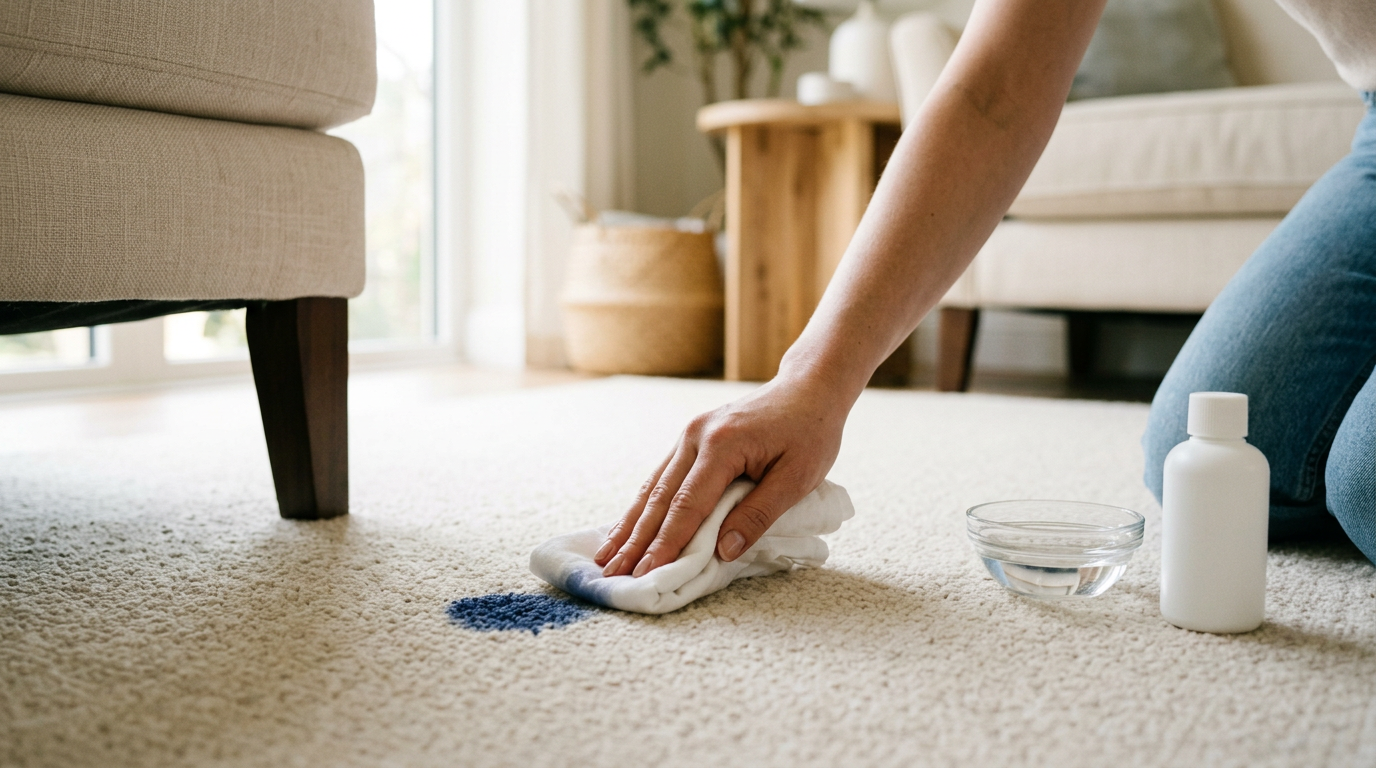
An ink stain on the carpet has a way of making a person's stomach drop. It happens fast — a pen rolls off the table, a child decides the floor is a canvas, or a cartridge leaks without warning. Within seconds, something that was supposed to stay contained is now soaking into the fibers beneath your feet.
The good news is that ink stains, even ones that look alarming, are manageable if you approach them with the right method and a steady hand. The key is understanding what kind of ink you're dealing with, why it behaves the way it does, and which household supplies can actually break it down.
This is not about scrubbing harder or hoping the stain disappears on its own. It's about working with the chemistry of the stain rather than against it.
Why Ink Stains Are Stubborn
Ink is designed to bond to surfaces. That's the whole point of it. Whether it comes from a ballpoint pen, a felt-tip marker, or a printer cartridge, the pigments and dyes in ink are formulated to adhere quickly and resist removal. On carpet, this becomes a particular challenge because the liquid doesn't just sit on top — it travels down into the individual fibers and, depending on the pile depth, may reach the backing beneath.
Ballpoint pen ink contains oil-based dye suspended in a solvent. This is why water alone does almost nothing to lift it. The oily base repels water and holds the pigment in place. You need a solvent-based solution — something that dissolves oil — to break the bond and release the pigment from the fiber.
Felt-tip and marker inks are typically water-based or alcohol-based, which makes them slightly easier to address, though they spread more readily if handled carelessly. Printer ink and India ink tend to be the most concentrated and the most resistant to removal because they're formulated for permanence.
Understanding this helps explain why rubbing alcohol works as well as it does. Alcohol is a solvent. It dissolves the oil-based compounds in ballpoint ink and loosens the dye so it can be lifted out of the fiber rather than just pushed deeper in.
Before You Start: What Not to Do
There are a few instinctive reactions to an ink stain that actually make the situation worse. Knowing what to avoid is just as important as knowing what to do.
- Do not scrub. Scrubbing spreads the stain outward and pushes the ink deeper into the fiber. Always blot, pressing straight down and lifting straight up.
- Do not use hot water. Heat can set certain stains, making them harder or impossible to fully remove. Use cool or lukewarm water only.
- Do not pour solution directly onto the stain in large amounts. Flooding the area can cause the ink to migrate sideways or soak into the carpet padding below, creating a stain that keeps reappearing as it wicks back up when the carpet dries.
- Do not use colored cloths or paper towels with dye in them. If a dye transfers from your cloth onto wet carpet fibers, you now have two problems instead of one.
Work from the outside edge of the stain inward. This keeps the ink from spreading as you work.
The Rubbing Alcohol Method
This is the most reliable approach for ballpoint pen ink and many types of permanent marker. Isopropyl alcohol — the kind sold at any pharmacy — works as a solvent to dissolve the oily base of the ink and allow it to be blotted away.
You'll need: isopropyl alcohol (70% or 90% concentration), white cloths or white paper towels, and cool water for rinsing.
Start by blotting up as much of the fresh ink as possible with a dry white cloth. Press firmly and lift. Don't rub. If the ink has already dried, skip this step and go straight to the alcohol.
Dampen a clean white cloth with rubbing alcohol. You want it damp, not dripping. Press the cloth onto the stain and hold it there for a few seconds. This gives the alcohol time to penetrate and begin dissolving the ink. Then lift the cloth straight up.
You should see ink transferring to the cloth. This is exactly what you want. Move to a clean area of the cloth with each press so you're not redepositing the ink back onto the carpet. Continue this process, working from the outer edge inward, using fresh sections of cloth each time.
As the stain fades, switch to smaller, more precise applications. A cotton ball or cotton swab dipped in alcohol works well for the final traces, especially in tight areas around furniture legs or baseboards where a full cloth is awkward to manage.
Once the ink is gone or no longer transferring, blot the area with cool water to rinse out the alcohol. Then press a dry cloth over the area and leave it for several minutes to absorb the moisture. If you have a fan nearby, positioning it to blow across the carpet will help it dry more evenly and prevent any remaining residue from wicking upward as it dries.
The Dish Soap and Water Method
For water-based inks — common in many felt-tip markers, rollerball pens, and some stamp pads — a small amount of liquid dish soap mixed with cool water can work well. Dish soap is formulated to cut through a range of substances without being harsh, and its surfactant properties help lift dye from fibers when used correctly.
Mix one teaspoon of clear or white dish soap into one cup of cool water. Stir gently. You don't want a lot of foam — foam is harder to blot out of carpet and can leave residue if not fully rinsed.
Apply a small amount of the solution to a white cloth and press it onto the stain. Work in the same patient, blotting motion as described above. Let the solution sit on the stain for thirty seconds or so before blotting. This gives the surfactants time to work into the fiber and loosen the ink particles.
Rinse with cool water applied on a fresh cloth, then press a dry cloth over the area to draw out the moisture. Repeat the process if the stain is still visible after the area dries. Sometimes a second or third pass is needed.
This method is gentler on carpet fibers and is worth trying first if you're unsure what type of ink caused the stain or if the carpet is delicate. It's also a good follow-up step after the alcohol method, applied as a final cleaning pass to remove any remaining residue.
Hairspray: An Old Standby Worth Explaining
Hairspray has been recommended for ink stains for decades, and there's a real reason it used to work: older formulations of hairspray contained a high percentage of alcohol, which acted as the actual stain-removing agent. It was the alcohol doing the work, not the hairspray itself.
Modern hairspray formulations vary widely. Many contain conditioning agents, polymers, and other additives that can actually leave a sticky residue on carpet fibers and attract dirt over time. If you use hairspray, choose a simple, non-conditioning aerosol variety and test it in a hidden area first.
If you have rubbing alcohol on hand, it's a more straightforward choice. But if hairspray is what you have available at the moment, a few short bursts onto the stain followed by careful blotting can still help loosen the ink before a deeper cleaning.
Milk: Does It Actually Help?
Milk is sometimes suggested as a home remedy for ink stains, particularly on fabric. There is a degree of logic behind it — the proteins in milk can help bind to certain dye particles and the fat content provides some emulsifying action. On fabric soaked in a bowl of milk, this can have a mild effect over time.
On carpet, however, milk creates a second problem: if any milk residue is left in the fibers, it will sour as it dries and leave a lasting odor. For carpet specifically, it's better to stick with alcohol or mild dish soap solutions that can be thoroughly rinsed and dried without leaving anything behind.
Dealing With Dried Ink Stains
A fresh stain is always easier to address than a dried one, but a dried ink stain is not hopeless. The approach is the same — rubbing alcohol is still your best starting point — but it requires more patience and more passes.
On a dried stain, let the alcohol-dampened cloth rest on the stain for a full minute before blotting. The solvent needs extra time to rehydrate and penetrate the dried ink. You may also find it helpful to use a soft-bristled brush (like a clean toothbrush) to very gently work the alcohol into the fibers before blotting. Brush lightly, in one direction, then blot. Don't scrub back and forth.
Expect the process to take longer and require more repetitions. A stain that has been set for a day or two may lighten considerably but not disappear entirely. Persistent faint traces can sometimes be addressed with a commercial enzyme-based carpet cleaner used as a finishing step.
Carpet Type Matters
The fiber content of your carpet affects how it responds to cleaning solutions and how deeply ink can penetrate.
Synthetic fibers like nylon and polyester are generally more forgiving. They're less porous than natural fibers, meaning the ink tends to sit in the fiber rather than being fully absorbed into it. This makes removal somewhat easier.
Wool carpet is more absorbent and more sensitive to chemical treatments. Rubbing alcohol used sparingly is generally safe, but avoid leaving it on wool for extended periods. Blot it off promptly and rinse thoroughly with cool water. Avoid any products with bleaching agents or high alkalinity on wool, as they can damage the fibers and affect the color.
Light-colored or cream carpets are the most nerve-wracking to treat because every step of the process is visible. Work carefully, use minimal solution, and blot rather than wipe. The same methods apply — they just require more precision.
On darker or patterned carpets, the main concern shifts to whether the cleaning solution affects the carpet's existing dye. Always test your solution in an inconspicuous area first — under a piece of furniture or in a closet — and let it dry fully before proceeding on the visible stain.
After the Stain Is Gone
Once the ink is out and the carpet is dry, run your hand across the fibers. If the pile feels stiff or matted, it may have dried with some residue still present. A very light misting of cool water followed by gentle blotting and air drying usually softens it back to normal.
If the area looks slightly different from the surrounding carpet once dry — a slight shadow or ring — this is often a residue outline from where the cleaning solution stopped. Address it the same way: cool water, blot, dry. Working the edge of the ring rather than the center helps break up these outlines.
Over the following days, keep an eye on the spot. Occasionally, ink that migrated into the carpet padding will wick back up to the surface as the padding dries. If this happens, repeat the cleaning process on the surface. It may take one or two additional passes to fully address a deep stain.
Patience and repetition are the real tools here. A steady, methodical approach will take care of most ink stains that seem, in the first moments of panic, completely beyond recovery.
Related articles
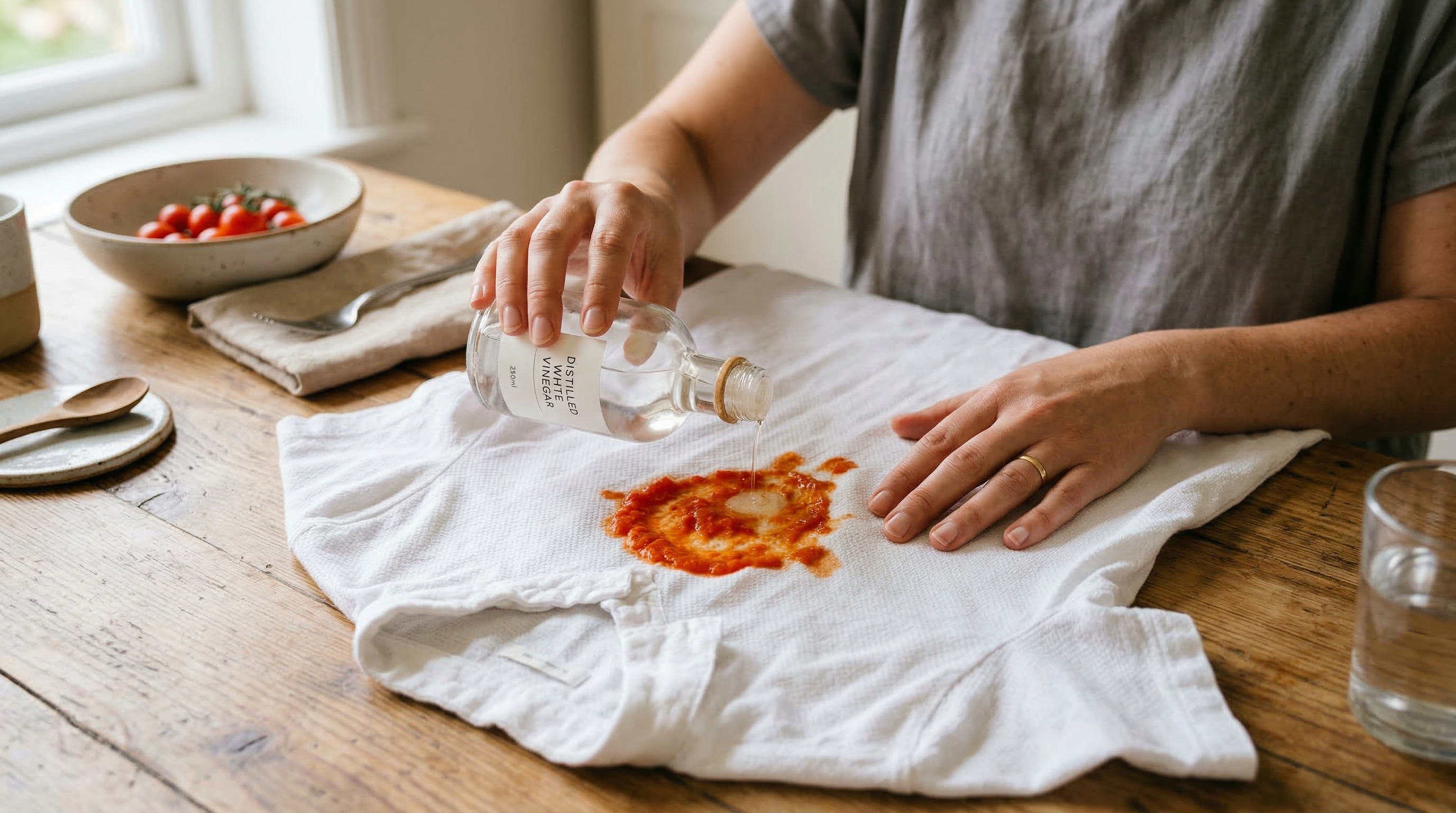
Grandma Knows: How to Remove Tomato Sauce from Clothing
Tomato sauce stains are vivid and quick to set. Learn the right sequence of treatments to remove tomato stains from clothing before they become permanent.
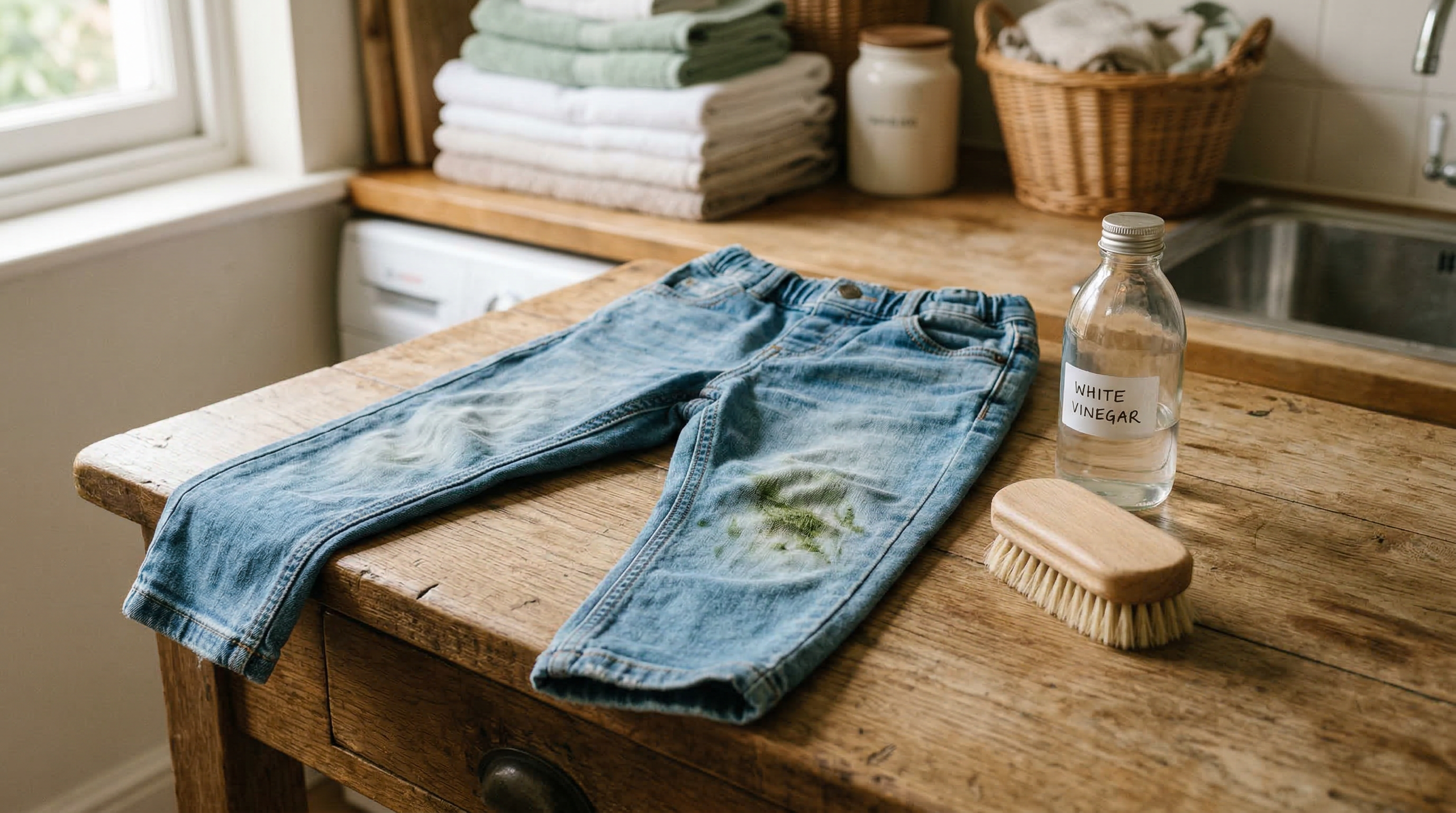
Grandma Knows: How to Remove Grass Stains from Clothes
Grass stains on clothes are stubborn but very treatable. Learn the household methods that break down chlorophyll and get fabric clean again.
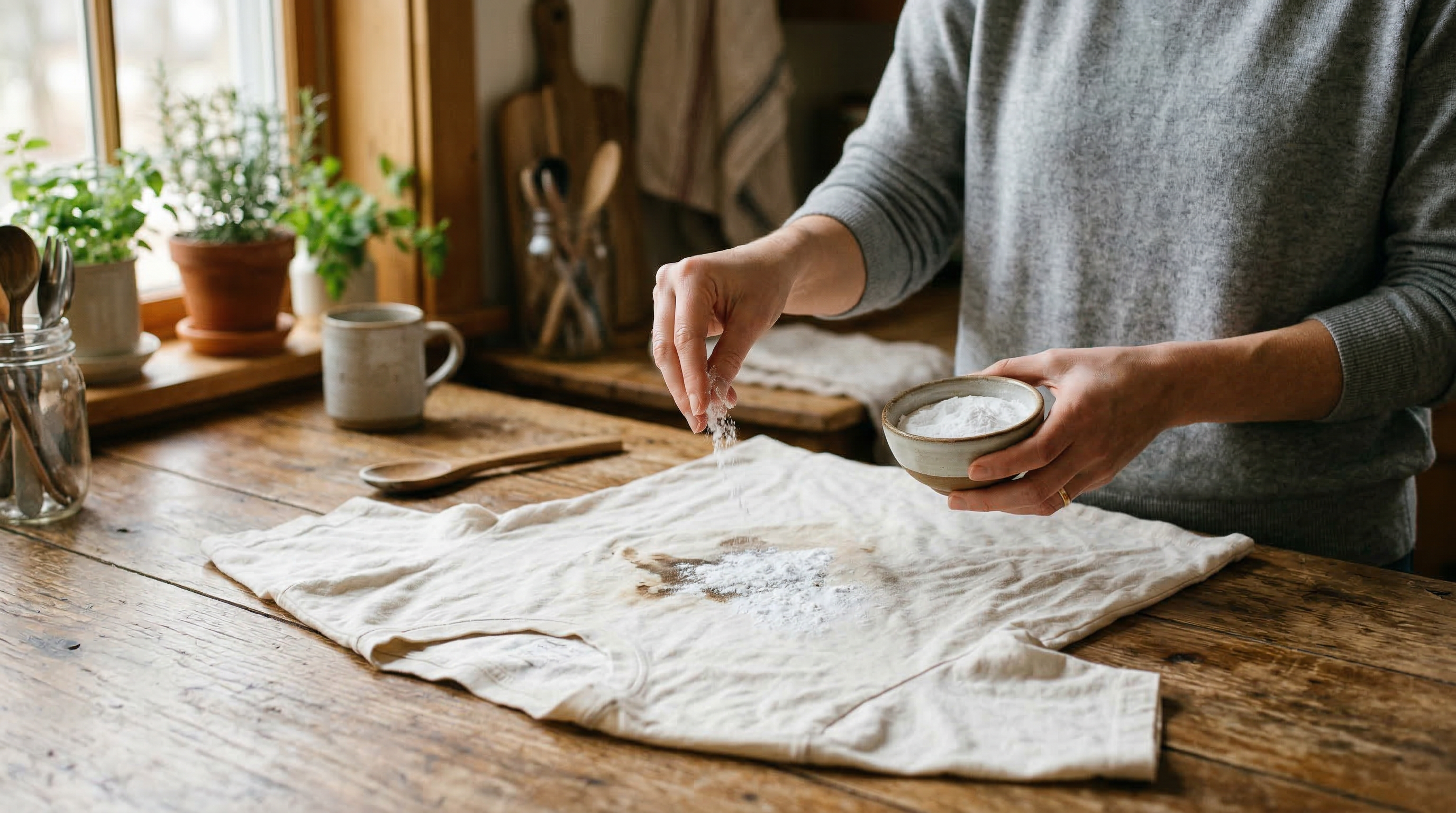
Grandma Knows: How to Remove Grease from Clothes
Grease stains on clothes are tricky but not impossible. Discover proven household methods using baking soda, dish soap, and patience.