
The Cheapest Way to Keep Your House Warm in Winter
Before thermostats and heating systems, homes stayed warm through layered wisdom and practical habits. Here's what actually works.
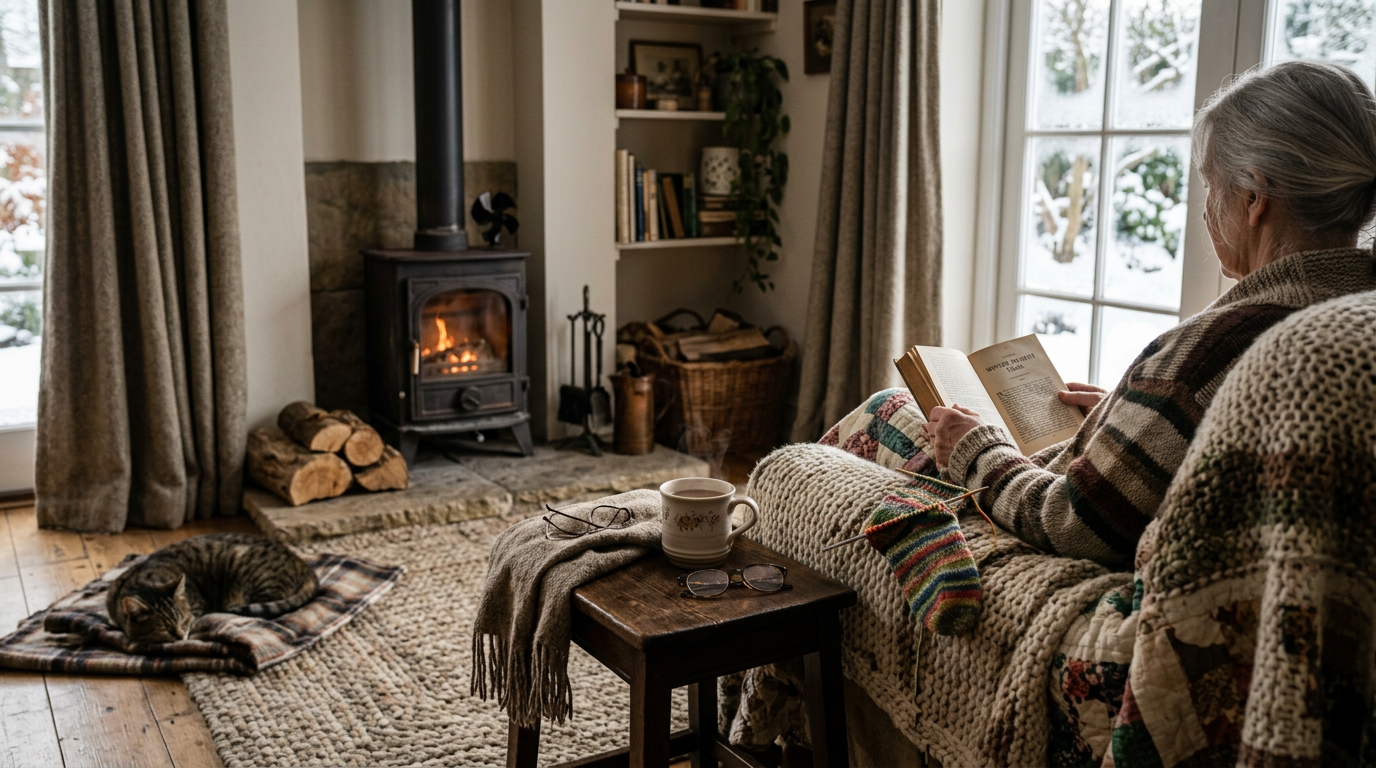
There's a particular kind of quiet that settles over a house on a cold winter morning—the kind that makes you pull the blanket a little higher and wonder how to stretch the heating season without stretching the budget. If you've ever felt that tension between comfort and cost, you're not alone. But before we reach for expensive solutions, it's worth understanding how homes have been kept warm for centuries, and what still works today.
The truth about winter warmth isn't dramatic. It won't come from a single product or a clever hack. Instead, it comes from understanding heat itself—how it moves, where it escapes, and how to work with your home's natural patterns rather than against them. This is knowledge built on observation, not marketing.
Understanding Where Your Heat Actually Goes
Most people assume heat disappears evenly throughout a house, but it doesn't. Heat follows physics, and physics has rules. Warm air rises naturally, which means your ceiling is losing heat constantly—far more than many people realize. Windows are another major pathway, especially older single-pane ones, but even newer windows lose significant warmth. Doors, gaps around baseboards, and unsealed cracks in walls are smaller culprits individually, but together they create what's sometimes called "invisible drafts."
The practical insight here is that sealing these pathways is often cheaper than generating more heat. A single weatherstripping project around exterior doors might cost fifteen dollars and reduce your heating needs by five to ten percent—that's a return on investment measured in weeks, not months.
Before you invest in anything, spend one evening doing a draft audit. On a windy evening, light a candle and move it slowly around window frames, door edges, and baseboards. You'll see the flame flicker where air is moving. Take notes. These are your heat leaks, and they're free to identify but expensive to ignore.
The Thermal Layers of Your Home
Think of your house like a person getting dressed for winter. You don't put on one heavy coat; you layer strategically. The same principle applies to keeping a house warm efficiently.
The innermost layer is your insulation—the material in walls, attics, and crawlspaces that actually prevents heat from escaping. If your home was built before 1980, there's a strong chance your insulation is inadequate by modern standards. But adding insulation is expensive and often requires professional help, so let's assume that's not your immediate solution.
The middle layer consists of thermal mass: the materials in your home that absorb, store, and release heat slowly. Brick, concrete, tile, and dense stone are excellent thermal masses. Water is even better. This is why homes with fireplaces that haven't been used in decades still have them—the thermal mass of the fireplace helped regulate temperature throughout the year. You can't install a fireplace cheaply, but you can understand this principle: items that absorb heat slowly and release it slowly become your allies in winter.
The outermost layer is what faces the outside air—your windows, doors, walls, and roof. This is where the actual insulation happens, where the barrier between inside warmth and outside cold is created.
Leveraging Windows Wisely
Windows deserve their own consideration because they're complicated—they're both the biggest heat loss in most homes and, during sunny winter days, a valuable source of free heat.
South-facing windows in winter are genuinely useful. If your house has windows that receive direct sun during midday hours, the heat gain from those windows (even through single-pane glass) is significant. The trick is capturing that warmth and preventing it from escaping at night. Heavy curtains or thermal drapes hung all the way to the floor accomplish this remarkably well. The air gap they create between the window and the fabric acts as insulation. Importantly, these drapes should be closed at night and on cloudy days, but open during sunny afternoons. This requires a small habit change, but it's free to implement.
For windows that don't receive direct sun, or windows you want to keep uncovered, weatherstripping is your first investment. The foam tape kind is inexpensive and works adequately if applied carefully. Better yet, silicone-based weatherstripping lasts longer and seals more effectively, though it costs a bit more.
Window plastic film (the kind you heat with a hair dryer) genuinely works and costs very little. If you have old windows with poor seals and you can't replace them yet, this temporary measure creates a dead-air buffer that meaningfully reduces heat loss. Yes, you lose the view temporarily, but you also lose less heat.
Door Sealing and Air Flow Management
Doors are like the mouth of your house—a place where warm air leaves and cold air enters unless you're intentional about it. Exterior doors, especially older ones, are often the worst offenders.
A door sweep—the small brush or rubber strip that seals the gap between the door's bottom and the floor—is one of the highest-return fixes available. It costs five to twenty dollars and takes ten minutes to install. The energy savings are immediate and noticeable; you'll feel the draft reduction the first time cold wind blows outside.
For the gaps around the door frame, weatherstripping serves the same purpose. Apply it carefully around all four sides. It won't make your home airtight, but it will meaningfully reduce how much cold air finds its way in.
If you have multiple exterior doors, consider which ones are actually used during winter and which are decorative or seasonal. A door you use twice a month is losing heat constantly. Sealing the least-used doors more aggressively (with weather stripping and draft excluders) is a practical priority.
The Underrated Power of Attic and Basement Management
Heat rises, which means your attic is constantly receiving warm air that escapes through the roof. If your attic isn't properly insulated, you're paying to heat the outside air. This is a significant loss in most homes.
Checking attic insulation doesn't require expertise. In winter, stand in your attic (safely) and look at the floor. If you can see the joists clearly, your insulation is thin. If the insulation is thick enough that joists are mostly hidden, you're better off. The depth should be at least 10-12 inches in cold climates. If it's less, adding attic insulation (loose-fill or batts) is one of the most cost-effective improvements possible—sometimes recovering its cost in just a few years.
Basements and crawlspaces work differently. In winter, these spaces are cold, but they're often also unheated and uninsulated. Sealing air leaks into living spaces from basements prevents cold air from rising up into your main living areas. This is less about insulating the basement itself and more about preventing air exchange between the basement and upper floors.
Practical step: seal any large gaps, cracks, or holes between your basement and upper floors. Use caulk or foam sealant. This prevents cold basement air from reaching your living spaces through convection.
Heat Distribution and Home Habits
Once your home is reasonably sealed against outside air, the next step is managing how heat moves within your home. This is where habits and small adjustments matter tremendously.
Close doors to rooms you're not actively heating. If you have a guest bedroom you're not using, keep the door closed. If you have rooms with poor insulation or heat loss, consider them secondary spaces in winter. Your heating system works much more efficiently when it's warming a smaller, well-sealed area than when it's trying to maintain temperature in every corner.
Keep air vents unblocked. Furniture, curtains, or rugs against heating vents prevent warm air from circulating. This seems obvious, but it's a pattern many people inadvertently create—blocking the very pathways heat uses to reach them.
If you have a ceiling fan, reverse its direction for winter. Most fans have a small switch. On reverse, the fan pushes warm air that rises to the ceiling back down toward the living space. This subtle circulation helps distribute heat more evenly and reduces the need to set your thermostat higher.
The Thermostat as a Tool, Not a Comfort Dial
Here's where behavior and mechanics meet. A thermostat is a tool that should be used strategically, not mindlessly adjusted.
First, know your thermostat's actual accuracy. Many people assume the number displayed is exact; it rarely is. A mechanical thermostat might be off by 2-3 degrees. Understanding this prevents constant adjustment and saves energy.
Second, understand that setting your thermostat higher doesn't heat your home faster. A furnace heats at a fixed rate. Setting the dial to 75 instead of 70 doesn't make your home reach 75 faster; it just ensures the furnace keeps running after the home reaches 70, consuming more fuel. If you're cold, you're cold for reasons beyond the thermostat—usually drafts, poor air circulation, or low insulation.
Practical approach: set your thermostat to one comfortable temperature and leave it there. During sleeping hours, reduce it by 3-5 degrees. Many people sleep more comfortably in a slightly cooler room anyway, and the nighttime reduction saves noticeable energy. When you're away, reduce temperature further. A seven-degree reduction during eight hours away daily adds up significantly over a winter.
If your heating bills are high despite a reasonable thermostat setting, the problem isn't usually the thermostat—it's the sealing, insulation, or air circulation issues addressed above.
Supplemental Heat and Targeted Warmth
Once your home is reasonably efficient, supplemental heat becomes useful rather than wasteful. A small space heater or wood stove directed at the rooms where you spend time can mean you don't need to heat your entire home to comfort level.
Space heaters are energy-intensive, but if you're using one to warm a single room while keeping the rest of the house cool, you're often using less total energy than heating the whole house to comfort level. The key is using them specifically—not as a band-aid for poor insulation everywhere, but as a targeted solution in a particular room.
A fireplace or wood stove, if you have access to affordable fuel, creates both heat and thermal mass. The room containing the fireplace becomes warmer, and the heat radiates outward. For people who have free or cheap access to wood, this is genuinely economical.
Personal Warmth and Adaptive Comfort
The cheapest heat is the heat you generate or keep close to yourself. This is the lesson that reveals itself when you look at how people stayed warm before central heating.
Layers of clothing are obvious, but the specifics matter. Base layers made of merino wool or synthetic materials (not cotton) keep you warm even if slightly damp. A warm sweater, worn while at home, means you're comfortable at 68 degrees instead of 72 degrees. The energy savings are real.
Blankets and quilts are not decoration in winter; they're functional. A weighted quilt on your lap while you read or work creates a pocket of warmth that lets you be comfortable while your home is cooler. Using blankets strategically means you can reduce your overall heating.
Warm beverages—tea, coffee, broth—generate warmth inside your body and make you feel warmer overall. This isn't placebo; warm drinks raise your core temperature slightly and keep it there.
Finally, staying active generates body heat. Winter isn't the season to become sedentary. Movement throughout the day—whether exercise, housework, or simply not sitting all afternoon—keeps your metabolism elevated and makes you less cold.
The Integration: A System Rather Than Fixes
The cheapest way to keep your house warm isn't any single thing. It's a system: a home that's sealed against outside air, insulated where possible, arranged to concentrate heat where it's needed, managed through habits and intentional thermostat use, and supplemented with personal warmth strategies.
Start with the free audit—identify where heat escapes. Then address the cheapest, highest-impact fixes first: weatherstripping, door sweeps, thermal curtains, and attic assessment. From there, prioritize based on your home's specific problems and your budget.
This approach respects both your comfort and your wallet. It's not trendy, but it's proven. It works because it's rooted in how heat and homes actually function, not in selling you something new.
Related articles

How Shared Routines Help Grandchildren Feel Grounded
Understand how repetition supports emotional safety for children.

Making Space for Unhurried Time Together
Explore how slowing the pace allows natural connection to form at home.

Creating a Home Grandchildren Feel Drawn To
Understand how warmth and predictability invite children to feel at ease.